
SpaceX Starship Reaches Orbit and Deploys Satellites in 14th Flight
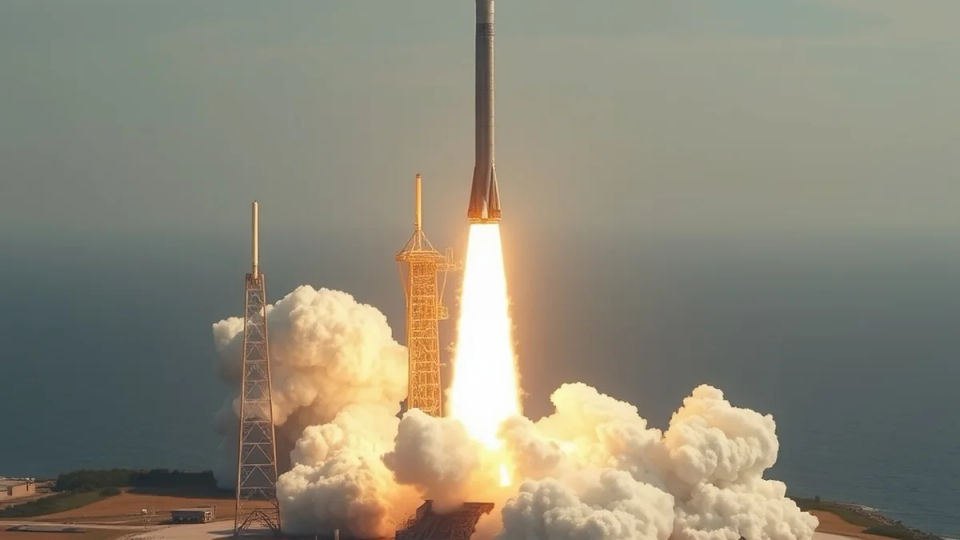
SpaceX achieved a major aerospace milestone on Monday as its giant Starship rocket reached Earth orbit for the first time during its 14th test flight from South Texas. The uncrewed vehicle successfully deployed 26 next-generation V3 Starlink satellites into low Earth orbit before mission controllers brought the upper stage down early into the Pacific Ocean.
Future vehicle configurations mentioned in external aerospace reporting plan to integrate Raptor 3 engines designed with extra reliability enhancements. In separate technology coverage, individual V3 Starlink satellites are described as providing approximately 1 Tbit/s of downlink capacity and 160 Gbit/s of uplink capacity.
The flight encountered drama during ascent when one of the upper stage's six Raptor engines shut down prematurely. According to Spaceflight Now, spaceX initially called off the orbital attempt before engineers confirmed that remaining engines could achieve orbit. The spacecraft ultimately executed the burn, reached orbit, and dispensed all 26 upgraded broadband satellites over a 30-minute span.
Engine Failure and Real-Time Reassessment
The mission underscored the delicate operational margins of early-stage testing for heavy-lift architectures. Following liftoff from the Starbase facility near Brownsville, Texas, the Super Heavy booster separated from the upper stage and performed a controlled splashdown in the Gulf of Mexico. During the upper stage climb, the premature failure of a Raptor engine prompted SpaceX spokesperson Dan Huot to declare on the live broadcast that the team had called off the orbital burn.
Within minutes, however, flight controllers reversed course after evaluating onboard reserves and determining that a single remaining engine could complete the insertion. The 407-foot vehicle successfully entered orbit at an altitude of roughly 275 kilometers. The recovered telemetry provided critical engineering data for SpaceX, which is attempting to mature the vehicle for routine commercial and government missions.
According to Light Reading, for Starlink V3, SpaceX established contact with all 26 deployed V3 satellites, which will raise their orbits using onboard thrusters to begin commercial customer service within weeks. According to The Next Web, spaceX has spent over 5 billion on the Starship development program, with capital expenditures rising sharply to support serial production and testing.
V3 Starlink Deployment and Capacity Expansion
The payload deployment marked the first time Starship has carried out revenue-generating operations while still in development. The 26 V3 Starlink satellites are substantially more powerful than previous iterations, with SpaceX estimating that a single full Starship launch of V3 units adds capacity equivalent to 20 flights of Falcon 9-carried V2 mini satellites.
Three of the deployed satellites were equipped with specialized cameras to monitor the upper stage during flight. Engineers will analyze imagery of the heat shield to evaluate how the thermal protection system manages atmospheric re-entry. These upgrades are central to Musk's broader commercial strategy to scale broadband deployment and phase out older launch vehicles.
Early Return and Pacific Ocean Splashdown
Although mission planners initially intended for the Starship upper stage to circle the planet six times over nearly ten hours, controllers opted to truncate the flight after three hours. The vessel initiated its deorbit burn and re-entered the atmosphere approximately two hours and forty minutes after launch.
Previous flight tests intentionally followed passively safe suborbital paths to maximize public safety and learning. Furthermore, upgraded Raptor 3 sea-level engines deliver increased thrust, rising from two hundred thirty metric tons of force up to two hundred fifty metric tons of force.
The spacecraft broke the sound barrier and descended toward a pre-cleared zone in the northern Pacific Ocean, splashing down intact three hours and eight minutes after liftoff before tipping and disintegrating in the waves. SpaceX officials noted that recovery of the upper stage from the sea was not planned for this test.
Artemis Lunar Timeline and Future Launch Infrastructure
Reaching orbit is a vital prerequisite for NASA's Artemis program, which relies on Starship to land astronauts on the lunar surface. NASA administrator Jared Isaacman commended the execution on social media, noting the safe management of flight milestones. Artemis III is scheduled for a low Earth orbit docking exercise in mid-2027, followed by Artemis IV lunar landings.
To support an anticipated flight rate of thousands of launches per year, SpaceX recently agreed to build a new massive launch complex in Louisiana, supplementing its existing facilities in Texas and Florida. The company continues to refine its tower catch system, having successfully executed multiple pad catches of the Super Heavy booster on prior flights while planning future catches for the upper stage.