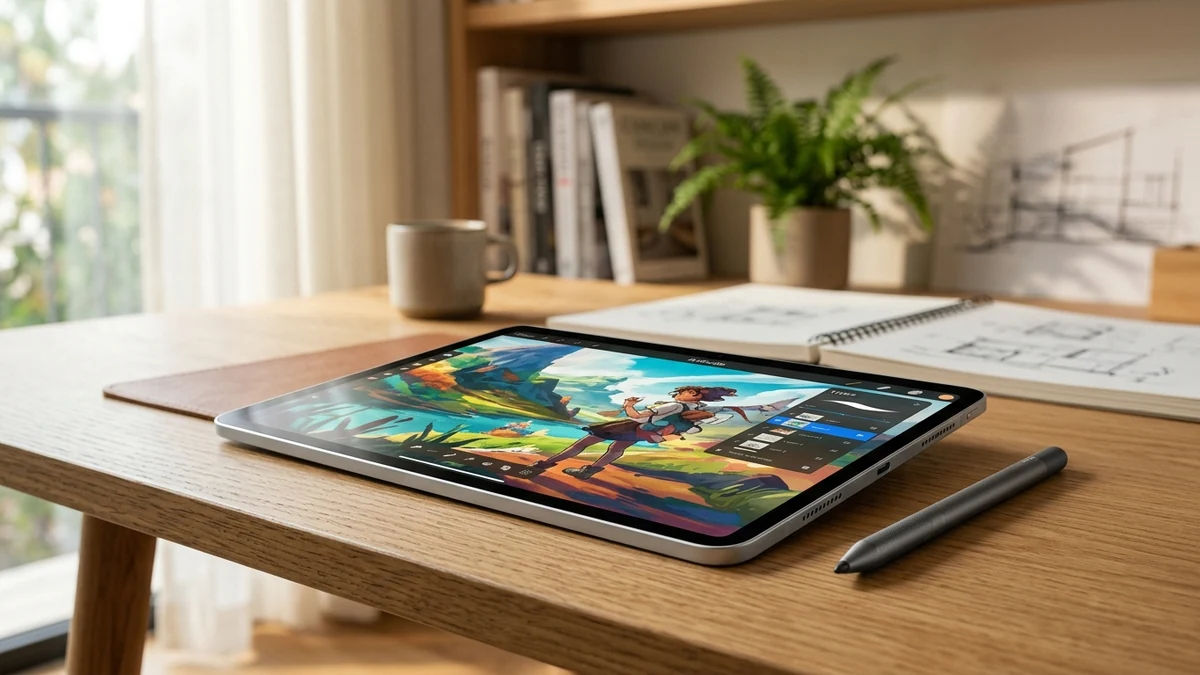
Motorola has expanded its consumer technology footprint in the Indian subcontinent with the commercial launch of the Moto Pad 70, a feature-packed Android tablet tailored specifically for remote education, digital creative workflows, and mobile multimedia consumption. Positioned in the hyper-competitive sub-₹15,000 price tier, the tablet represents Lenovo-owned Motorola’s direct challenge to incumbent budget tablet offerings from Realme, Redmi, and Samsung.
As hybrid educational models and digital textbook initiatives become deeply embedded across Indian schools, universities, and competitive examination coaching centers, consumer demand for large-screen, affordable slate computing has surged. The Moto Pad 70 addresses this market with a premium all-metal unibody chassis, an expansive 11-inch 2K high-resolution display, quad-speaker Dolby Atmos spatial audio, and low-latency precision active stylus integration.
Industrial Design, Chassis Architecture, and Display Excellence
The Moto Pad 70 departs significantly from the cheap plastic constructions historically associated with budget-tier tablets. Machined from a single block of aerospace-grade aluminum alloy, the device features a svelte 7.1 mm profile and weighs an easily manageable 490 grams, ensuring comfortable single-handed reading during extended study sessions. The rear panel incorporates a modern two-tone matte anodized finish that resists fingerprint smudges while providing a secure ergonomic grip.
The centerpiece of the device is an 11-inch IPS LCD panel boasting a crisp 2K resolution (2000 x 1200 pixels) with a 15:9 aspect ratio optimized for document reading and split-screen multitasking. The panel supports a smooth 90Hz refresh rate, delivering fluid UI scrolling, seamless document navigation, and responsive touch tracking during digital handwriting. With a peak brightness rating of 450 nits and TÜV Rheinland low-blue-light hardware certification, the display minimizes visual fatigue during prolonged nocturnal reading and video lecture sessions.
Processing Hardware, Memory Configurations, and Performance
Under the hood, the Moto Pad 70 is driven by the power-efficient MediaTek Helio G99 octa-core processor, fabricated on a 6nm manufacturing node. The silicon configuration pairs two high-performance ARM Cortex-A76 cores clocked at 2.2 GHz with six energy-efficient Cortex-A55 cores running at 2.0 GHz, coupled with an ARM Mali-G57 MC2 graphics processing unit.
The tablet is offered in two distinct hardware configurations:
- 4GB LPDDR4X RAM + 128GB UFS 2.2 Storage: Designed for school students, web browsing, and digital textbook reading.
- 6GB LPDDR4X RAM + 256GB UFS 2.2 Storage: Engineered for college students requiring heavy multi-app split-screen note-taking and casual gaming.
Both variants feature a dedicated microSD card slot supporting expandable storage up to an additional 1TB, ensuring ample physical space for downloaded offline video lectures, educational PDF libraries, and high-resolution media files.
Clean Software Experience and Educational Multitasking
Software on the Moto Pad 70 is anchored by a remarkably clean, bloatware-free iteration of Android 14, distinguished by Motorola’s intuitive My UX customization layer. Departing from competitor interfaces cluttered with intrusive push notifications and unremovable third-party trial applications, the Moto Pad 70 delivers a near-stock Android software experience that maximizes system responsiveness and RAM availability.
The tablet integrates specialized productivity tools, including:
- Smart Split-Screen Multitasking: Allowing users to take handwritten notes on one half of the display while simultaneously streaming a live Zoom or YouTube lecture on the other.
- Google Kids Space and Family Link: Built-in parental controls offering curated, age-appropriate educational applications, books, and screen-time monitoring.
- Moto Smart Connect: Enabling wireless desktop-style screen mirroring and cross-device clipboard synchronization with Motorola smartphones and Windows personal computers.
Audio Engineering, Camera Hardware, and Battery Endurance
To satisfy digital classroom and video conference demands, the Moto Pad 70 is equipped with four symmetrical stereo speakers tuned with Dolby Atmos spatial audio processing. The acoustic setup delivers clear vocal frequencies and rich spatial separation, eliminating the need for external headphones during online seminars. Dual noise-canceling microphone arrays utilize AI algorithms to suppress background household chatter during virtual presentations.
Camera hardware includes an 8-megapixel wide-angle front-facing camera positioned on the horizontal bezel, accompanied by automated center-framing algorithms that keep the speaker centered during Google Meet calls. The rear panel houses a 13-megapixel autofocus camera with an LED flash, optimized for scanning physical paper documents, whiteboard notes, and QR codes.
Battery life is sustained by a massive 7,700 mAh lithium-ion cell capable of delivering up to 14 hours of continuous video playback or two full days of typical classroom usage on a single charge. The tablet supports 20W TurboPower fast charging via a reversible USB Type-C port, with the compliant fast charger included directly inside the retail box.
Pricing Tiers, Availability, and Market Impact
The Moto Pad 70 is commercially available across leading e-commerce platforms (Flipkart and Amazon India) and Motorola authorized retail stores nationwide. Introductory pricing starts at ₹12,999 for the 4GB/128GB Wi-Fi configuration, while the 6GB/256GB Wi-Fi edition retails at ₹14,999, with optional LTE cellular configurations slated for release in subsequent cycles. Motorola has also introduced an optional active capacitive stylus pen bundled at a promotional price of ₹1,999.
By combining an aluminum unibody build, a vibrant 2K 90Hz display, and clean Android software under ₹15,000, the Moto Pad 70 establishes a formidable new benchmark in India's budget computing landscape, empowering millions of students and mobile professionals with reliable, affordable digital technology.