
Edited by Editor-in-Chief, The Indus Pulse 19 Sept 2026, 10:16 PM 2 min readtech
MIT Researchers Develop Autonomous Robotic Lab for Precision Optics Experiments
Sources & Citations
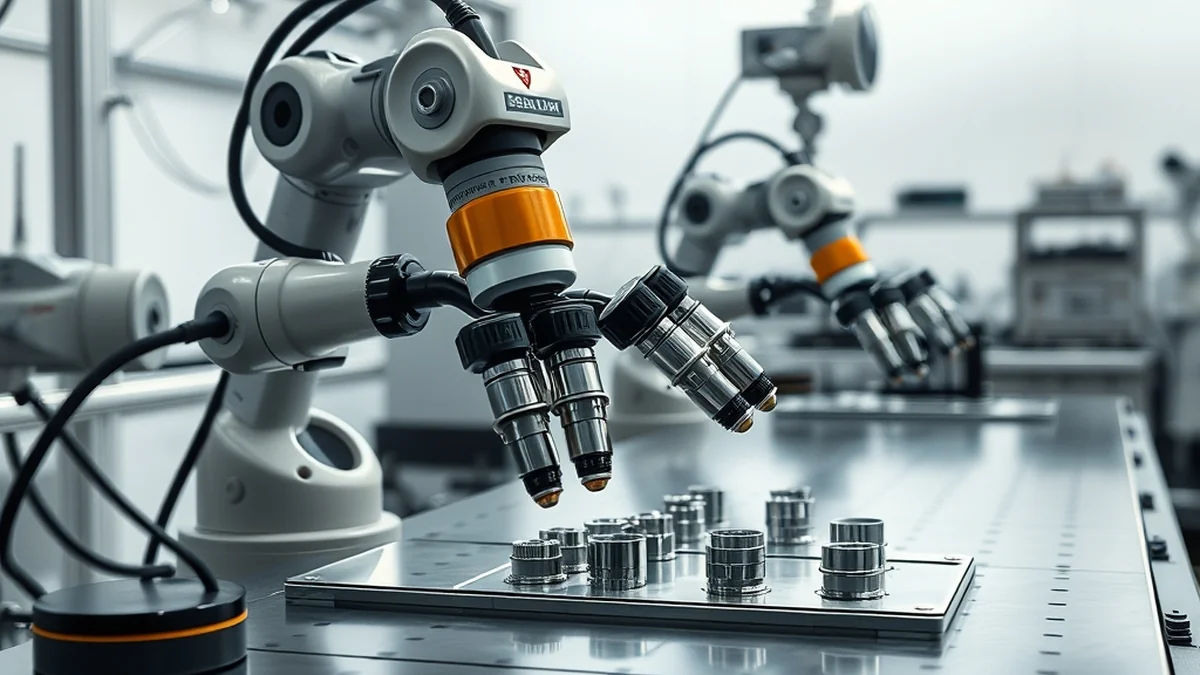
Researchers at the Massachusetts Institute of Technology (MIT) have developed a reconfigurable robotic laboratory capable of autonomously assembling and maintaining complex optics experiments. The system, which utilizes a seven-jointed robotic arm, successfully constructed a functioning tabletop laser cavity in under 30 minutes through 50 autonomous maneuvers. This development marks a shift from traditional, manual optics setups that often require days or months of human intervention to align sensitive components like mirrors and lenses.
Autonomous Assembly and Precision Alignment
The robotic system operates on a metallic tabletop, utilizing 3D-printed mounts for optical components. Each mount is equipped with a QR code that allows the robot to identify the component, determine its function, and calculate its placement. Magnetic bases secure these components to the table, providing stability against environmental factors such as vibrations or temperature fluctuations that typically degrade optical measurements. To achieve micron-scale precision, the team integrated a wirelessly controlled motorized tuner that clips onto standard optical mounts, enabling the robot to automatically adjust the angle of mirrors and lenses without human tactile input.
Self-Correction and Experimental Stability
A key feature of the robotic lab is its ability to monitor and repair experiments in real time. During testing, researchers deliberately disturbed the laser cavity by moving components. The system detected the misalignment via overhead cameras and automatically adjusted the setup to restore the laser's intensity. This self-correction capability suggests that such platforms could eventually run long-term experiments without human oversight, ensuring data integrity by compensating for minor environmental shifts.
Future Integration and Remote Access
The MIT team is currently developing a cloud-based application to allow researchers to interact with the robotic laboratory remotely. This interface would enable scientists to submit experimental protocols online, which the robot would then execute autonomously. Beyond the current laser cavity demonstration, the researchers envision the system accelerating prototyping for various technologies, including solar cells, augmented reality devices, and carbon-capture materials. By automating the repetitive and meticulous aspects of optics, the team aims to free researchers to focus on theoretical development and new experimental ideas. The project remains a research demonstration, but it highlights a potential path toward fully automated, 24/7 laboratory environments.
Sources & Citations
The Indus Pulse is committed to accuracy and transparency.