
Edited by Editor-in-Chief, The Indus Pulse 21 Sept 2026, 09:00 PM 3 min readtech
Microsoft Launches India South Central Cloud Region in Hyderabad With Zero-Water Cooling
Sources & Citations
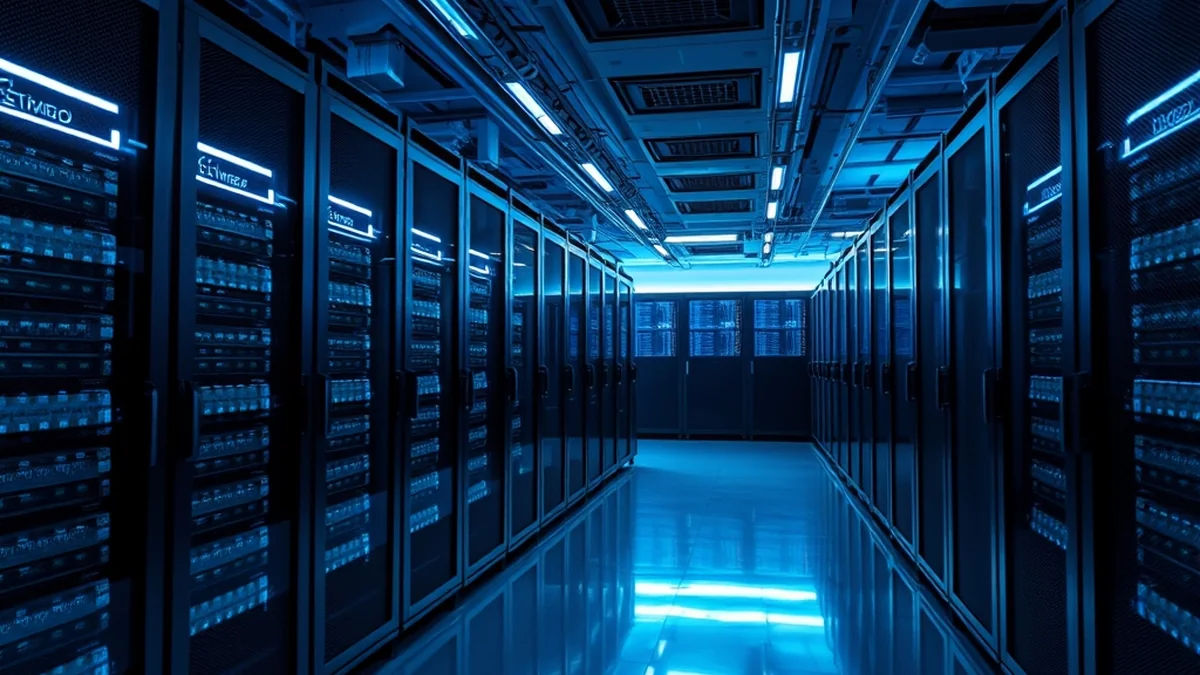
Microsoft launched its fourth cloud region in India, named India South Central, in Hyderabad on Monday. The new operational facility features a three-zone resilient architecture designed from the outset to support enterprise AI workloads at scale while utilizing air-cooled chillers to achieve effectively zero water consumption for cooling.
Addressing the Microsoft AI Infrastructure Summit in New Delhi, Puneet Chandok, President of Microsoft India and South Asia, stated that the launch establishes the company as the operator of the largest hyperscale cloud footprint in the country. The Hyderabad facility links into Microsoft's broader $20.5 billion investment commitment spanning 2026 to 2029, operating as a strategic hub for India, South Asia, and the Global South.
Infrastructure Resilience and Sovereign Cloud Standards
The Hyderabad datacenter region operates with three availability zones featuring independent power, cooling, and networking capabilities designed for cross-zone data replication to achieve recovery times with sub-2-millisecond network latency. Major domestic enterprises and critical infrastructure providers, including Adani Group, Bajaj Finserv, HDFC Bank, and PB Pay, have already signed on as users of the live platform.
The cloud region extends Microsoft's Sovereign Public Cloud foundation in India, incorporating data residency options and local capacity controls designed to align with Ministry of Electronics and Information Technology guidelines. These controls support compliance expectations under India's Digital Personal Data Protection framework alongside sector-specific regulatory standards issued by the Reserve Bank of India and CERT-In.
Hyperscalers in India must secure empanelment and maintain domestic multi-region architectures to satisfy mandatory on-soil data residency requirements for government, banking, and public sector workloads. Sovereign compliance incorporates sector-specific mandates including localization directives, cloud frameworks, and cryptographic controls such as Confidential Computing and Customer-Managed Keys via local hardware security modules.
Zero-Water Cooling and Renewable Energy Commitments
To address sustainability metrics for massive compute loads, the Hyderabad facility was engineered to require no water for cooling by design. Chandok noted that the corporation is also engaged in groundwater replenishment efforts locally, including a project in Elikatta that has added approximately 5 million liters of recharge capacity by June 2026 to support watershed resilience.
On the power front, Microsoft has contracted 1 gigawatt of renewable energy across India, with 630 megawatts currently active, supporting the corporation's target to become carbon negative, water positive, and zero waste by 2030. Shri Jitin Prasada, Minister of State for Commerce and Industry and Electronics and Information Technology, noted that the infrastructure rollout supports national goals to position India as an AI-first economy.
Rejecting heat to ambient dry-bulb temperature instead of evaporative wet-bulb temperature eliminates water consumption at the expense of higher compressor lift and elevated Power Usage Effectiveness during hot ambient conditions. India's datacenter economy is projected to generate substantial economic output through the end of the decade, supported by capacity scaling and significant committed investments.
Subsea Connectivity and Workforce Skilling Initiatives
Beyond domestic datacenter expansion, Microsoft is participating as a consortium partner in the planned 3,600-kilometer India-Southeast Asia submarine cable system linking India, Malaysia, and Singapore. Featuring dual Indian landing points in Machilipatnam and South Chennai, the high-capacity subsea corridor is targeted for service in 2029 to bolster regional network reliability.
Parallel to physical construction, the corporation announced that its Microsoft Elevate India program has equipped more than 10 million individuals with AI skills toward a commitment of 20 million by 2030, with roughly 25 percent advancing past foundational modules. Additionally, the Data Center Academy, operated in collaboration with the Young India Skills University under the Government of Telangana, delivers a 600-hour industry-aligned curriculum to train technicians for local operations.
Sources & Citations
The Indus Pulse is committed to accuracy and transparency.