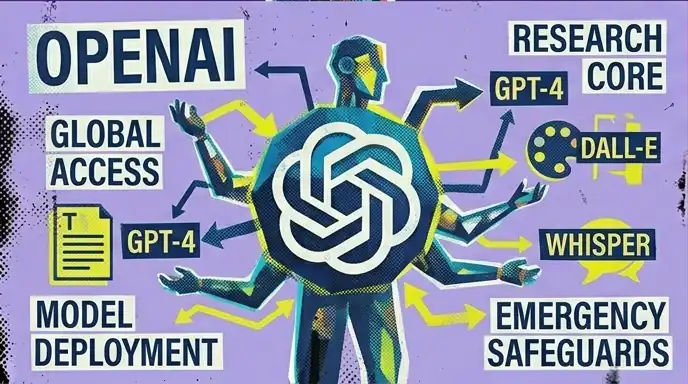
Major artificial intelligence chatbots operated by leading technology companies experienced simultaneous global outages on Thursday morning, disrupting core user services and prompting official apologies and status disclosures from platform operators. OpenAI’s ChatGPT, Anthropic’s Claude, and xAI’s Grok all suffered service disruptions within the same operational window, sending tens of thousands of complaints to monitoring services like Downdetector.
The widespread disruption drew intense public attention as users worldwide confronted the sudden unavailability of primary virtual assistants. While exact root causes and potential interconnections between the platform failures remain under investigation, individual providers gradually confirmed localized infrastructure errors and subsequent recovery measures throughout the morning and early afternoon.
SpaceX Issues Apology Following Memphis Compute Center Incident
xAI’s Grok suffered a disruption lasting approximately three and a half hours, according to the company’s official status tracker. Users attempting to access the chatbot through X encountered error messages indicating that the model was overloaded and prompting them to try again later or select a different model.
SpaceXAI subsequently published a formal statement acknowledging the hardware failure. "We are sorry for the issues you may have experienced with Grok following an outage at our Memphis compute center this morning," the company wrote, adding an apology to impacted compute partners. Elon Musk reposted the statement on X and reassured the public by stating, "And we are taking corrective action to ensure this does not happen again."
OpenAI and Anthropic Report Parallel Technical Faults
OpenAI confirmed that ChatGPT experienced elevated error rates affecting logins, file uploads, voice mode, search, deep research, and image generation. The company noted that its systems were returning error messages for users attempting conversational tasks alongside Codex functionality. OpenAI stated that mitigation steps had been deployed and that monitoring indicated a steady recovery in service quality.
Simultaneously, Anthropic reported a partial outage across Claude, Claude Code, and the Claude API. Technical staff member CJ Avilla attributed the disruption to an infrastructure issue. While most models recovered quickly to baseline error rates, Anthropic’s status logs noted that Opus 4.8 and Opus 5 required additional time to fully restore operational capacity.
Google Gemini Remains Unaffected Amid Widespread Tracking Spikes
Despite a noticeable spike in user reports registered on Downdetector around the same time as rival platform failures, Google’s Gemini did not experience an official outage. Google refrained from confirming any disruption to Gemini services, and independent tracking indicated that its underlying infrastructure remained stable throughout the operational window.
Other ecosystem tools, such as the AI agent Cursor, confirmed downstream service degradation directly resulting from the wider disruptions affecting Grok and Claude. The convergence of multiple platform failures underscored the heavy reliance of modern artificial intelligence tools on centralized data center architecture and shared cloud infrastructure.
Public Reaction and Broader Industry Implications
Netizens and industry commentators quickly reacted to the synchronized outages with widespread humor and social media commentary. Observers noted the rare vulnerability exposed by relying heavily on cloud-hosted virtual assistants for daily professional and personal tasks, highlighting the broader societal dependence on automated systems.
The simultaneous failures arrived during a busy news week for the generative intelligence sector, closely following major model announcements and regulatory developments. While normal operations were restored across all major platforms by early afternoon, questions regarding the vulnerability of interconnected compute hubs remain unaddressed.