
FCC Approves SpaceX Plan for Up to 1 Million Orbital AI Data Center Satellites
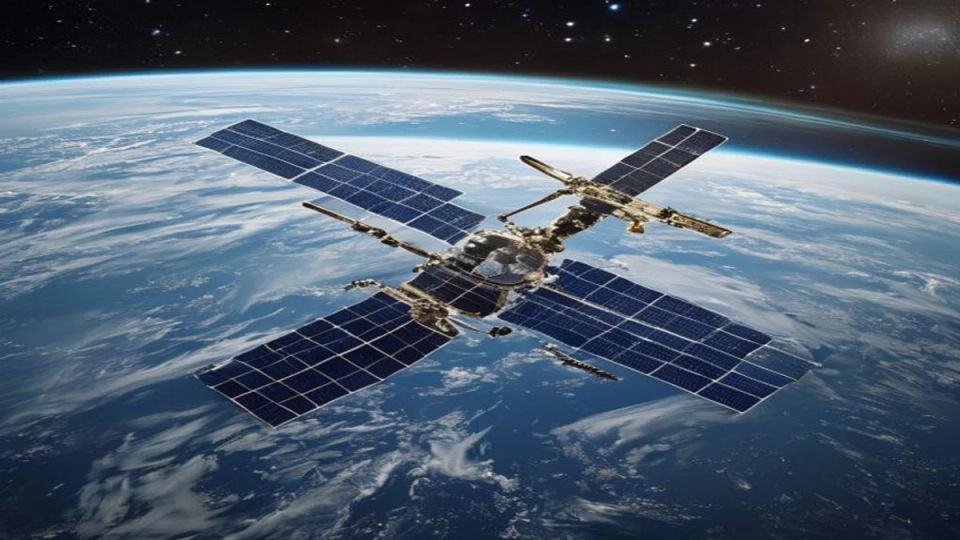
The U.S. Federal Communications Commission on Wednesday, November 25, 2026 authorized SpaceX to deploy up to 1 million solar-powered satellites as orbital AI data centers under its "Starmind" initiative, according to The Verge, Decrypt, and Bloomberg.
SpaceX's Starlink constellation took roughly six years to reach its first 7,000 operational satellites, according to BASENOR. The FCC's November 25, 2026 authorization permits SpaceX to establish the Starmind constellation of up to 1 million orbital data centers, use radiofrequency links for backup and emergency telemetry, tracking, and command (TT&C), and supplement optical inter-satellite links with 18.8–19.3 GHz downlink and 28.6–29.1 GHz uplink bands, according to Federal Communications Commission.
Regulatory conditions, timeline, and Starmind design
The Verge reported that the FCC's authorization requires SpaceX to launch at least one satellite by 2033 and reach the 1 million milestone by 2040, while deferring SpaceX's request to park satellites above 600 km in "graveyard" orbits instead of burning up in the atmosphere due to insufficient disposal information.
FCC Chairman Brendan Carr wrote on X that Starmind and competing constellations would use solar energy to advance U.S. leadership in superintelligence, and Elon Musk replied that it would be a major asset for America and the world.
SpaceX plans to produce chips for Starmind at an upcoming Terafab facility and transmit processed data back to Earth via high-speed lasers linked to Starlink, with radio frequencies authorized as a backup for communications and emergency controls.
Decrypt reported that SpaceX originally filed in January and the FCC opened a review in February shortly after Musk folded xAI, the maker of Grok, into SpaceX, while Crypto Briefing noted the Space Bureau opened public comments on February 4, 2026 (due March 6), excluded the proposal from July 2026 expedited rules, and received a collision and debris analysis in September 2026.
Crypto Briefing added that SpaceX's original application proposed sun-synchronous orbits at altitudes between 500 and 2,000 km using the 18.3-19.3 GHz and 28.6-29.1 GHz frequency bands.
Rival plans, engineering hurdles, and environmental debate
At an investment conference earlier this month, Musk projected initial Starmind computers could reach orbit in the third quarter of 2027, though SpaceX's securities filings cautioned that orbital computing has not yet proved commercially viable. SpaceX's first-generation Starmind AI1 satellite features 75-meter solar panels, 30-meter deployable radiators, and 250 kilowatts peak computing power (175 kilowatts average), equivalent to one NVIDIA Vera Rubin NVL72 rack, in 600–800 km sun-synchronous orbit, according to BigGo Finance.
Rival efforts include Google's Project Suncatcher, which launched a prototype AI server satellite in October and booked Jeff Bezos's Blue Origin for a dedicated heavy-lift launch in 2029, with Google research estimating solar panels in continuous-sunlight orbits can be up to eight times more productive than on Earth.
Decrypt noted that cooling AI chips in a vacuum requires radiators and protection against cosmic radiation.
While the FCC said Starmind meets orbital debris rules, the Center for Space Environmentalism warned in September of atmospheric pollution, and a November 22, 2026 preprint cited by Crypto Briefing projected launch and re-entry emissions more than 150 times higher than 2025 levels.
Background
The FCC order denied petitions to deny or defer from Amazon's Kuiper division (Amazon Leo), Viasat, and the American Astronomical Society, and requires a final orbital debris mitigation plan before any deployment above 600 km, according to BASENOR.
Because Starmind satellites are expected to have a main body mass exceeding 2 tons plus propellant, the number carried per launch will be limited even with Starship's 100-ton-class payload capacity, requiring high-frequency launch capability, according to BigGo Finance.
Sources & Citations
- The Verge
- Decrypt
- Bloomberg
- Crypto Briefing
- BASENOR
- FccPrimary / official
- BigGo Finance