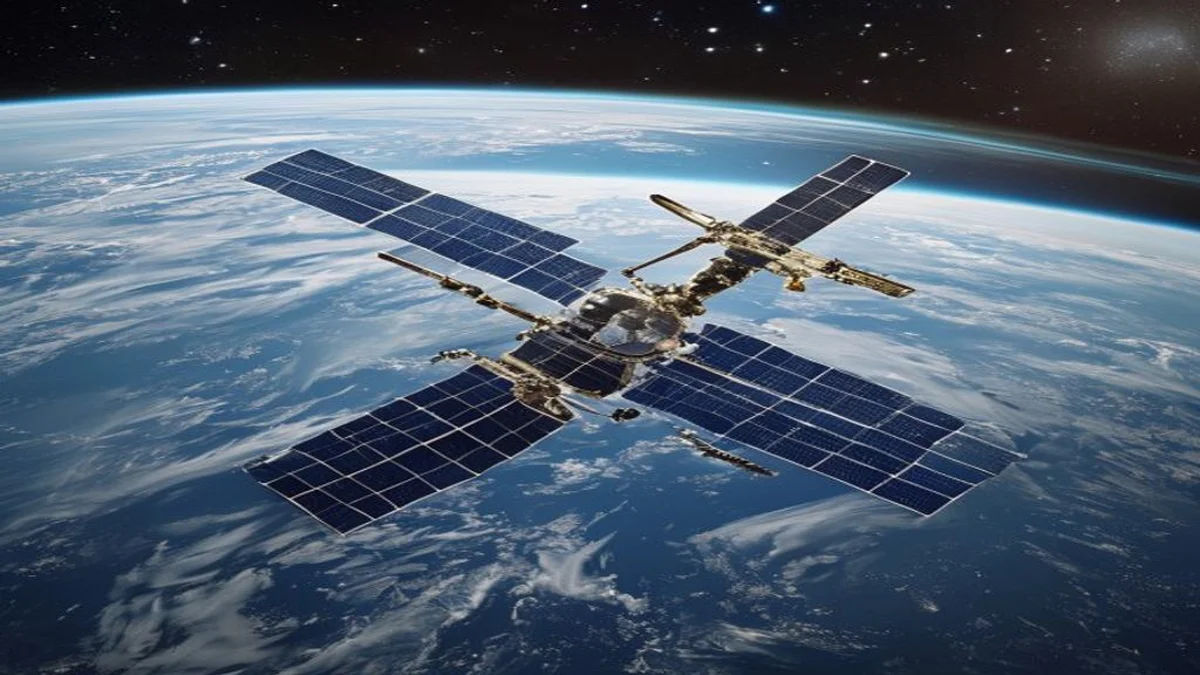
The BepiColombo spacecraft, a joint mission by the European Space Agency (ESA) and the Japan Aerospace Exploration Agency (JAXA), has entered its final arrival phase at Mercury. On September 3, 2026, the mission’s Mercury Transfer Module (MTM) successfully separated from the two science orbiters, marking the end of an eight-year, 6-billion-mile journey powered by solar electric ion propulsion. The spacecraft is now in a ballistic free-fall, coasting toward a critical orbit insertion maneuver scheduled for November 21, 2026.
This upcoming maneuver represents a singular, high-stakes moment for the €1.65 billion mission. To successfully enter orbit, the Mercury Planetary Orbiter (MPO) must fire its chemical thrusters to shed significant velocity, allowing the planet’s weak gravity to capture the craft. Because of the 124-million-mile distance between Earth and Mercury, a round-trip signal delay of 22 minutes makes real-time intervention impossible. The entire burn sequence must be pre-programmed and executed autonomously, with ground controllers in Darmstadt, Germany, unable to abort or correct the maneuver once it begins.
The Engineering of the Capture Burn
Mercury presents a unique gravitational challenge that has historically made it the least-explored rocky planet in the inner solar system. As BepiColombo has traveled toward the Sun, solar gravity has continuously accelerated the craft. To achieve orbit, the MPO must utilize its four 22-newton chemical thrusters to drop its velocity below the planet's escape threshold. These thrusters provide a modest force, but when applied with precise timing, they will stabilize the craft into an initial 60-hour orbit.
This capture orbit serves as a temporary beachhead. Following the November 21 burn, the mission team will execute a series of 16 additional maneuvers over several weeks to lower the spacecraft into its final science configuration. ESA operations managers have confirmed that there is no contingency plan for a second capture attempt; if the November 21 burn fails to perform as designed, the spacecraft will continue past Mercury on an irreversible solar trajectory.
Two Orbiters, One Scientific Breakthrough
Once the arrival phase concludes, the mission will deploy its two distinct science components: the ESA-built Mercury Planetary Orbiter (MPO) and the JAXA-built Mercury Magnetospheric Orbiter, nicknamed Mio. The separation of these two craft is planned for December 9–10, 2026. Shortly thereafter, on December 16, the MPO will jettison the protective sunshield that has shielded Mio from the intense solar radiation encountered during the cruise phase.
This dual-orbiter design is the cornerstone of the mission's scientific strategy. By having two spacecraft in different orbits simultaneously, researchers can distinguish between the internal drivers of Mercury’s magnetic field and the external influence of the solar wind. This capability addresses a significant limitation of NASA’s previous MESSENGER mission, which relied on a single spacecraft to observe the planet’s magnetosphere. Scientists hope this simultaneous two-point measurement will finally explain why Mercury’s magnetic field is both weak and offset from the planet's center.
Probing the Mysteries of the Innermost Planet
BepiColombo carries 16 scientific instruments designed to investigate Mercury’s most enduring mysteries, including the origin of its disproportionately large iron core. The MPO will utilize the BepiColombo Laser Altimeter (BELA) to map surface topography in high resolution, while the Mercury Orbiter Radio-science Experiment (MORE) will conduct precision tests of Einstein’s theory of general relativity. These observations are expected to provide insights into how terrestrial planets form near their parent stars.
Another priority is the investigation of Mercury’s radiation belts. A 2026 study confirmed that these transient zones form near the planet's aphelion and vanish near perihelion, but their intensity remains uncharacterized. Mio’s dedicated particle detectors will provide the first direct measurements of these belts. Additionally, the mission will examine the planet's "hollows"—peculiar surface depressions that appear to be actively eroding—to determine the mechanisms driving their formation.
A Legacy of Trajectory Innovation
The mission is named after Italian mathematician Giuseppe "Bepi" Colombo, whose pioneering work on gravity-assist trajectories enabled the first successful visits to Mercury in the 1970s. The current mission has utilized nine gravity-assist flybys—one at Earth, two at Venus, and six at Mercury—to navigate the inner solar system. This complex path was further complicated by a 2024 power fault in the MTM, which forced a trajectory redesign and delayed the arrival by 11 months.
As the November 21 deadline approaches, the mission team remains focused on the final sequence of operations. Full science operations are scheduled to commence on April 6, 2027, following the completion of the orbital descent phase. For the scientists and engineers involved, the arrival represents the culmination of 26 years of development, with the success of the entire project resting on a single, pre-programmed burn that will be confirmed only after an 11-minute signal delay.