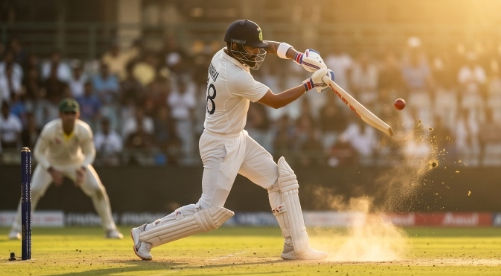
India Women navigated early pressure and fielding lapses to secure a commanding position in the Women's Asia Cup 2026 semi-final against Bangladesh Women at the Dubai International Cricket Stadium. Opener Shafali Verma anchored the innings with a resilient 35-ball half-century, rising past teammates to set a formidable scoring pace despite sustained bowling discipline from the Tigresses.
Bangladesh elected to bowl first under overcast conditions, immediately reaping dividends as Sultana Khatun and Marufa Akter probed testing lengths. Smriti Mandhana fell early for just two runs, caught by Shorna Akter at mid-on, leaving India searching for stability. However, Shafali capitalized on multiple dropped chances in the field, surviving four reprieves as Bangladesh's catching deserted them at vital moments during the middle overs.
Shafali Verma Anchors India's Recovery
Shafali shrugged off early discomfort to notch her 20th T20I half-century, mixing powerful pulls with inventive reverse sweeps. Her knock drove India past initial roadblocks after the Powerplay phase yielded caution. Even as regular partners rotated, Shafali remained the focal point of the innings, surpassing Smriti Mandhana for the most runs scored in T20 Asia Cups for India.
Captain Harmanpreet Kaur fought through a sluggish spell at the crease, battling for runs while anchoring the lower-middle order. Bangladesh deployed five bowlers strategically, with Fahima Khatun and Rabeya Khan squeezing the run rate during the middle phases. Despite tight spells that restricted free flow, India accumulated vital partnerships to rebuild the innings past the century mark.
Bangladesh Bowlers Miss Crucial Opportunities
Bangladesh's bowling unit executed precise line and length in the opening overs, but missed fielding opportunities proved costly. Sultana Khatun troubled both openers with sharp turn and clever variations, claiming early wickets to test India's depth. Marufa Akter maintained intense pressure with the new ball, extracting low bounce from the Dubai deck.
Fielding errors ultimately undermined the bowling effort. Shafali was dropped multiple times in the deep as outfielders lost the ball in the stadium lights or failed to hold onto difficult chances. Captain Nigar Sultana rotated her attack efficiently, but the inability to convert catching opportunities allowed India to consolidate their position heading into the final overs.
Middle Order Resistance and Tactical Rotations
Following Shafali's dismissal, Richa Ghosh joined Harmanpreet Kaur to inject fresh momentum into the innings. Ghosh utilized sweeps and quick running between the wickets to keep the scoreboard ticking. Harmanpreet broke her shackles with a powerful lofted six over long-off, utilizing the depth of her crease against the spinners.
Bangladesh kept searching for breakthroughs, utilizing Shorna Akter and Rabeya Khan to probe defensive techniques. The pitch offered variable bounce, occasionally keeping low and forcing batters to adjust their strokeplay. India's ability to absorb dot balls and capitalize on loose deliveries ensured they reached a competitive total in the knockout fixture.
Looking Ahead to the Asia Cup Final Milestone
With the semi-final encounter reaching its closing stages, the victor advances directly to the Women's Asia Cup 2026 title clash. India's dominant tournament run faced its sternest test in Bangladesh's disciplined bowling attack and athletic fielding in patches.
Both coaching staffs will assess fitness levels and tactical adaptations as players prepare for the championship match. Implementation of tactical adjustments in the Powerplay and execution during death overs will dictate the ultimate winner of the continental trophy.