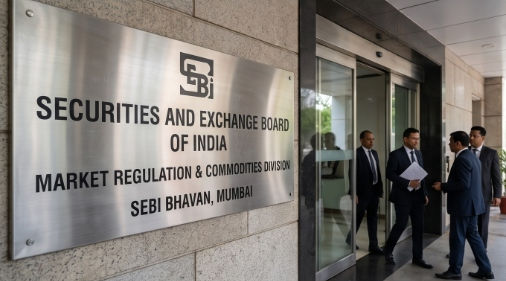
The introduction of the Closing Auction Session (CAS) by the Securities and Exchange Board of India (SEBI) on August 3, 2026, has triggered significant volatility in Sensex derivatives, prompting the regulator to initiate a review of its settlement methodology. Designed to improve price discovery in the cash market, the CAS mechanism has instead created a high-stakes environment for options traders, as the auction-discovered closing price now serves as the final settlement value for derivative contracts. This linkage has turned the final minutes of trading into a period of intense price swings, with traders reporting massive intraday fluctuations that directly impact the value of expiring options.
The most severe disruptions occurred during the monthly expiry on August 27 and the weekly expiry on September 3. On August 27, the Sensex experienced a rapid decline of over 2,000 points during the auction window, rattling market participants who rely on stable settlement prices. The following week, on September 3, the index saw a nearly 3,900-point two-way swing within approximately two minutes. These events have highlighted a structural vulnerability: the relatively thin liquidity in the cash market compared to the massive volume of derivatives, allowing large orders to disproportionately influence the index close and, by extension, the settlement of derivative contracts.
Regulatory Scrutiny and Market Surveillance
SEBI has acknowledged the growing concerns surrounding the CAS rollout, particularly regarding the potential for manipulation and the impact on derivative settlement. Following an incident on August 13, where surveillance teams identified three abnormal spikes in the indicative equilibrium price of the Sensex—including a 405-point rise in just 28 seconds—the regulator took decisive action. SEBI issued an interim order against Copthall Mauritius Investment, an entity associated with JPMorgan Chase, and Mansi Share and Stock Broking.
The regulator alleged that these entities engaged in manipulative trades during the CAS window. According to SEBI’s findings, Copthall Mauritius Investment acted as the dominant buyer during the auction, accounting for 86.6% of the gross buy value in Sensex constituents during the session. This enforcement action underscored the regulator's commitment to maintaining market integrity, even as it evaluates the broader systemic implications of the new closing mechanism.
The Mechanics of Expiry-Day Risk
Under the previous system, closing prices were determined through continuous trading until the market close. The new CAS framework mandates that continuous trading ends at 3:15 pm, followed by an auction window where the closing price is discovered. While this method is standard in many developed global markets, the Indian context presents unique challenges due to the sheer size of the derivatives market relative to the underlying cash market.
Analysts have noted that the BSE, which hosts the Sensex, holds a significantly larger share in derivatives volumes than in cash market volumes. When participation in the auction window is thin, even limited, large-scale orders in Sensex constituents can move the indicative index close. Because this price is then used to settle derivative contracts, a short burst of volatility in the final minutes can determine whether options expire worthless or suddenly gain significant value, as seen when some Sensex put premiums surged 400-500% during the September 3 auction window.
Trader Sentiment and Market Stability
Market participants have expressed widespread agitation regarding the unpredictability introduced by the CAS. The sharp late-session moves have been described by traders as a "test of nerves," with social media platforms becoming a hub for criticism of the new system. The volatility has forced traders to reconsider their expiry-day positioning, as the traditional reliance on stable closing prices has been disrupted by the auction-based discovery process.
Despite the turbulence, some observers point out that the system has functioned smoothly when order flow is balanced and market participation is broad, as evidenced by the relatively calm first expiry on August 6. This suggests that the extreme swings observed in late August and early September may be driven by a combination of expiry-day positioning and the current lack of depth in the auction window, rather than being an inherent, daily feature of the CAS mechanism itself.
Path Toward Reform and Future Milestones
In response to the feedback from market participants and the observed volatility, SEBI has confirmed that it is reviewing the methodology for determining settlement prices for derivative contracts. The regulator explicitly noted that a significant portion of the feedback it has received relates to the fact that derivative settlement prices are currently tied to the CAS-discovered closing price.
SEBI is expected to release a consultation paper within the coming week to address these concerns and explore potential adjustments to the settlement framework. This move is seen as a critical step in balancing the goal of improved price discovery with the need for market stability. As the industry awaits the regulator's proposals, the focus remains on whether the current auction structure can be refined to prevent the extreme volatility that has characterized the first month of its implementation.