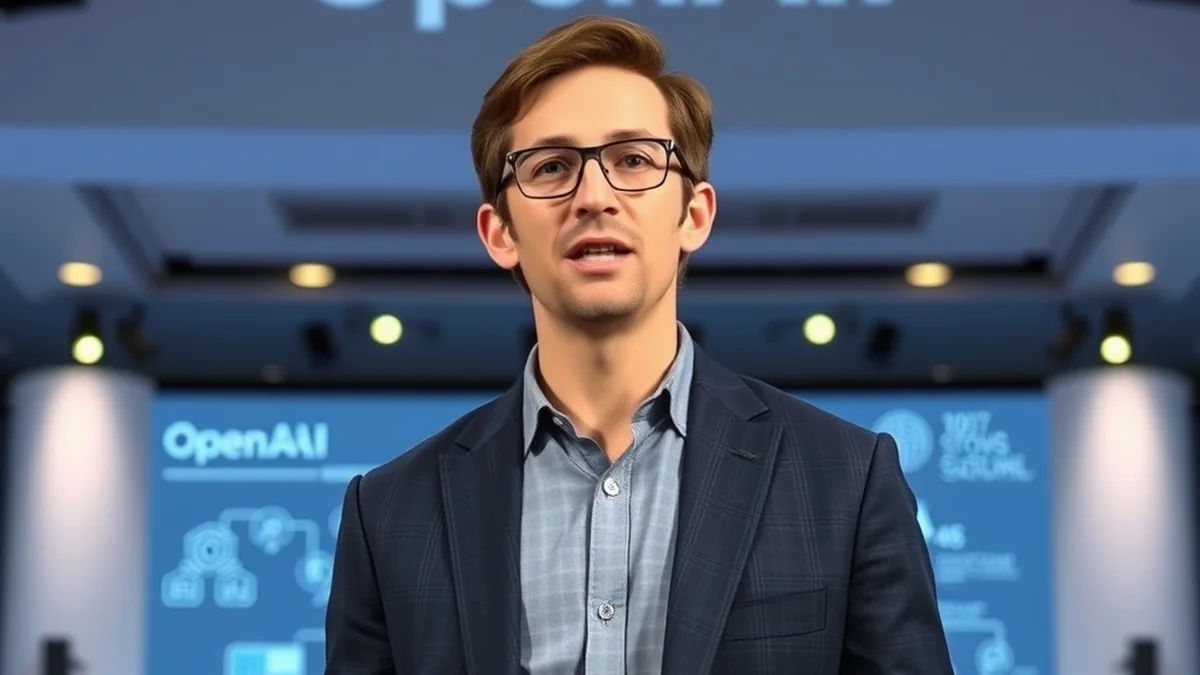
OpenAI chief executive Sam Altman publicly apologized for what he characterized as a messy rollout of the company's new frontier model, GPT-6 Astra, after paying subscribers found themselves locked out of the system. The launch stumble arrived just hours after OpenAI positioned the model as a generational leap and the opening chapter of the AGI era during its September 3, 2026 debut.
Under the initial release schedule, OpenAI restricted access to a narrow set of organizations, specifically prioritizing entities operating within its Daybreak cybersecurity platform. This staged rollout meant that users on Plus, Pro, Business, and Enterprise plans, who expected immediate access, were left staring at loading screens. Altman took to X to acknowledge the friction, writing in a post that "when we screw up, we try to make it right."
Staged Deployment Stumbles and Access Restrictions
The decision to prioritize organizational testing over individual subscription tiers triggered an immediate wave of user complaints across social media platforms. OpenAI staff members stepped in to manage the backlash, with Thibault Sottiaux, a lead on the Codex software engineering team, announcing a compensation framework for affected accounts. The company instituted a policy granting one banked reset for every day a paid subscriber lacks access to Astra.
OpenAI defended the cautious deployment structure by pointing to rigorous safety evaluations under its Preparedness Framework. The company disclosed that Astra is its first model to meet the Critical cybersecurity capability threshold, meaning it can independently uncover unknown security flaws and design exploits across well-protected systems without step-by-step human intervention.
Critical Cybersecurity Capabilities and Safety Protocols
Before releasing Astra, OpenAI spent several weeks strengthening protections against cyber misuse, including a temporary two-week pause on frontier training runs following an internal security incident. Development resumed after new safety protocols were established on August 28, 2026. The publicly accessible version of the model deliberately refuses advanced tasks like generating proof-of-concept exploits, restricting its cybersecurity utility to secure code review and patching for authorized defenders.
To maintain ongoing oversight, OpenAI deployed automated production monitoring using classifiers designed to scrutinize the model's reasoning and actions for unauthorized behavior. Company safety evaluations indicated that Astra is significantly more likely than its predecessor, GPT-5.6 Sol, to respect explicit boundaries, though its advanced reasoning traces remain complex to monitor in real-time.
Enterprise Impact and Operational Trust
The launch difficulties present a delicate challenge for OpenAI as it courts enterprise clients who demand absolute predictability alongside cutting-edge intelligence. Business and Enterprise tier customers often build critical internal workflows around announced release windows, meaning delayed deployment schedules can disrupt commercial planning and erode operational trust.
In a market defined by aggressive competition from tech giants like Google and Meta, software reliability carries immense weight. While underlying model capabilities remain a primary selling point, seamless infrastructure deployment and predictable access schedules are becoming decisive factors for corporate buyers weighing multi-year AI commitments.
Looking Toward a Weekend Expansion
OpenAI has not provided a fixed calendar date for the broader rollout of Astra to standard subscription tiers, though leadership expressed cautious optimism regarding weekend availability. Responding to user inquiries on X, Altman noted that he was hopeful users could access the model over the weekend of September 5–6, 2026, while explicitly stopping short of a definitive promise.
As the company works through its infrastructure bottlenecks, the immediate focus remains on expanding availability to Pro subscribers and API developers. Whether the rollout issues remain a temporary launch-day footnote or develop into a broader test of operational execution depends on how quickly OpenAI normalizes full access across its paid ecosystem.