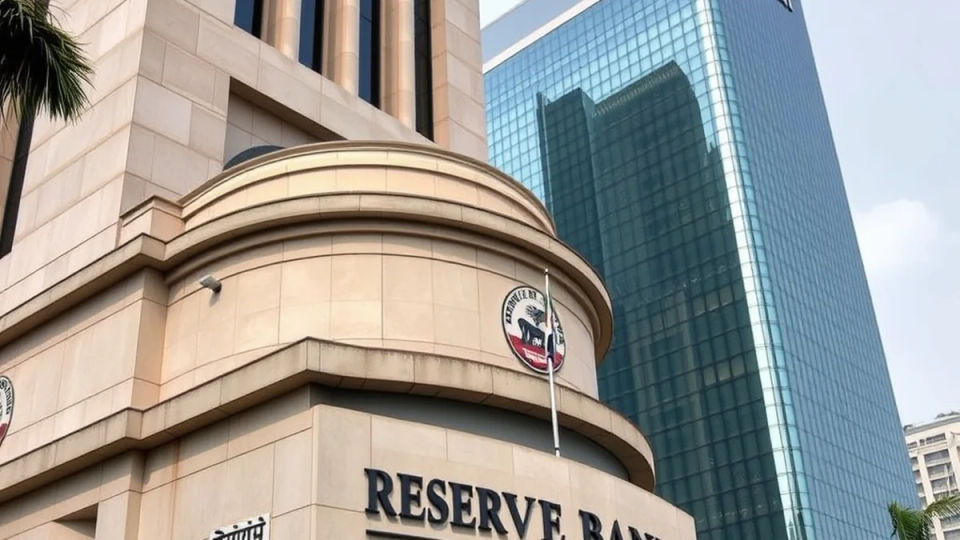
The Reserve Bank of India instructed major commercial lenders to implement a standardized compliance checklist for corporate overseas investments. The enhanced supervisory scrutiny applies to outward direct investment proposals exceeding one billion dollars or surpassing four times the net worth of the investing firm. While central bank authorities avoided establishing rigid capital ceilings, the detailed disclosures demand rigorous justification for cross-border capital transfers. Lending institutions must formally question corporate borrowers regarding why an offshore acquisition is preferred over a domestic Indian asset. Financial institutions must confirm whether the prospective offshore vehicle functions as an active operating company or a holding entity.
The banking regulator categorically mandated that commercial lenders cannot passively rely on third-party valuation certificates for offshore transactions. Bank appraisal teams must independently verify acquisition pricing to determine whether acquisition premiums significantly exceed intrinsic asset value. In structured equity swap transactions, financial institutions are required to demonstrate that share exchange ratios are independently defensible. Transactions involving related-party corporate entities or structures transferring enterprise value outside Indian borders face heightened evidentiary standards. Legal experts noted that the comprehensive reporting obligations place greater legal responsibility on banks to independently audit commercial investment viability.
Outward direct investment flows from Indian corporations expanded dramatically, exceeding thirty billion dollars in fiscal year 2026. Total annual outbound capital remittances nearly tripled compared to eleven billion dollars recorded five fiscal years earlier. The surge in outward corporate remittances occurred alongside sustained foreign portfolio investment outflows and persistent pressure on the Indian rupee. In estimating macroeconomic benefits to the domestic economy, banks must evaluate projected export growth, technology transfers, and inbound dividend remittances. Where parent corporations provide sovereign guarantees to reduce offshore subsidiary borrowing costs, lenders must evaluate corporate default probabilities.
The central bank introduced targeted foreign exchange stabilization mechanisms, including establishing a dedicated dollar facility for state-run oil refiners. Commercial banks face heightened liquidity costs under a newly mandated twenty percent foreign exchange risk reserve applied to currency derivative positions. Importers encounter higher commercial forward contract pricing as financial institutions pass along elevated capital holding expenses. The central bank also raised its benchmark policy repo rate by twenty-five basis points to 5.50 percent under a calibrated monetary tightening stance. These synchronized regulatory interventions aim to curb speculative dollar demand while balancing broader financial market borrowing costs across the economy.
Reporting describes RBI asking major banks for a more detailed standardised checklist when corporate clients plan very large overseas direct investments. Enhanced review of transaction rationale, valuation and funding sources is different from an across-the-board ban on legitimate overseas acquisitions. The reported one-billion-dollar threshold relates to particularly large deals; smaller transactions still have to satisfy applicable foreign-exchange rules and documentation requirements.
Large outward investments create demand for foreign currency, although their timing and financing differ: some are funded from overseas subsidiaries, debt or staged payments rather than immediate purchases of dollars in India's domestic market. A central bank can seek better information to detect unusual risks without formally changing the policy rate or outlawing capital movements. Businesses need to know whether the checklist is a supervisory instruction, a published regulation or an informal reporting request. The best follow-up would identify any RBI circular, effective date and required fields; until then, do not portray reporting on supervisory practice as a newly enacted statutory prohibition.
