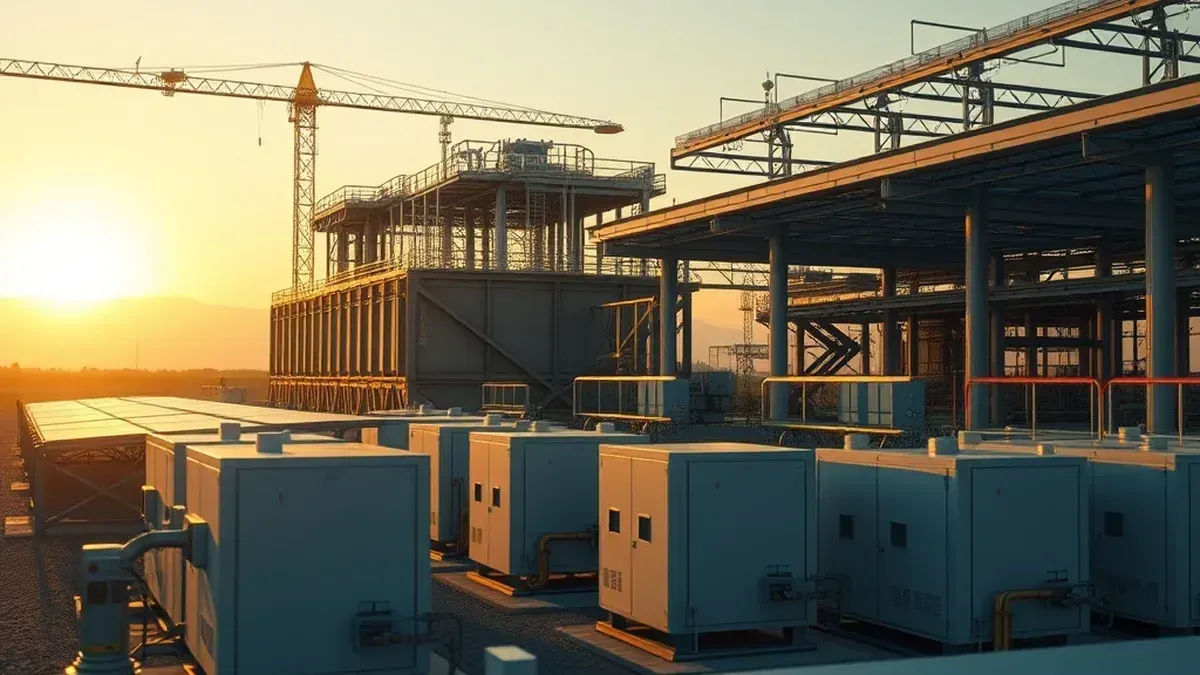
Fitch Ratings has officially removed Qatar from its "Rating Watch Negative" list, a move that signals a stabilization in the assessment of the nation's critical energy infrastructure. The global ratings agency, which maintains Qatar’s sovereign credit rating at AA, announced the decision on Friday, citing a marked reduction in risks to the country’s liquefied natural gas (LNG) production facilities since March. This development marks a significant shift in the agency's outlook on the operational security of Qatar's energy sector, which has been under intense scrutiny since the onset of the US-Israel war on Iran six months ago.
Despite the removal from the negative watch list, Fitch has opted to retain a negative outlook on Qatar’s sovereign rating. The agency’s decision reflects the persistent, broader geopolitical instability in the region, specifically regarding the security of maritime transit routes. The Strait of Hormuz, a vital artery for global energy supplies, remains a focal point of concern for international observers and credit analysts alike. The agency noted that the long-term economic and credit implications of the ongoing conflict remain difficult to quantify with precision at this stage.
Easing Risks to LNG Infrastructure
The decision to remove Qatar from the "Rating Watch Negative" list is primarily driven by the stabilization of the country's energy production capabilities. Since March, the immediate physical threats to Qatar’s massive LNG facilities have subsided, allowing for more consistent operational output. These facilities are central to Qatar’s status as one of the world’s leading gas exporters, and their vulnerability had previously prompted the ratings agency to place the nation under heightened surveillance.
By mitigating the immediate risks of facility damage, Qatar has demonstrated a level of operational resilience that Fitch deemed sufficient to warrant the removal of the watch status. This improvement in the physical security of energy assets provides a clearer picture of the country’s ability to maintain production levels despite the regional volatility. However, the agency’s statement emphasized that while the physical risks have decreased, the overall credit profile remains subject to the wider, unpredictable consequences of the ongoing regional conflict.
Persistent Geopolitical Uncertainty
While the physical security of production sites has improved, the logistical challenges of exporting that energy remain a significant concern for international credit agencies. Fitch explicitly cited the ongoing risks surrounding the movement of gas exports through the blockaded Strait of Hormuz as the primary reason for maintaining a negative outlook on Qatar’s sovereign rating. The blockade continues to pose a threat to the reliable flow of LNG to global markets, creating a layer of uncertainty that prevents a full upgrade or a stable outlook at this time.
In its official statement, the agency noted, "The impact of the war on the credit profile will take longer to discern." This cautious stance reflects the complexity of the current geopolitical environment, where energy exports are inextricably linked to the security of maritime corridors. For Qatar, the challenge lies in balancing its role as a major energy supplier with the reality of operating in a region where transit routes are frequently compromised by military tensions and blockades.
Resilience of the Sovereign Credit Profile
The affirmation of Qatar’s AA sovereign rating underscores the country’s underlying financial strength, which has served as a buffer against the economic shocks of the last six months. Earlier this year, both S&P and Moody’s also affirmed Qatar’s ratings, pointing to the nation’s substantial fiscal capacity as a key factor in mitigating the economic impact of the war. This financial cushion has allowed the state to absorb potential losses and maintain stability even as export disruptions and shortages have affected the energy sector.
Analysts have frequently highlighted that Qatar’s ability to weather the current crisis is largely due to its significant reserves and prudent fiscal management. By maintaining a high sovereign rating, Qatar continues to signal to international investors that its economic foundations remain robust despite the external pressures of the conflict. The alignment of the major credit agencies on this assessment suggests a consensus that the country’s fiscal resources are sufficient to navigate the current period of regional instability.
Future Outlook and Monitoring
Looking ahead, the trajectory of Qatar’s sovereign rating will depend heavily on the evolution of the conflict and the security of the Strait of Hormuz. Fitch has indicated that it will continue to monitor the situation closely, with the negative outlook serving as a reminder that the risks have not entirely dissipated. The agency’s decision to remove the watch status is a positive step, but it does not signal an end to the cautious approach adopted by international financial institutions.
Unresolved questions remain regarding the duration of the war and the potential for further escalation that could impact energy transit. As the situation develops, the ability of Qatar to secure its export routes and maintain its production levels will be critical factors in future rating reviews. For now, the market will likely view the removal from the watch list as a stabilization of the immediate credit risk, while remaining wary of the broader geopolitical headwinds that continue to cloud the regional economic landscape.