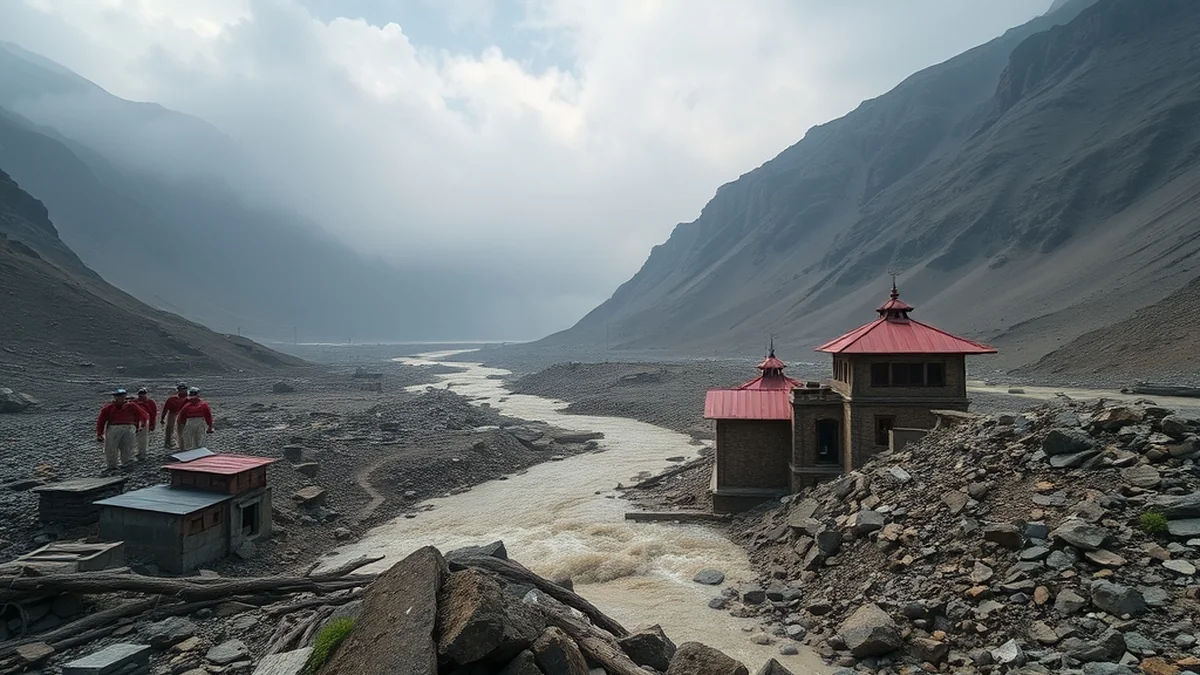
Families of American nationals missing in the wake of catastrophic flash floods in Nepal have formally petitioned U.S. Secretary of State Marco Rubio to significantly expand rescue operations. The appeal, detailed in a letter dated August 29, highlights the plight of at least 90 U.S. citizens who remain unaccounted for following the disaster that struck northern and central Nepal on August 26. The letter, signed by relatives and friends of 57 missing individuals, expresses deep frustration with the current level of U.S. government support.
As the death toll from the floods climbs to 1,282, with thousands still missing, the families are calling for immediate, high-level intervention. They have specifically requested the deployment of high-altitude search equipment, advanced satellite imagery, and the establishment of emergency connectivity via Starlink. The families argue that the current response has been insufficient, noting that they have struggled to receive updates or assistance from State Department channels since the tragedy began.
Urgent Call for Enhanced Search Capabilities
The families of the missing Americans have outlined a series of specific demands to bolster the search and rescue efforts. Beyond the deployment of specialized high-altitude aircraft and advanced search technology, they are urging the State Department to facilitate direct coordination between U.S. consulates and the relevant ministries in Nepal. The letter emphasizes that the missing individuals were primarily on a pilgrimage to Mount Kailash, a route that traverses the Rasuwa district and crosses into Tibet at Gyirong, complicating the search across international borders.
"We want all of them found. We write as Americans because we expected more from our own government for the Americans among them," the family members stated in their correspondence. The group is also seeking the deployment of dedicated urban search and rescue teams, alongside scaled-up funding to ensure that operations can continue in the rugged, flood-affected terrain. The families have expressed concern that the lack of visible U.S. presence on the ground has hindered the search for their loved ones.
Diplomatic Coordination and International Cooperation
A central component of the families' request is for the U.S. government to leverage its diplomatic channels to secure information and access. The letter explicitly calls on Secretary Rubio to coordinate rescue efforts with other nations whose citizens were part of the same tour groups, including Australia, the United Kingdom, India, and Singapore. The families believe that a unified international approach is essential to navigating the complex logistical and political challenges of the search, particularly regarding access to areas near the Tibetan border.
Ajay Bhutoria, a former White House advisor and Indian-American community leader, underscored the necessity of this approach, stating, "In moments of crisis, swift unity and action are our strongest tools." By seeking consular access and information from China, the families hope to bridge the gap in communication that has left them without news of their relatives for over a week. The request for international cooperation reflects the multi-national composition of the tour groups caught in the path of the floods.
The Scale of the Humanitarian Crisis
The flash floods have caused widespread devastation across Nepal, with the death toll reaching 1,282 as of Friday. Search and rescue teams are currently working to locate more than 4,700 people who remain missing. The scale of the disaster has overwhelmed local resources, and the economic impact is estimated to be at least $2.56 billion in property and infrastructure damage. The situation remains fluid, with rescue operations hampered by the destruction of critical infrastructure and the remote nature of the affected regions.
Engineers and local volunteers have been utilizing informal communication networks, such as WhatsApp groups, to guide search efforts in areas like buried hydropower tunnels, where survivors may still be trapped. However, the families of the missing Americans argue that these local efforts, while heroic, require the backing of advanced international resources to be truly effective. The ongoing uncertainty has left families in a state of anguish, with many reporting that they have spent days attempting to reach official contacts without success.
Unresolved Questions and Future Milestones
As the search enters its second week, the primary concern remains the lack of concrete information regarding the status of the missing U.S. nationals. The families are awaiting a formal response from the State Department regarding their specific requests for equipment and diplomatic coordination. The effectiveness of the search will likely depend on whether the U.S. government chooses to escalate its involvement and whether it can successfully coordinate with regional partners to access the most remote areas of the disaster zone.
Questions persist regarding the timeline for potential recovery operations and the level of cooperation that can be expected from regional authorities in the coming days. For the families, the immediate priority is the deployment of the requested assets, which they believe could be the difference between life and death for those still missing. The situation serves as a stark reminder of the logistical difficulties inherent in international disaster response and the growing pressure on the U.S. government to provide tangible support to its citizens in crisis.