
Air India H1 Losses Narrow by Rs 2,000 Crore to Rs 10,837 Crore
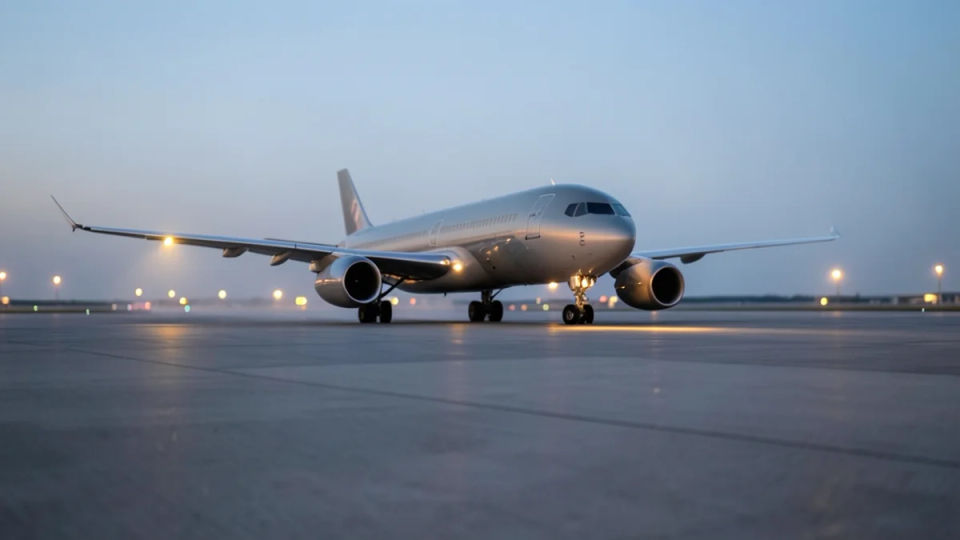
Tata Group-owned Air India narrowed its financial losses by an estimated 2,000 crore rupees during the first half of fiscal year 2026-27, according to financial disclosures released by key minority stakeholder Singapore Airlines. Singapore Airlines' allocated share of net losses from Air India decreased to 361.7 million Singapore dollars, or roughly 2,720 crore rupees, in the initial six months, down from 429.5 million Singapore dollars, representing 3,229 crore rupees, recorded in the prior-year period. Based on Singapore Airlines' 25.1% equity interest in the Indian flag carrier, the results imply that Air India's aggregate half-year losses decreased to approximately 10,837 crore rupees, down from 12,850 crore rupees twelve months earlier. The reduction of 67.8 million Singapore dollars in minority loss absorption offers some relief to Air India's financial backers.
Turnaround Headwinds and Partner Financial Results
The improvement follows a challenging prior fiscal year in which Air India and low-cost subsidiary Air India Express posted a consolidated net loss of 22,238 crore rupees in FY2025-26. That full-year deficit expanded more than two-fold from the 10,859 crore rupee shortfall registered during the preceding financial cycle, underscoring the financial challenges confronting the airline's turnaround. The narrowing of associate losses arrived as Singapore Airlines reported a 43.9% contraction in its own first-half group net profit to 134 million Singapore dollars, equivalent to approximately 1,008 crore rupees. Singapore Airlines' profit fell amid a sharp increase in jet fuel costs. By early November 2026, Air India received approximately 10 of the 80 widebody aircraft ordered from Airbus and Boeing, operating an active long-haul fleet of 61 widebody aircraft, according to Aviation Direct. In the financial year ended March 2026, Singapore Airlines absorbed a S$945.2 million share of losses from associate company Air India, according to The Economic Times. Air India is considering route network adjustments including shifting long-haul international flights from Delhi to Mumbai and developing Bengaluru as a third hub to get around airspace restrictions in neighbouring Pakistan, according to Aviation Direct.
Executive Transition and Unit Cost Rationalization
Cost management and operating efficiency have become dominant priorities following the appointment of new Chief Executive Officer and Managing Director Tewolde Gebremariam, who assumed leadership on October 1. Addressing attendees during the Aviation India and South Asia Summit on November 3, Gebremariam explained that carrier executives are scrutinizing unit expenses across all operating verticals. Air India established an internal multi-functional cost-savings team dedicated to auditing company expenditures and securing structural efficiencies. In an internal communication circulated to airline staff in October, the chief executive called for an institutional culture anchored on frugality, personal accountability, and deliberate decision-making.
Group Integration and Long-Term Partnership Alignment
Management is actively deepening operational integration between full-service Air India and budget carrier Air India Express through the consolidation of selected corporate departments. Singapore Airlines noted in an official statement that both partners recognize that an airline transformation of this magnitude requires extended execution time. The joint stakeholders affirmed continued close collaboration to support Air India's journey toward profitable growth by strengthening structural cost efficiencies, unlocking subsidiary synergies, and elevating the passenger customer proposition.