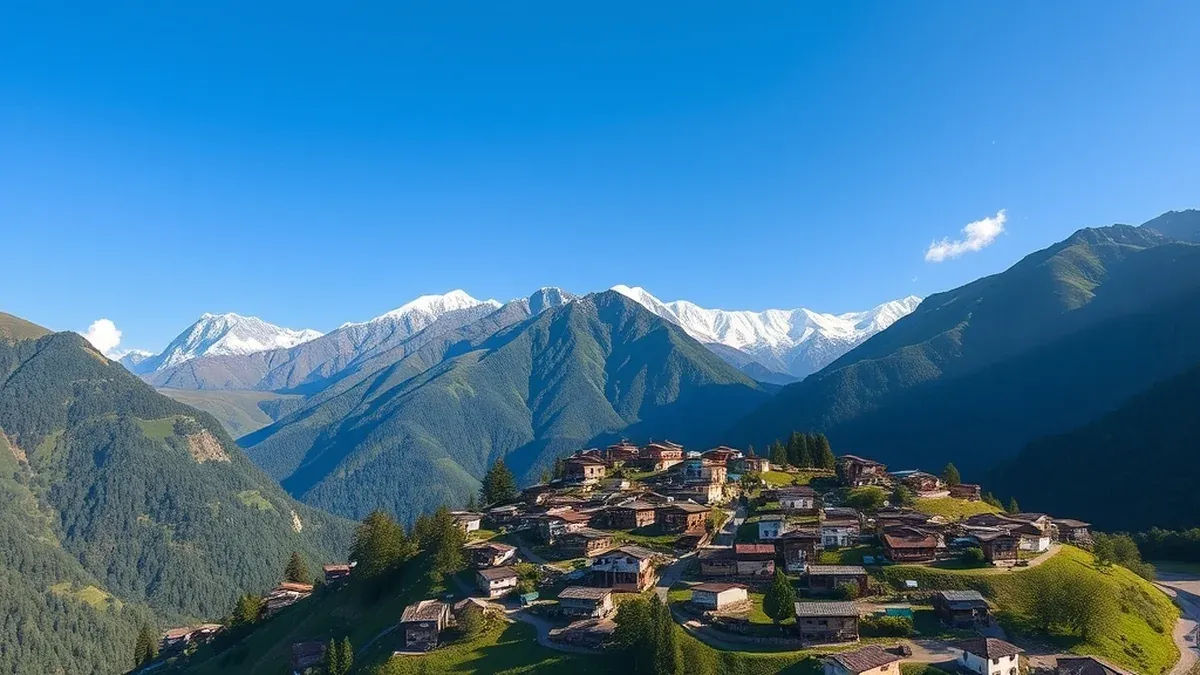
Hundreds of farmers and residents across Karnataka's Malnad region have launched active protests following the Union government's issuance of the seventh draft notification designating vast portions of the Western Ghats as an Ecologically Sensitive Area (ESA). The administrative move, rooted in the recommendations of the Kasturirangan report, was published on July 27, 2026, granting a 60-day window for public objections and stakeholder feedback.
The unfolding resistance highlights deep local anxieties over potential restrictions on land use, farming activities, and rural infrastructure development within the protected boundaries. Demonstrators are pressing state and central authorities to execute meticulous physical ground surveys to permanently exclude populated human settlements and cultivated agricultural lands from the proposed ecological demarcations.
Protests Surge Across Shivamogga and Surrounding Districts
The opposition to the latest draft notification intensified on August 29, 2026, when hundreds of farmers from the Hosanagara taluk staged a massive protest march spanning nine kilometres. Participants walked from the Ganesha temple at Karanagiri to Hosanagara town, voicing sharp opposition to the ecological restrictions. Local farmer associations and community leaders have announced plans for additional coordinated demonstrations across Shivamogga and neighboring districts to maintain political pressure on administrative bodies.
The central grievance centers on the fear of livelihood displacement and stringent regulatory oversight under the ESA framework. Farmers argue that blanket ecological classifications fail to account for generations of continuous habitation and agrarian activity, threatening the socioeconomic stability of rural communities nestled within the Malnad landscape.
Historical Roots and Decades-Long Policy Tensions
The current wave of unease is the latest chapter in a policy debate that spans nearly four decades, tracing its lineage back to early environmental movements aimed at preserving the biodiversity of the Western Ghats. Successive panels, including the Gadgil committee and subsequent Kasturirangan high-level working group, have attempted to balance conservation imperatives with regional developmental needs.
However, successive drafts have repeatedly triggered friction between environmental conservation goals and local inhabitants. Residents contend that top-down zoning proposals frequently overlook ground-level realities, leading to persistent friction between state machinery and agrarian populations who rely directly on the regional ecosystem for their sustenance.
Demand for Comprehensive Physical Ground Surveys
At the core of the ongoing agitation is a firm demand for transparent, on-the-ground demarcation rather than satellite-based or aerial mapping. Protesters and local leaders argue that bureaucratic mapping exercises routinely misclassify agricultural holdings, plantations, and residential pockets as pristine forest land.
State political leaders have acknowledged the urgency of the brewing crisis, with the Karnataka government announcing plans to convene a dedicated three-day special legislative session. Lawmakers intend to deliberate extensively on the severe drought conditions affecting the state alongside the contentious implications of the Kasturirangan report recommendations.
Legislative Responses and Future Accountability
The upcoming special session is expected to provide a formal platform for elected representatives to formulate a unified state stance regarding the central draft notification. Regional stakeholders are demanding that the Karnataka government officially urge the Union Ministry of Environment, Forest and Climate Change to mandate physical verification before finalizing any ecological boundaries.
As the 60-day objection window approaches its conclusion, the administration faces mounting pressure to reconcile conservation mandates with the livelihood security of thousands of families inhabiting the Western Ghats. The outcome of the legislative session and the formal submission of state objections will determine whether the Union government accommodates demands for boundary revisions in future iterations of the notification.