
Tamil Nadu Seeks Supreme Court Review of Karthigai Deepam Order
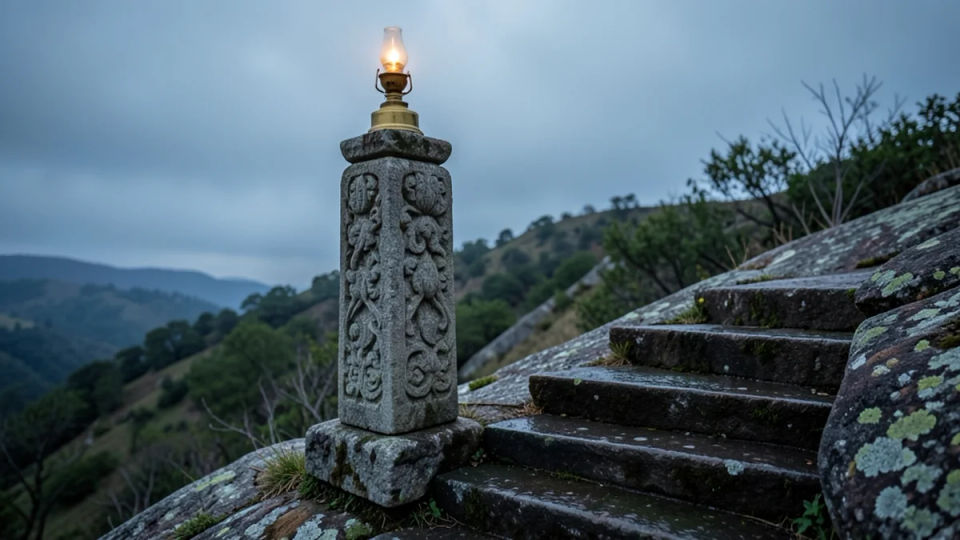
Tamil Nadu's Hindu Religious and Charitable Endowments (HR&CE) Department has filed a review petition in the Supreme Court against its November 20, 2026 interim order permitting the lighting of the Karthigai Deepam on a stone pillar called the deepathoon atop Thiruparankundram hill in Madurai on November 24. The plea, filed forty-eight hours before the festival ceremony, seeks an ex parte stay of the direction and an open-court hearing.
On November 20, a Supreme Court Bench of Justices Aravind Kumar and Vipul M Pancholi stayed the Madras High Court's January 6 findings on the nature of the pillar and the land where it stands. At the same time, the Bench permitted a temple-authorised team to light the lamp on November 24 as a limited one-time arrangement that would not serve as a precedent or recognise a vested right, while directing that worship at customary sites and lawful access to the nearby Sikandar Badusha Dargah continue undisturbed.
State's Legal and Statutory Arguments
In the review plea, the HR&CE Commissioner contended that the interim order gave the writ petitioners their requested 2026 relief without even a prima facie finding of a right to light the lamp at the pillar, even though appeals by the State and statutory authorities await a January 2027 hearing. The petition contended that the review would become infructuous once the ceremony takes place because a later order cannot undo it.
The State further argued that withholding permission at the pillar would leave the festival intact since the lamp can still be lit at its customary location near the Uchippillaiyar Temple. Allowing the ceremony near the dargah, the plea said, could disturb communal harmony and be viewed as vindicating the claim of custom despite the Court's clarification.
Citing the Tamil Nadu HR&CE Act, the Commissioner argued that Section 28(1) requires a temple trustee to administer the institution according to established usage, and Section 63(e) empowers the Joint Commissioner to determine such usage after examining evidence. The State also pointed to a 1996 Madras High Court ruling, saying the lamp was ordinarily to be lit near the Uchippillaiyar Temple under that order.
Background of Appeals and Political Reaction
The legal challenge began with a December 2025 directive by Madras High Court Justice GR Swaminathan ordering the Arulmigu Subramaniaswamy Temple Devasthanam to light the pillar lamp alongside the customary site, which a Division Bench upheld in January 2026. In 1923, a trial court adjudicating a 1920 civil suit filed by the Arulmigu Subramaniaswamy Temple Devasthanam ruled that most of the unoccupied hill and pilgrim path were temple property, while the topmost peak, mosque area, Nellithope area, and steps to the mosque were Muslim property, according to The Indian Express.
On Sunday, November 22, Bharatiya Janata Party (BJP) MP and spokesperson Sudhanshu Trivedi criticised the Tamilaga Vettri Kazhagam-led Tamil Nadu government headed by Chief Minister C Joseph Vijay, alleging it was refusing to implement the Supreme Court's judgment and demanding immediate compliance ahead of the scheduled November 24 lighting.
Background
No member of the general public may accompany the authorised team to the Deepathoon, and processions, public congregations, demonstrations, and slogan-raising are prohibited, according to The Times of India.
The Supreme Court directed the Madurai District Collector to file a compliance report within three days after the festival and allowed approaching the Court in case of exigency, according to LiveLaw.
The Madurai District Collector must act as nodal officer and settle the composition and number of the authorised team in consultation with the Temple Executive Officer, Archaeological Survey of India, and Madurai Commissioner of Police, while the Union of India shall facilitate CRPF deployment if required, according to Rediff.com (PTI).