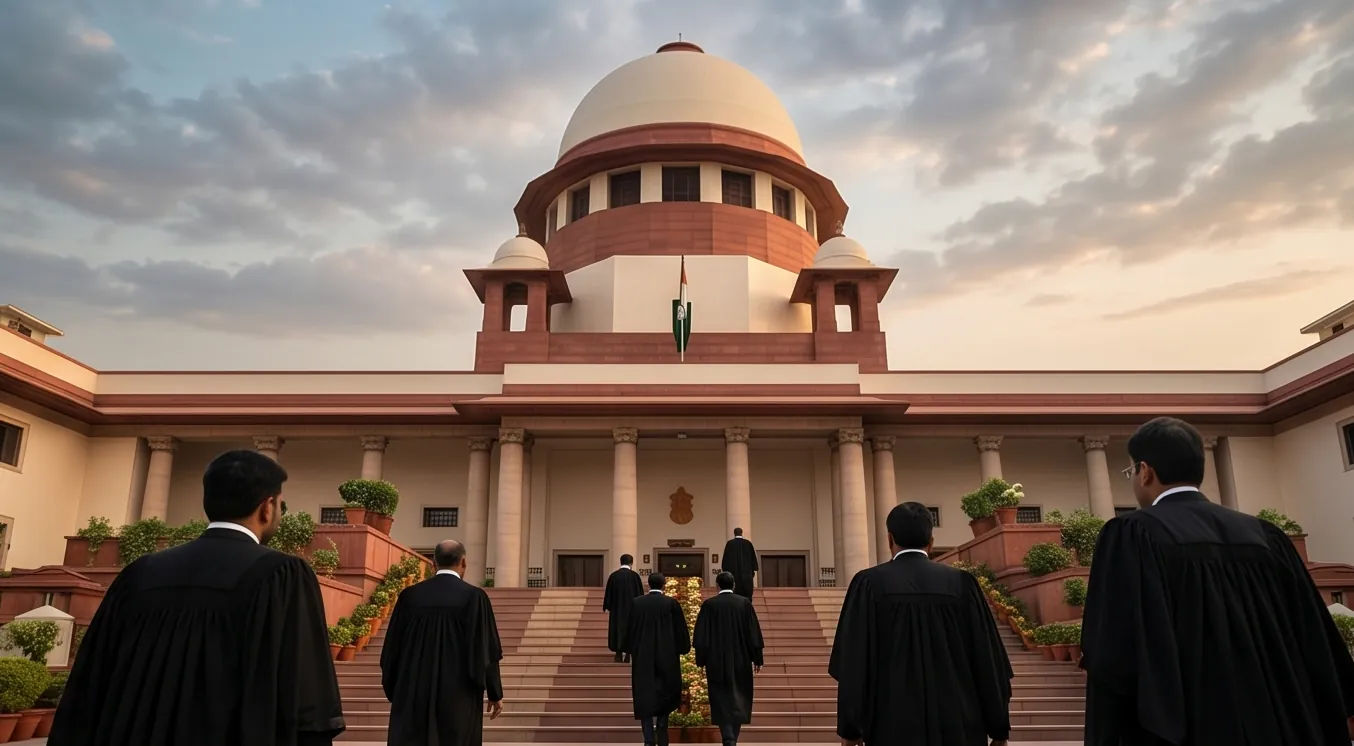
The Supreme Court on September 3, 2026, delivered a clear ruling declaring that the Bar Council of India and its state-level bodies possess no statutory authority to discipline or penalise law students. A bench led by Chief Justice Surya Kant, alongside Justices Joymalya Bagchi and V Mohana, asserted that disciplinary control over students remains strictly within the domain of their parent educational institutions. The apex court addressed the legal boundaries governing regulatory bodies in the context of recent controversies involving student protests at the NALSAR University of Law.
The judicial intervention stemmed from a writ petition filed by NALSAR alumni Mihira Sood and Abhishek Tiwari. The petitioners challenged aggressive directives issued on August 13 by BCI Chairman Manan Kumar Mishra, which had attempted to freeze the professional enrolment of NALSAR's graduating 2026 batch and order inquiries into student and faculty dissent. Although the BCI subsequently withdrew those controversial communications following public backlash, the bench insisted on establishing a definitive constitutional precedent regarding the limits of regulatory powers.
Limits of Statutory Authority Under the Advocates Act
During the proceedings, the bench dissected the provisions of the Advocates Act, 1961, which serves as the foundational statute creating the Bar Council of India. The court observed that the legislation contains no express or implied provisions empowering the BCI or any State Bar Council to police the conduct of individuals who have not yet graduated or registered as advocates. The bench underscored that statutory regulatory jurisdiction over a professional lawyer begins exclusively after formal enrolment upon completion of a recognized law degree.
Elaborating on this division of authority, the bench noted that internal discipline within a university campus is governed strictly by the institutional bylaws, regulations, and administrative mechanisms established by the parent academy. Senior advocate K Parameshwar, representing the petitioners, argued before the bench that the BCI's attempted actions threatened foundational constitutional freedoms, particularly freedom of speech and expression on university campuses. He emphasized that the dispute extended far beyond individual grievances to address institutional accountability for statutory regulators.
Defence and Arguments Presented by the Bar Council
BCI Chairman Manan Kumar Mishra appeared before the court as senior counsel and defended the council's position by highlighting the swift withdrawal of the contested August 13 communications. Mishra urged the bench to give the matter a quietus, stating that the regulatory body had resolved there was no further cause to pursue the punitive inquiry against the NALSAR graduating batch. He maintained that the council acted promptly to de-escalate tensions following discussions regarding the campus controversy.
Despite the BCI's withdrawal of the letters, the Supreme Court ruled that a formal judicial clarification was necessary to prevent future overreach. The bench formalized its interim protection, making absolute the order shielding NALSAR students and faculty from any retaliatory measures by the BCI or State Bar Councils. By formally disposing of the petition, the court formally invalidated the August 13 communications and any subsequent modified iterations as lacking any foundation in statutory law.
Background of the NALSAR Convocation Protest
The dispute originated from an intense campus mobilization at Hyderabad's NALSAR University of Law, where students and faculty voiced strong objections to the proposed participation of the Chief Justice of India as the chief guest for their convocation. The peaceful student campaign and subsequent administrative fallout prompted the BCI leadership to issue harsh directives targeting the academic community. These included orders to block state bar councils from enrolling the university's 2026 graduates, sparking widespread condemnation from legal scholars and civil liberties advocates.
The Supreme Court's definitive ruling arrives amidst a broader judicial focus on the governance structure of the legal regulator. In separate proceedings concerning the BCI, the apex court observed that Chairman Mishra's leadership position remains strictly pro tem until a newly constituted council successfully elects its permanent office-bearers. Furthermore, the court mandated that all future policy decisions undertaken by the council must actively involve consultations with the Attorney General and the Solicitor General to ensure administrative oversight.