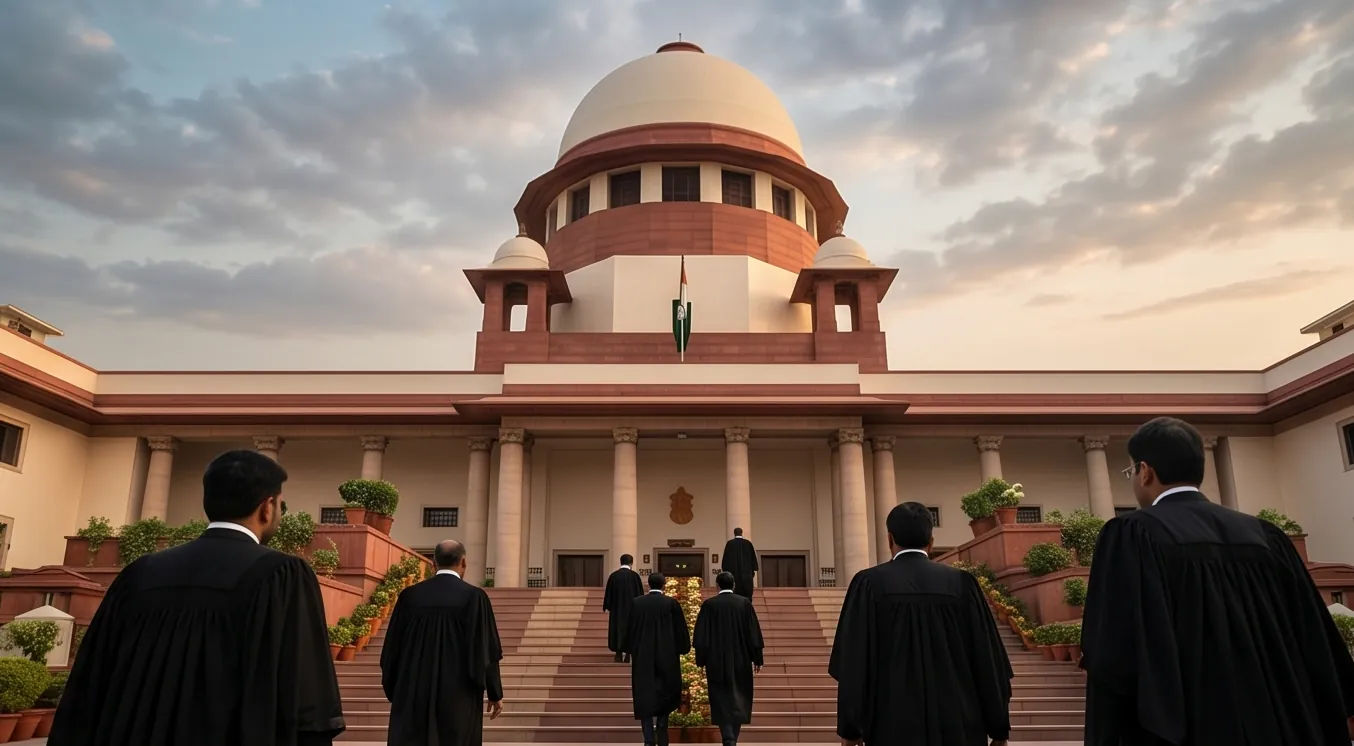
The Supreme Court of India on Wednesday, September 2, 2026, directed the Bar Council of India to consult the Attorney General and Solicitor General prior to finalizing any policy decisions. The order was issued by a three-judge bench comprising Chief Justice of India Surya Kant, Justice Joymalya Bagchi, and Justice V Mohana during a hearing on multiple petitions challenging the prolonged tenure of BCI Chairman Manan Kumar Mishra.
During the proceedings, the bench clarified that BCI Chairman Manan Kumar Mishra is currently serving in a pro-tem capacity. The court emphasized that his authority is strictly limited to day-to-day administrative functioning and does not extend to unfettered policy formulation as an elected office-bearer.
Judicial Observations and Attorney General Oversight
Justice Joymalya Bagchi addressed the BCI leadership directly during the courtroom exchange. Your term is co-terminus with the elections, Justice Bagchi observed, noting that the Attorney General and the Solicitor General serve as permanent ex-officio members of the BCI. The court mandated that these two senior law officers must be given prior notice and invited to participate in any decision-making process having a policy impact, stressing that the Attorney General is as much a member of the BCI as the chairperson.
Chief Justice Surya Kant added during the hearing that an April 2025 gazette notification, which petitioners allege extended Mishra's tenure until April 2030, might have become infructuous since Bar Council elections have already taken place. Petitioners contend that the extension violates BCI Rule 12(2), which explicitly stipulates a two-year cap on the chairman's tenure.
Contentions Raised by Petitioners
Senior advocate Madhavi Divan, representing the petitioners, presented multiple challenges against the current BCI leadership. According to the petitions filed by young lawyers, a January 9, 2025, resolution purported to extend the chairman tenure from three years to five years despite existing rules prescribing a two-year term. The petitioning lawyers also raised allegations concerning the formation of the BCI Pearl First Trust in 2020 and significant expenditures incurred on felicitations.
Responding to these contentions, the specific details regarding the BCI Pearl First Trust formation and its alleged tie-up with the Goa government for a university, as well as the exact nature and amounts of expenditures on felicitations, remain unverified allegations that have not been fully detailed in official records.
Comparative Context and Judicial Scrutiny
The Supreme Court intervention follows a recent pattern of judicial oversight regarding the regulatory body's administrative actions. The court's current scrutiny comes days after justices criticized the BCI handling of a controversy involving the 2026 graduating batch of NALSAR University of Law, where BCI Chairman Mishra initially directed state bar councils not to enrol protesting students before withdrawing the freeze and offering an apology.
Timeline for State Bar Council Reconstitution
To address the leadership and representation issues within the legal fraternity, the Supreme Court established a strict schedule for the reconstitution of State Bar Councils across the country. According to the court order, Chief Justices of High Courts are requested to complete the co-option of two women members within two weeks.
Following this co-option phase, State Bar Councils must formally notify their new composition within one week. Subsequently, the councils are required to elect their respective office-bearers and BCI representatives within a three-week window.
The Supreme Court is scheduled to review compliance with all issued directions on September 17, 2026.