
Edited by Editor-in-Chief, The Indus Pulse 15 Sept 2026, 09:16 PM 3 min readindia
Six Jurisdictions Sign Long-Pending Pact for Kishau Multi-Purpose Project to Boost Yamuna Flows
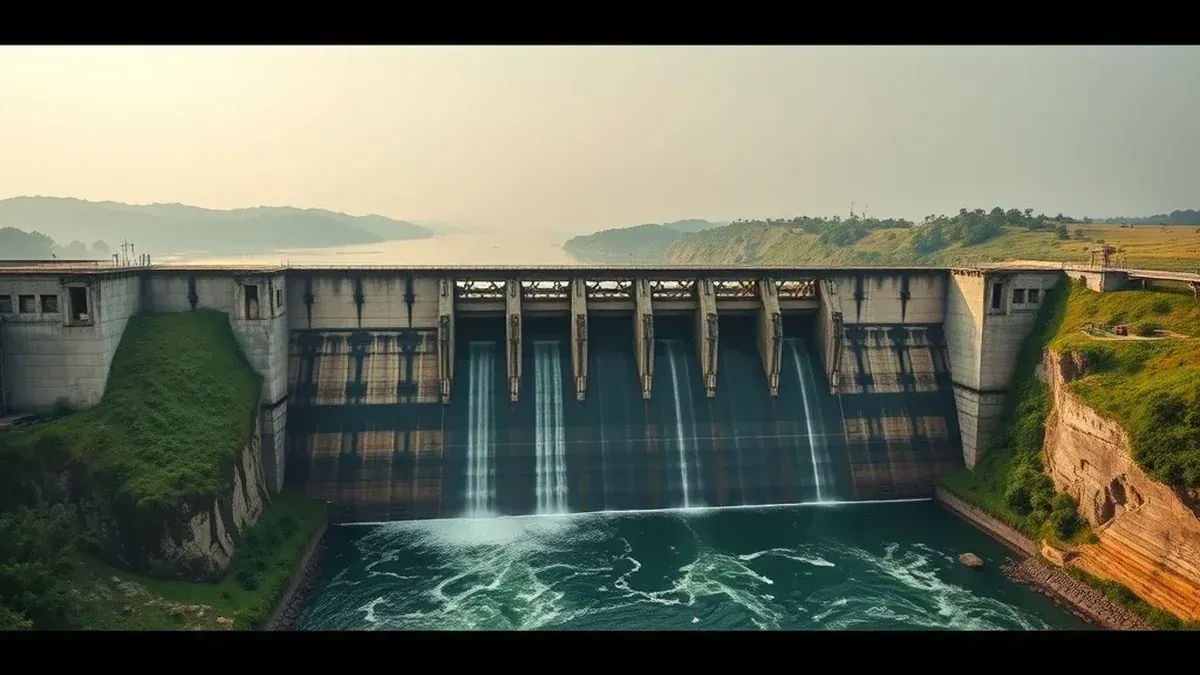
Six jurisdictions including the national capital territory of Delhi and five neighboring states formally signed an agreement on Tuesday for the long-pending Kishau Multi-Purpose Project, a major infrastructure initiative designed to regulate water availability across the Yamuna river basin. The pact brings together Uttar Pradesh, Uttarakhand, Himachal Pradesh, Rajasthan, Haryana, and Delhi under a cooperative framework aimed at augmenting drinking water supplies for Delhi while simultaneously boosting downstream river flows and environmental conservation.
The project centers on the construction of an approximately 232.6-metre-high concrete gravity dam across the Tons River, a major tributary of the Yamuna along the border of Himachal Pradesh and Uttarakhand. According to the administrative details outlined during the signing ceremony in New Delhi, the planned reservoir possesses a water storage capacity of 1,562 million cubic metres, generates 1,476 million units of clean hydroelectric power, and supplies irrigation water to roughly 97,000 hectares of land across the riparian states.
Financial Architecture and Central Funding
The financial burden of the high-altitude construction will be heavily subsidized by the central government, which has designated the project as a national initiative. Union Home Minister Amit Shah announced that the Centre will cover approximately 90 per cent of the total project cost, with the remaining 10 per cent divided among the participating state governments based on established basin-sharing frameworks dating back to 1994.
The funding structure addresses specific financial concerns previously raised by Uttarakhand regarding the fiscal pressure of large dam projects within its borders. During discussions leading up to the formalization, central authorities assured participating states that additional support mechanisms would be channeled through various federal welfare and infrastructure schemes to ease local fiscal obligations.
Environmental Flows and Yamuna Basin Integration
Addressing historical shortcomings in regional water management, federal officials emphasized that earlier basin allocations failed to reserve adequate water for the river itself. The Kishau reservoir is projected to introduce an estimated 25 per cent additional flow into the Yamuna system, a measure explicitly linked to ongoing clean-up operations in the national capital and the broader objective of revitalizing the Yamuna before its confluence with the Ganga at Prayagraj.
The formalization follows a series of bilateral and multi-state negotiations coordinated by the Ministry of Jal Shakti. Union Jal Shakti Minister CR Patil and chief ministers Yogi Adityanath of Uttar Pradesh, Pushkar Singh Dhami of Uttarakhand, Sukhvinder Singh Sukhu of Himachal Pradesh, Bhajan Lal Sharma of Rajasthan, Rekha Gupta of Delhi, and Nayab Singh Saini of Haryana participated in the signing proceedings alongside senior bureaucrats.
Precedent Water Dispute Resolutions and Construction Timeline
The agreement marks the latest in a sequence of interstate water pacts brokered through federal forums such as the Zonal Councils between 2018 and 2026. Government records cite several preceding milestones, including the resolution of the Lakhwar and Shahpur Kandi dam disputes in August 2018, the Renukaji Multipurpose Dam Project accord in 2019, and the Ken-Betwa link pact between Madhya Pradesh and Uttar Pradesh in 2021.
The Kishau Multi-Purpose Project, initially approved by the Ministry of Environment and Forests in 2018, is currently scheduled for full completion by 2028. Construction was originally expected to begin in 2015 but faced prolonged delays due to negotiations over water-sharing and environmental clearances across stakeholder states.
The Indus Pulse is committed to accuracy and transparency.