
RBI Puts Existing ATM and Card Rules Into New Directions, Including the Rs 23 Fee Cap
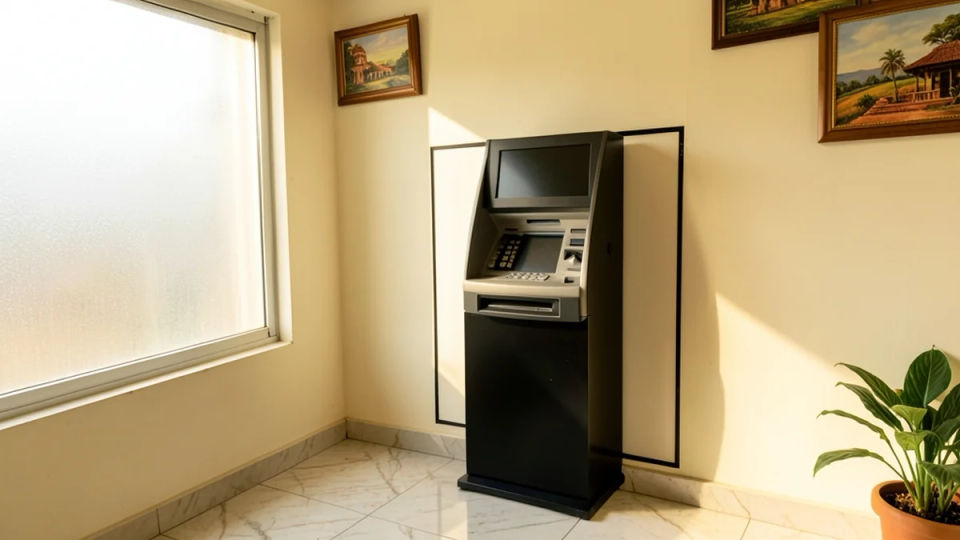
The Reserve Bank of India issued a consolidated Master Direction on 27 November 2026 for cash withdrawals at ATMs and shop card terminals, saying it was meant to harmonise instructions already in place. A second set of directions, on card payments, merges 25 earlier circulars. A third does the same for white label ATMs, taking in guidelines first issued on 20 June 2012. White label machines are cash machines that non-bank companies set up, own and operate. The cash withdrawal Direction took effect immediately.
Main Customer Rules Are Not New
Banks were advised in August 2014 to warn customers about the number of free ATM transactions they had already used in a month. The ceiling of Rs 23 for each transaction beyond the free limit has applied since May 2025. Explicit customer consent for registering a card for tokenisation was already required under a circular of January 2019. A September 2021 circular required card issuers to seek consent again when a renewed or replaced card is linked to merchants where it had been registered. The rule that new and reissued cards start with only domestic ATM and shop terminal use switched on comes from January 2020.
Free ATM Limits and Charges
Savings account holders get at least five free transactions a month at their own bank's ATMs, counting both financial and non-financial ones. At other banks' ATMs the minimum is three a month in metro centres and five elsewhere, with an overall cap of five for people who use both. The metro centres are Mumbai, New Delhi, Chennai, Kolkata, Bengaluru and Hyderabad. Beyond the free allowance, a bank may charge up to Rs 23 per transaction, plus applicable taxes, under a policy approved by its board. Cash withdrawals at another bank's ATM are limited to Rs 10,000 per transaction. Transactions that fail for technical reasons such as no cash in the machine, and declines wholly due to the bank or service provider, including invalid PIN cases, do not count as transactions for the customer. No charge may be levied for those failed or declined attempts. Banks must also have a way to tell customers how many free transactions they have used and what later ones may cost.
Cash at Shops and White Label Machines
Cash can also be drawn at shop card terminals, known as point of sale or PoS terminals, using a debit card, UPI or a prepaid instrument with full identity checks. The limit there is Rs 2,000 per transaction and Rs 10,000 a month. Any customer charge for it cannot exceed 1% of the amount withdrawn. The facility is open whether or not the cardholder buys anything. White label operators need a net worth of at least Rs 100 crore at all times. They must keep a deployment ratio of at least 1:2:3 across metro or urban, semi-urban and rural areas. White label operators are not permitted to take over ATMs run by banks. Their machines may not charge bank customers directly.
Card Tokens, Controls and Charges
Tokenisation replaces the actual card number with a substitute code, called a token, for processing payments. Registering a card for it needs explicit consent, authenticated by the card issuer through an extra step, and that consent cannot come from pre-selected or default options. Cardholders can set per-transaction and daily limits for tokenised payments. No charge can be recovered from them for using the service. Contactless card payments of up to Rs 5,000 at shops are exempt from extra authentication. No one in the payment chain other than card issuers and card networks may store actual card data for online and other card-not-present payments. Any such data stored earlier has to be purged. Separately, all entities involved in providing tokenisation services must be audited at least once a year by auditors empanelled with CERT-In, India's computer emergency response team. Shops pay a fee on debit card sales, called the merchant discount rate, and for terminal and online payments it is capped at 0.40% for small merchants and 0.90% for others, where small means a previous financial year turnover of up to Rs 20 lakh. For QR code acceptance, the two caps are 0.30% and 0.80% respectively. The fee is also limited to Rs 200 a transaction for small merchants and Rs 1,000 for other merchants. RBI also advises payment firms to ensure that merchants do not pass this fee on to customers paying by debit card.
Sources & Citations
- Reserve Bank of India, cash withdrawal Directions
- Reserve Bank of India, card payment Directions
- Reserve Bank of India, white label ATM Directions
- Reserve Bank of India, August 2014 circular
- Reserve Bank of India, ATM charges circular
- Reserve Bank of India, January 2019 circular
- Reserve Bank of India, September 2021 circular
- Reserve Bank of India, January 2020 circular
- LiveMint
- Rediff