Rajasthan Civic Polls Conclude With 70.68% Turnout | The Indus Pulse
By The Indus Pulse India Desk 12 Sept 2026, 10:03 AM 5 min readindia
Rajasthan Civic Polls Conclude With 70.68% Turnout Amid Reports of Violence
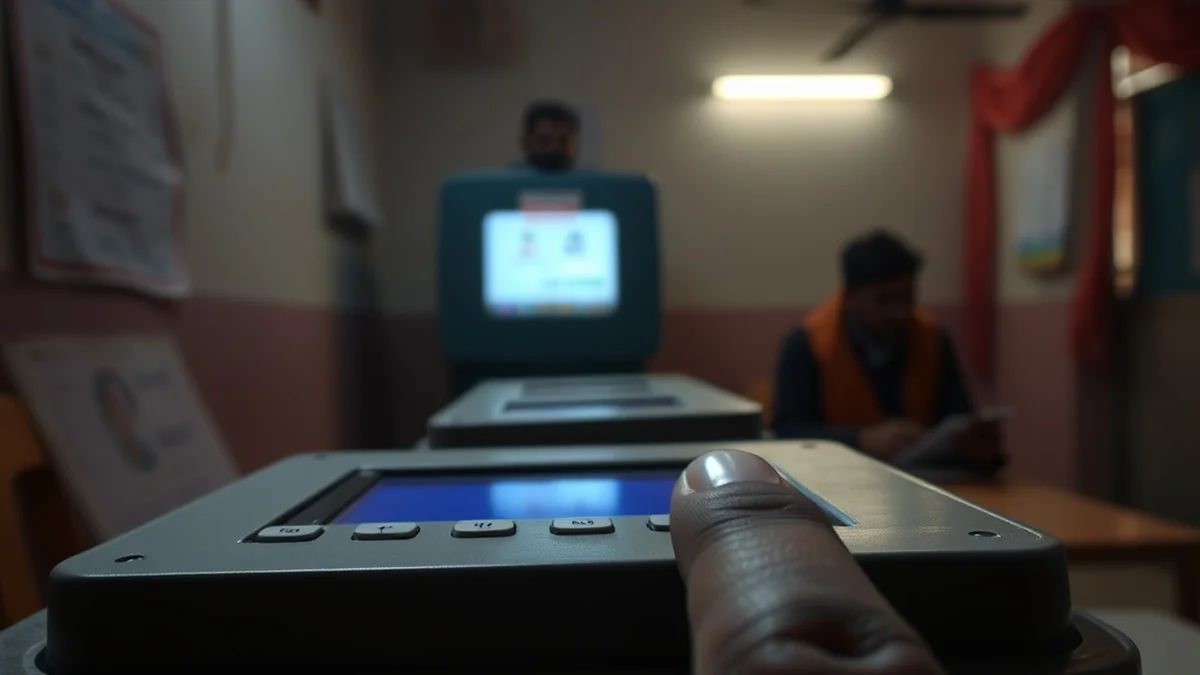
AI Illustration
The Bottom Line
•Voters in Rajasthan concluded the second phase of urban local body elections with a 70.68 percent turnout across 147 municipal bodies.
•The election was marked by technical malfunctions of EVMs and reports of violence, including two deaths linked to electoral disputes in Pali and Sikar.
•The State Election Commission is now overseeing the security of EVMs as the state awaits the final results for 309 municipal bodies.
Voters across Rajasthan concluded the second and final phase of urban local body elections on Friday, September 11, 2026, with a final turnout of 70.68 percent. The polling process, which spanned 147 urban local bodies including six municipal corporations, saw over 61.93 million citizens exercise their franchise to determine the fate of 18,266 candidates across 4,852 wards. While the State Election Commission reported that the process was largely peaceful, the day was marked by localized disruptions, including technical malfunctions of electronic voting machines and multiple reports of clashes between rival political party workers.
The high voter participation underscores the intense political engagement in the state, with turnout figures varying significantly across districts. Dhorimanna Municipality in Balotra district recorded the highest participation at 91.59 percent, while the Sirohi Municipal Council saw the lowest turnout at 62.03 percent. The two-phase election process, which covered a total of 309 municipal bodies, has now moved into a tense waiting period as candidates and parties await the official declaration of results.
Voter Turnout and Regional Participation
The second phase of the urban local body elections encompassed a diverse range of administrative units, including 20 municipal councils and 121 municipalities, alongside the six major municipal corporations. According to the State Election Commission, the cumulative turnout for the 309 bodies involved in the two-phase exercise averaged 72.95 percent. This figure reflects a robust engagement from the electorate, particularly in newly created urban bodies where elections were held for the first time.
Regional data highlights the varied intensity of the electoral contest. While Jodhpur municipal corporation led the major urban centers with a 71.1 percent turnout, other cities like Kota and Ajmer recorded 64.7 percent and 63.6 percent respectively. The Jaipur Municipal Corporation, which saw a 63.5 percent turnout, faced specific scrutiny due to allegations of irregularities at several polling booths. These figures are subject to final verification by the State Election Commission as the counting process approaches.
Reports of Violence and Electoral Irregularities
The polling day was marred by several incidents of violence and allegations of malpractice that prompted intervention from law enforcement. In Pali district, the death of a Congress booth agent, identified as Dinesh, became a focal point of political tension. Congress state president Govind Singh Dotasra alleged that the worker had been subjected to severe pressure and harassment inside the polling booth, leading to his death by suicide. The party has demanded a high-level investigation into the circumstances surrounding the incident.
Separately, in Sikar, the death of a local resident named Fayyaz Mirza, who was reportedly struck by a vehicle belonging to a BJP candidate, sparked further outrage. Dotasra called for the immediate registration of an FIR and the arrest of the driver involved. These incidents, alongside reports of physical altercations between BJP and Congress supporters in districts such as Jhunjhunu, Dausa, and Barmer, have intensified the political atmosphere as the state awaits the final results.
Technical Challenges and EVM Malfunctions
Beyond the physical confrontations, the electoral process faced significant technical hurdles that disrupted voting in multiple locations. Electronic voting machine malfunctions were reported in several wards, including Ward 25 of Singhana municipality and Ward 106 in Jaipur, where voting was halted for approximately 30 minutes. In Ratangarh, a technical snag at polling booth number 32 caused a two-hour delay before the machine was replaced and polling resumed.
Allegations of bogus voting further complicated the day for election officials. In Sikar, police detained two women accused of attempting to cast fraudulent votes in Ward 18. Similar complaints were lodged in Jaipur, where independent and Congress candidates filed written grievances regarding alleged bogus voting in Wards 62 and 101. In Dausa, a heated confrontation occurred at booth number 79 between Congress MP Murari Lal Meena and BJP candidate Yogesh Sharma, following accusations that a relative of a Congress functionary had attempted to cast an illegal vote.
Political Responses and Administrative Oversight
The intensity of the electoral contest was reflected in the high-profile participation of state leaders, including Chief Minister Bhajan Lal Sharma and former Chief Minister Ashok Gehlot, who cast their votes during the second phase. The political discourse surrounding the election has been dominated by mutual accusations of coercion and malpractice. The BJP state legal cell also engaged in the process, filing a formal complaint with the Jodhpur returning officer regarding an incident involving former CM Gehlot at a polling booth, though officials later clarified that the individuals involved were not part of the official polling party.
As the dust settles on the final phase of polling, the focus has shifted to the security of the EVMs and the upcoming counting process. The State Election Commission has maintained that all necessary administrative and security arrangements were in place to ensure the integrity of the vote. With the fate of over 18,000 candidates now locked in the machines, the state remains in a state of anticipation for the final results, which will determine the leadership of the 309 urban local bodies across Rajasthan.
The Indus Pulse is committed to accuracy and transparency.