
14 Sept 2026, 06:18 PM 3 min readindia
Punjab Farmers Launch Five-Day Sit-In Over 12-Point Charter Pressing Loan Waivers
Sources & Citations
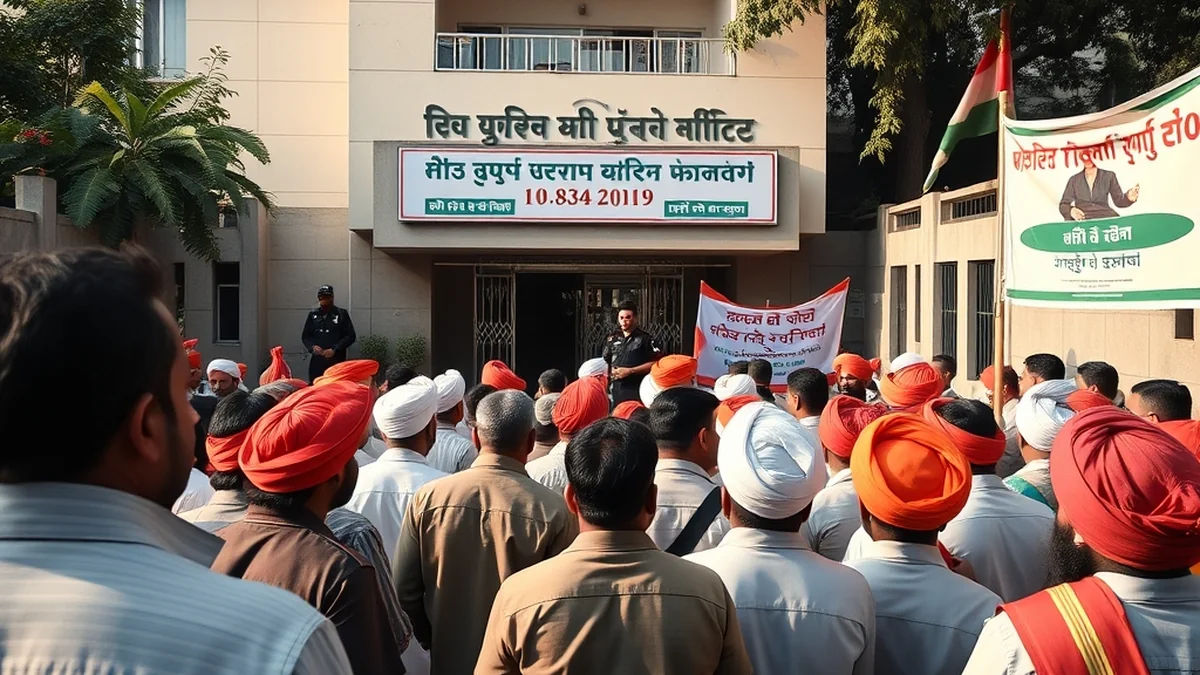
Farmers under the banner of the Kisan Mazdoor Morcha launched a five-day sit-in outside the office of Punjab Cabinet Minister Ravjot Singh in Hoshiarpur on Monday, demanding state intervention on a 12-point charter that includes crop loan waivers and minimum support prices. The protest marks an escalation in ongoing rural agitations after farm groups submitted formal memorandums to deputy commissioners across the state.
Organisers stated that the current demonstrations are intended to compel the state administration to initiate formal discussions. Protesting bodies include the Bharatiya Kisan Union Doaba, the Kisan Mazdoor Sangharsh Committee, and the Kisan Mazdoor Hitkari Sabha, bringing together various agrarian factions to press their demands.
Ultimatum Issued Over State Dialogue
Manjit Singh Rai, state president of the Bharatiya Kisan Union Doaba, addressed the gathering in Hoshiarpur and outlined the timeline for the ongoing agitation. According to Rai, farmer organisations have already exhausted administrative channels by submitting memorandums to local authorities before launching direct protests outside ministerial offices.
"If the government refuses to hold talks, we will convene a meeting on September 16 to decide our next course of action," Rai told the assembled workers. He warned that farmer unions are prepared to escalate their campaign by blocking major railway tracks and highways across Punjab if officials continue to ignore their core grievances.
Agrarian Demands and Input Shortages
The 12-point charter submitted by the Kisan Mazdoor Morcha covers a broad spectrum of economic and agricultural demands, including guaranteed minimum support prices for basmati, maize, moong, mustard, and potatoes. Protesters also called for a complete loan waiver for all farmers and farm workers, alongside financial compensation and government employment for families of agricultural workers who died by suicide.
In addition to market pricing, union leaders raised concerns over rural infrastructure and resource shortages. Rai claimed that unscheduled power cuts are severely disrupting tube-well irrigation during a critical growth stage for standing crops. He further criticized the state administration over coal inventory levels, alleging that official assertions regarding adequate fuel supplies for power generation have proved inaccurate and are impacting both agricultural output and industrial operations.
Legislative Objections and Contested Policies
The protest platform also targets several national and regional legislative measures. Farm organisations are demanding that the Punjab Assembly pass official resolutions opposing the Seed Act of 2025, the Cooperative Act of 2026, the VB-G RAM G Act, and the Electricity Amendment Bill of 2025. Furthermore, protesters have called for an immediate halt to the installation of prepaid electricity meters throughout the state.
The charter extends to trade policy and historical disputes from prior agitations. Protesters sought a formal assembly resolution opposing the proposed India-US trade agreement, the return of vehicles and personal belongings allegedly seized by authorities at the Shambhu and Khanauri protest sites, and secure ownership rights for all categories of cultivators. Additional demands include the withdrawal of police and railway cases registered against agitators, including those related to stubble burning.
Pending Decisions and Next Steps
With the five-day sit-in underway outside Minister Ravjot Singh's office, the immediate operational focus rests on the upcoming union meeting scheduled for September 16. That gathering will determine whether the state government has initiated contact or if the unions will proceed with threatened disruptions of transport routes across Punjab.
Sources & Citations
The Indus Pulse is committed to accuracy and transparency.