
Karnataka to Proceed With Mekedatu Dam Project: DK Shivakumar
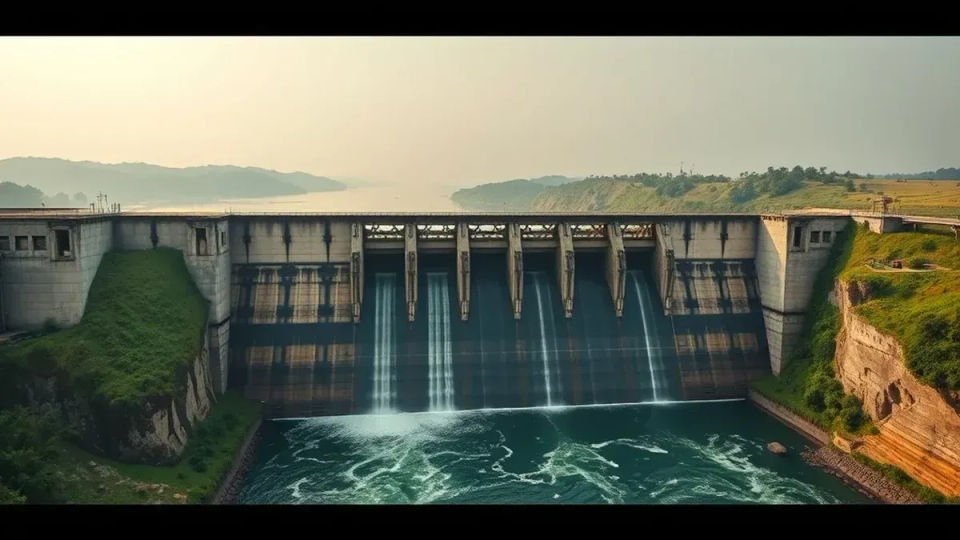
Karnataka Chief Minister DK Shivakumar asserted that the state will proceed with the proposed Mekedatu reservoir project along the Cauvery river basin. Speaking to journalists after offering prayers at the Hasanamba temple in Hassan, Shivakumar maintained that Karnataka does not require fresh concurrence from any neighboring state. Shivakumar argued that the Supreme Court of India had already established Karnataka's legal right to construct the reservoir within its own geographic boundaries. He emphasized that project execution remains strictly contingent upon ensuring the statutory annual release of 177 tmc ft of water to lower riparian Tamil Nadu. The chief minister appealed for inter-state harmony, extending an open invitation for Tamil Nadu to send a delegation to examine the proposal.
Inter-State Cooperation and Supreme Court Mandates
Addressing concerns over political polarization, Shivakumar highlighted that Karnataka's political leadership stands united across party affiliations regarding the river dispute. He noted that leaders representing the opposition Bharatiya Janata Party and National Democratic Alliance have endorsed the state government's unified stance. Shivakumar maintained that construction of the balancing reservoir would foster equitable river basin management and provide mutual advantages to both states. He called for an immediate cessation of regional confrontation, urging all stakeholders to respect judicial mandates and collaborate within legal mechanisms. The leader assured farmers and authorities in Tamil Nadu that Karnataka will never misuse allocated water and will faithfully discharge its river commitments. In February 2018, the Supreme Court of India allocated an additional 4.75 TMC ft of Cauvery water to Karnataka to meet the drinking water requirements of Bengaluru, according to The Hindu. Karnataka is planning to build a ₹9,000-crore balancing reservoir at Mekedatu for impounding 67.16 thousand million cubic ft of water, featuring a 400 MW hydropower component that will submerge around 4,996 hectares of land, according to The Hindu.
Tamil Nadu Delta Concerns and Chief Ministerial Objections
The political developments followed correspondence from Tamil Nadu Chief Minister Joseph Vijay addressed directly to Prime Minister Narendra Modi. In his communication, Vijay voiced apprehension regarding reports that central government technical personnel had carried out on-site inspection activities at Mekedatu. The Tamil Nadu chief minister urged the Union government to withhold statutory clearances and administrative permissions absent explicit consent from co-basin states. Vijay expressed distress on behalf of agricultural communities across the Cauvery delta, emphasizing vulnerability during low-rainfall and deficit water years. The correspondence maintained that lower riparian entitlements, including prescribed monthly discharge patterns and total water volumes, must remain protected. Tamil Nadu Chief Minister C Joseph Vijay formally requested Prime Minister Narendra Modi to defer any Union government action resulting from recent Mekedatu site inspections absent co-basin consent, according to Salar News. Tamil Nadu filed a writ petition before the Supreme Court on August 3 challenging the guidelines issued by the Ministry of Jal Shakti in December 2025 for preparing Detailed Project Reports in the Cauvery basin, according to Salar News.
Environmental Land Approvals and Central Water Commission Oversight
On the technical front, project execution necessitates statutory environmental clearance for submergence and utilization of designated forest terrain. Shivakumar revealed that Karnataka has identified approximately 5,000 hectares of alternative non-forest acreage across other districts for compensatory afforestation. State administrative departments are currently transferring the identified compensatory land parcels to the Karnataka Forest Department. Upon completing statutory land handovers, the state administration plans to submit comprehensive forest clearance documentation to the Central Water Commission. The central water regulatory authority will subsequently evaluate technical feasibility parameters amidst unresolved inter-state political friction.