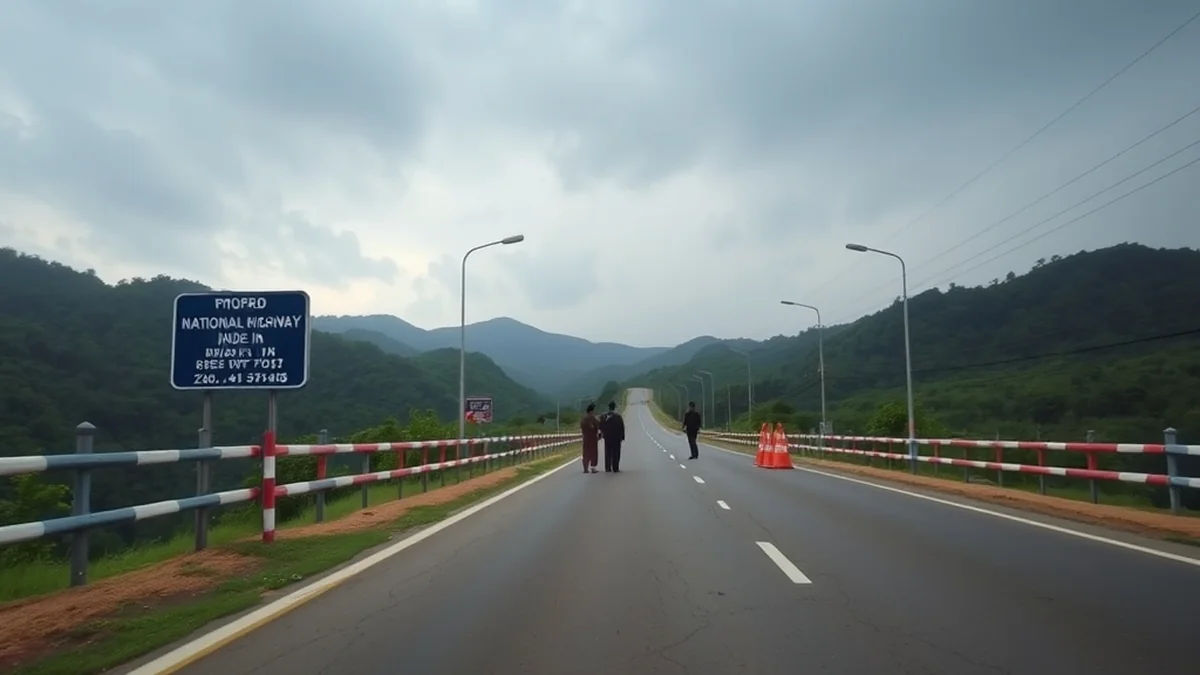
The United Naga Council (UNC), the apex organizational body representing Naga communities in Manipur, has declared an indefinite, intensified economic blockade across major National Highways in the state, starting at 1 a.m. on Wednesday, September 9, 2026. The decision threatens to choke key supply lines into the landlocked northeastern state, escalating tensions in a region already fractured by prolonged ethnic conflict.
This drastic escalation follows an emergency meeting of the UNC’s Presidential Council held in Ukhrul on September 2, 2026, where community leaders reviewed the state government's response to their outstanding grievances. The council determined that the administration had failed to address critical demands regarding the abduction and killing of Naga civilians earlier this year, prompting the call for direct action.
Demands for Justice and Political Accountability
The primary catalyst for the blockade is the unresolved abduction and killing of six Liangmai Naga civilians. According to the UNC, these individuals were seized from Leilon Vaiphei village, located in the Kangpokpi district, on May 13, 2026, and subsequently murdered. The apex body has repeatedly demanded a thorough investigation and swift punitive action against those responsible for the killings, accusing the state government of failing to deliver justice to the victims' families.
In addition to criminal prosecution, the UNC has introduced a highly sensitive political demand: the immediate removal of Manipur’s Deputy Chief Minister, Nemcha Kipgen. The Naga body has formally accused Kipgen of maintaining close ties and "hobnobbing" with Kuki armed groups, a charge that injects further political volatility into the state's complex administrative setup. By targeting a high-ranking cabinet member, the UNC has elevated a local law-and-order issue into a direct challenge to the state's coalition leadership.
Scope of the Indefinite Highway Blockade
The economic blockade is designed to systematically restrict commercial traffic across Manipur's primary transport arteries. According to a formal statement issued by UNC spokesperson H. James Hau, the indefinite disruption will target four critical routes: National Highway-2 (connecting Imphal and Dimapur), National Highway-202 (connecting Imphal, Ukhrul, and Jessami), National Highway-37 (connecting Imphal and Jiribam), and National Highway-102A (connecting Tadubi and Ukhrul). These highways serve as the lifeblood of the state, carrying essential commodities, fuel, and consumer goods from neighboring states.
To prevent a humanitarian crisis, the UNC has outlined specific exemptions to the blockade. Vehicles transporting essential supplies and services will be permitted to pass. These exemptions cover medical supplies, media personnel, electricity maintenance crews, telecommunications services, and municipal water supply transport. However, all other commercial and private freight transport along these routes is expected to grind to a halt, putting immense pressure on local markets and administrative machinery.
Disruption to Vital Transit Corridors
The timing of the blockade is particularly damaging to recent efforts to restore normalcy in the state. Notably, the blockade is poised to disrupt the Imphal-Guwahati public transport services operating via National Highway-2. These long-distance bus and passenger services had only recently resumed in August 2026, after being completely suspended for more than three years due to regional instability. The resumption of this route was seen as a vital step toward restoring economic and social connectivity for ordinary citizens.
The movement of people and goods across Manipur's highway network has been severely compromised since May 3, 2023, when large-scale ethnic violence first erupted between the Kuki-Zo and Meitei communities. For over three years, travel through community-dominated districts has been highly segregated and dangerous. The addition of an organized, indefinite Naga blockade across four major highways threatens to isolate the Imphal Valley further and disrupt the fragile transit corridors that communities rely on for survival.
The Broader Landscape of Manipur's Ethnic Conflict
The UNC's blockade occurs within a highly volatile security environment in Manipur. The state has been plagued by deep-seated ethnic divisions that have periodically erupted into open violence. Recently, Manipur’s Home Minister, Konthoujam Govindas, informed the state legislature that the ongoing ethnic clashes have claimed at least 306 lives. This official death toll includes casualties from the primary Meitei-Kuki conflict as well as separate clashes that have broken out between Kuki and Naga groups since February 2026.
The friction between the Nagas and Kukis adds a dangerous third dimension to the state's security crisis, which was previously characterized chiefly by the Meitei-Kuki divide. The UNC's mobilization of the Naga population over the May 13 killings highlights how unresolved local grievances can quickly escalate into broader community-wide standoffs. With armed groups active across various hill districts, the state government faces the daunting task of maintaining order without triggering further inter-community clashes.
Immediate Outlook and Pending State Response
As the blockade commences at 1 a.m. on Wednesday, September 9, 2026, the immediate focus shifts to how the Manipur state government and security forces will respond to the disruption of the national highways. The state administration has yet to issue an official statement regarding the UNC's ultimatum or indicate whether it will initiate talks to address the demands for Deputy Chief Minister Nemcha Kipgen's removal and the prosecution of those involved in the May 13 killings.
Local traders and transport associations are bracing for immediate supply chain disruptions, with fuel and essential food prices expected to fluctuate if the blockade persists. Security forces, including state police and central paramilitary units stationed along the highways, face the critical challenge of preventing violence at blockade points while ensuring that exempted essential services can travel safely across the designated routes.