
Edited by Editor-in-Chief, The Indus Pulse 25 Sept 2026, 12:09 PM 3 min readindia
Karnataka Announces ₹1,250-Crore Drought Relief Package as Crop Damages Exceed ₹40,000 Crore
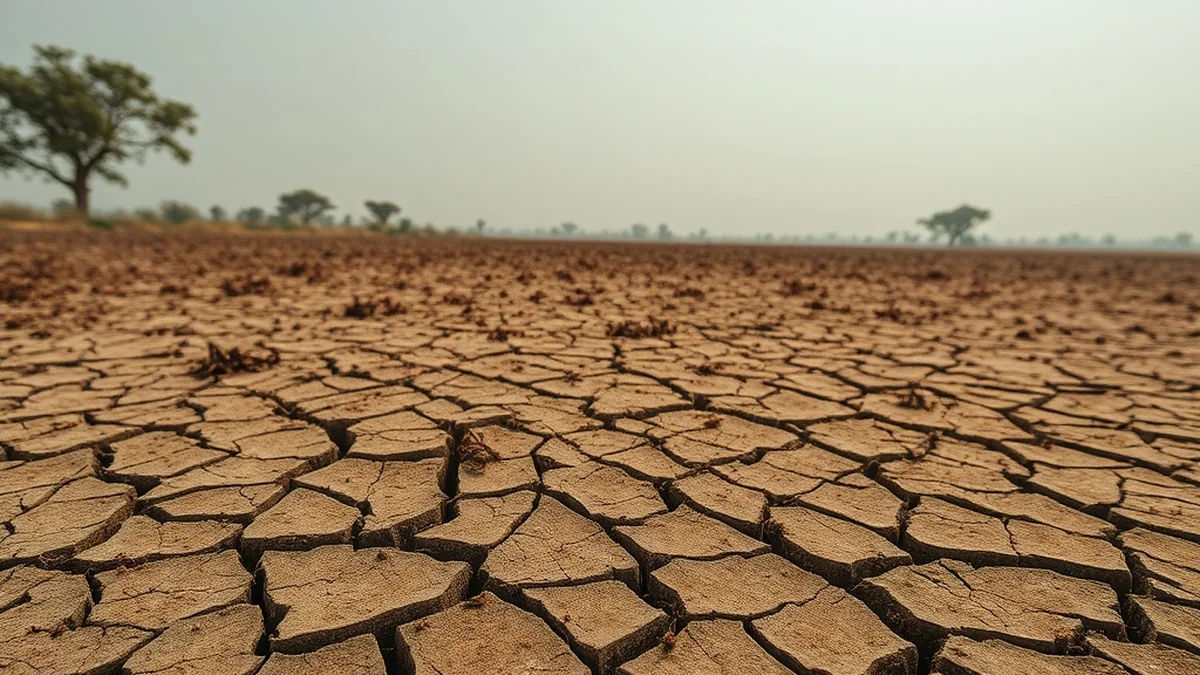
The Karnataka government announced a financial relief package totaling ₹1,250 crore on September 24 to support farming communities facing severe crop losses due to ongoing drought conditions across the state. Deputy Chief Minister and Revenue Minister G. Parameshwara informed the Legislative Assembly that about 45 lakh to 50 lakh farmers will receive a one-time input subsidy of ₹2,500 each in the first phase, anticipating funding from the National Disaster Relief Fund.
The administration has formally declared 177 taluks as drought-affected, with initial state government estimates placing agricultural losses at approximately ₹40,000 crore amid an overall 36 percent rainfall deficit. An additional 50 taluks are undergoing ground truthing assessments, which may expand the total tally of distressed administrative blocks past 200. Concurrently, extensive crop failures have rippled through agricultural markets, notably affecting onion production where joint surveys by the Department of Horticulture and the Natural Disaster Monitoring Centre recorded damage exceeding 50 percent across 62,985 hectares in 124 taluks.
State drought assessment and mitigation procedures follow updated federal manuals. These guidelines mandate specific indicators for triggering evaluations and dictate that financial determinations involve multi-tier verification by central teams and high-level committees.
Loan Restructuring and Recovery Protections
Alongside the cash transfer, the state government secured agreements with banking institutions to enforce a 12-month moratorium on loan repayments for Kisan Credit Cards and agricultural loans in drought-declared taluks. Repayment schedules have been extended based on severity, granting 36-month recovery windows in moderately affected areas and up to 60 months in severely impacted regions. Cooperation Minister Laxman Savadi instructed financial institutions to halt all forcible recovery actions against distressed borrowers.
Adding to these safeguards, Deputy Chief Minister Parameshwara warned microfinance companies that the administration would pursue criminal action against entities harassing farmers over loan repayments. Despite these measures, Opposition leaders criticized the assistance as inadequate given mounting agrarian debt and failed harvests during the kharif season, where sowing covered 1,41,256 hectares against a target of 1,50,000 hectares.
Central Assistance Demands and National Disaster Appeal
Chief Minister D.K. Shivakumar formally urged Prime Minister Narendra Modi to release 50 percent of Karnataka's ₹3,705.30-crore drought memorandum as interim financial assistance. State officials also confirmed plans to appeal directly to the central government to formally classify the widespread drought across 17 to 18 states as a national disaster.
During Assembly debates, Chief Minister Shivakumar stated that the state administration is prepared to share the financial burden if the central government initiates a comprehensive farm loan waiver, drawing comparisons to industrial debt write-offs. Opposition parties, however, argued that the ₹2,500 direct payment fails to match daily wage rates or cover basic tilling and sowing costs, prompting a brief legislative walkout by a dozen opposition members.
Municipal and Water Infrastructure Allocation
To address immediate drinking water shortages reported across 531 villages in 111 taluks and 81 urban wards, the state government released ₹117 crore directly, supplementing an additional ₹189 crore allocated through local legislators. Drinking water scarcity remains acute in several districts as administrative machinery struggles with groundwater depletion.
market supply chains continue to experience severe strain. Wholesale onion prices hover between ₹50 and ₹55 per kg while retail rates reach ₹65 to ₹70 per kg. Horticultural scientists and merchant associations noted that price stabilization depends entirely on incoming kharif harvests from Karnataka and supplementary shipments from Maharashtra, as previous low market returns pushed several cultivators to abandon the crop.
The Indus Pulse is committed to accuracy and transparency.