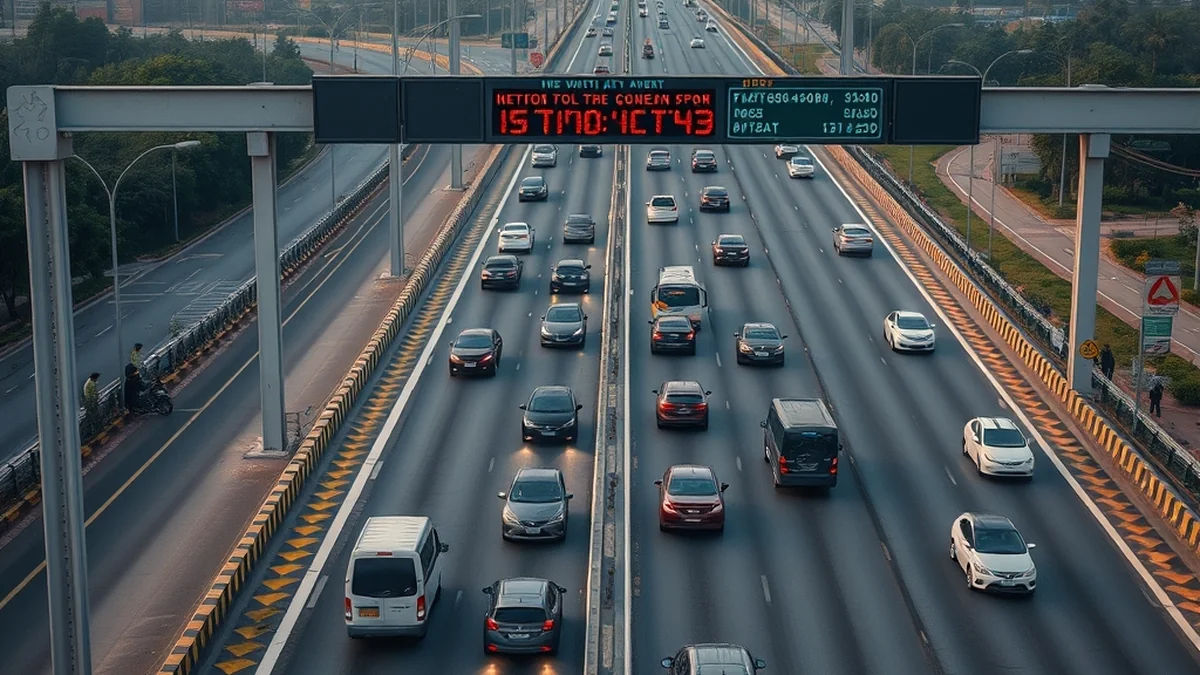
Union Minister for Road Transport and Highways Nitin Gadkari announced that all toll collection booths across national highways in India will transition to a barrier-free model by March 2027. Speaking at the Global Fintech Fest 2026 in Mumbai, the minister stated that full implementation of the electronic toll collection system could generate between 20,000 crore and 25,000 crore rupees annually for the government.
The sweeping infrastructure shift aims to eliminate traditional bottlenecks, narrow lanes, and physical boom barriers that currently cause heavy traffic congestion. By leveraging automated cameras and FASTag infrastructure, the government seeks to modernize highway transit while simultaneously lowering operating expenses and cutting down fuel waste across the country's extensive freight and passenger networks.
Phased Rollout Timeline and Pilot Installations
The transition toward a Multi Lane Free Flow system is already underway at select trial locations across the country. The initial comprehensive setup was introduced at Chorayasi in Gujarat, followed by Mundka Bakkarwala in New Delhi, with several additional plazas in states like Andhra Pradesh slated for integration.
According to official ministry projections, more than 70 percent of existing toll booths are expected to operate without physical barriers by the end of December 2026. The remaining infrastructure will be converted ahead of the hard deadline in March 2027, completely phasing out legacy toll plaza designs in favor of uninterrupted digital passage.
Digital Enforcement and Regulatory Framework
To support the transition, the government notified amendments to the National Highways Fee Rules, 2026, establishing a structured legal and financial recovery mechanism for unpaid user fees. The updated regulations introduce a technology-driven Electronic Notice system that automatically serves digital notices via SMS, email, and mobile applications to vehicle owners with outstanding dues.
The regulatory framework integrates the National Electronic Toll Collection system directly with the VAHAN database to streamline vehicle identification and digital enforcement. Furthermore, the rules incorporate a grievance redressal provision allowing aggrieved motorists or vehicle owners to submit formal representations through a designated online portal within 72 hours of receiving an electronic notice.
Financial Impact and Operating Cost Reductions
The broader adoption of electronic tolling has already yielded substantial financial gains for state coffers. FASTag integration previously increased overall toll booth income by approximately 10 percent, adding about 7,000 crore rupees and pushing total network revenue past 82,000 crore rupees.
Ministry figures indicate that the upcoming barrier-free rollout is projected to capture an additional 10 percent in revenue growth, bringing in an extra 7,000 crore to 8,000 crore rupees. Concurrently, the operating cost of running toll collection booths has dropped significantly from roughly 12 percent down to between 2 and 3 percent.
Technological Integration and Freight Transparency
Beyond automated toll collection, the ministry is pushing for advanced technological applications to tackle structural inefficiencies within the freight and logistics sector. Addressing technologists at the Mumbai summit, Nitin Gadkari urged the industry to develop reliable engineering solutions capable of accurately measuring and detecting freight vehicle overloading.
The transport ministry also noted that efforts are underway to increase operational transparency across the country's freight networks. While outlining these enforcement initiatives, the minister mentioned that a specific operator had faced legal action from the Central Bureau of Investigation, reflecting tightening regulatory oversight in the logistics industry.
Unresolved Administrative and Next Steps
While the infrastructure deadlines are firmly established, federal authorities continue to monitor compliance challenges and refine the backend digital architecture necessary for nationwide multi-lane enforcement. The immediate operational milestone involves scaling the pilot plazas in Gujarat and Delhi to cover 70 percent of national highway booths by December 2026.
autoridades must finalize integration protocols between regional transport databases and the central e-notice portal before the March 2027 completion date. Further administrative guidelines regarding dispute resolution timelines and penalty structures for chronic non-compliance will be rolled out as additional highway stretches transition to barrier-free operations.