
India Breaks Into Top 10 at WorldSkills Shanghai 2026 With Six Silver Medals
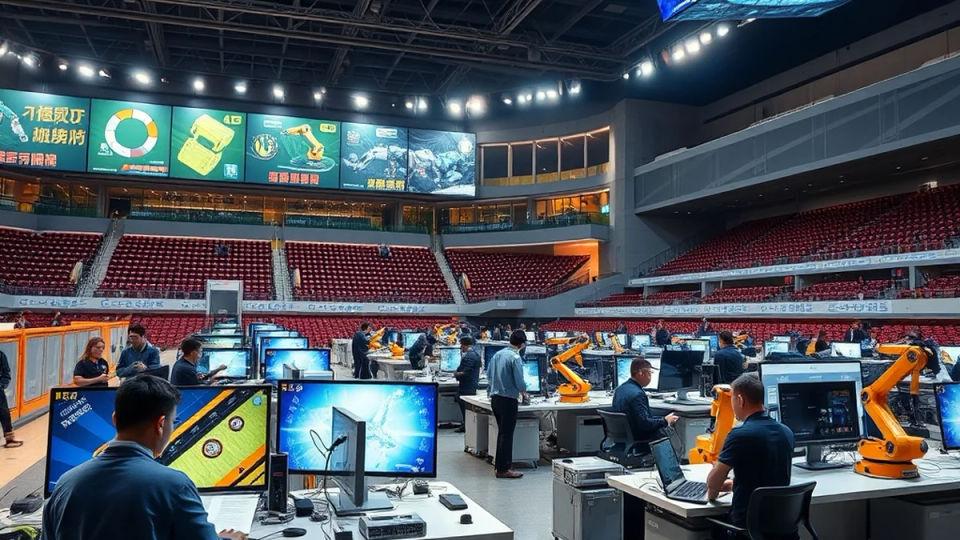
India secured a milestone 10th-place finish at the 48th WorldSkills Competition in Shanghai on Sunday, marking the country's first entry into the global top tier of occupational standards testing. The national contingent secured six silver medals and 20 Medallions for Excellence across diverse technical and trade categories, improving on its 13th-place standing at the Lyon competition in 2024.
The six-day international event brought together over 1,400 competitors from approximately 70 countries and regions. India fielded its largest contingent to date, deploying 70 young professionals across 63 distinct skill disciplines ranging from advanced manufacturing and engineering to digital design and specialised services.
Medal Wins and Debut Disciplines
India's six silver medals were awarded across a mix of traditional and newly entered fields. Smriti Nambiar secured a silver in bakery, Mohammed Salam in dental prosthetics, Kovid Ajay Gangrade in digital interactive media design, Parth Vohra in industrial design technology, Mehrunissa Begum in logistics and freight forwarding, and Saniya Joshi in retail sales. Additionally, Nambiar received the Best of Nation honor for her performance.
Significantly, three of the six silver medals came in disciplines India entered for the very first time. The country debuted in 11 new categories at Shanghai, including unmanned aerial systems, intelligent security technology, software testing, aircraft maintenance, and optoelectronic technology, signaling a broader diversification of technical capabilities beyond historical trade specialties.
Medallions for Excellence Across Sectors
In addition to the podium finishes, Indian competitors captured 20 Medallions for Excellence, awarded to participants who achieve benchmark professional proficiency against rigorous global standards. These recognitions spanned advanced domains such as mechatronics, autonomous mobile robotics, Industry 4.0, additive manufacturing, robot systems integration, and chemical laboratory technology.
Other medallions were awarded in practical fields including automobile technology, IT network systems administration, fashion technology, jewelry, beauty therapy, electrical installations, and health and social care. Ministry officials noted that female competitors represented India across numerous technical, creative, and service-oriented categories during the event.
Historical Progression and Policy Response
India's ascent through the WorldSkills rankings has been gradual over the past decade and a half. In 2011 at London, India ranked 39th, before climbing to 33rd in Leipzig in 2013, 29th in São Paulo in 2015, and 19th in Abu Dhabi in 2017. A major breakthrough occurred at Kazan in 2019, where the country reached 13th place and won its first gold medal, a standing it matched at Lyon before breaking into the top 10 in Shanghai.
Reacting to the outcome, Minister of State for Skill Development and Entrepreneurship Jayant Chaudhary congratulated the participants and technical experts. Team India's performance at WorldSkills Shanghai 2026 marks a significant leap in our global skills journey, Chaudhary stated, noting that the results reflect the growing competitiveness of India's skilled talent and the commitment to building a future-ready ecosystem.
Translating Global Standards to Domestic Training
China led the overall medal standings at WorldSkills Shanghai 2026, followed by Korea and Chinese Taipei. While the medal count represents a historical high for India, officials emphasized that the primary value lies in operational exposure.
Manisha Sensarma, official delegate for WorldSkills India and senior economic adviser in the ministry, stated that Shanghai provided invaluable exposure to evolving international standards and practices. Sensarma stated that the immediate focus is translating these lessons into stronger domestic training methodologies, upgraded assessment frameworks, and deeper industry engagement across the national skilling ecosystem.
Sources & Citations
- Times of India report
- News9live report
- Press Information BureauPrimary / official
- National Skills Network
- Bharat Skills / DGTPrimary / official
- Press Information BureauPrimary / official
- The Hindu
- WorldSkills India
- WorldSkills India
- Press Information BureauPrimary / official
- WorldSkills International
- WorldSkills International
- WorldSkills India
- Press Information BureauPrimary / official