
India And HD Hyundai Advance Plans For Thoothukudi Shipyard Project
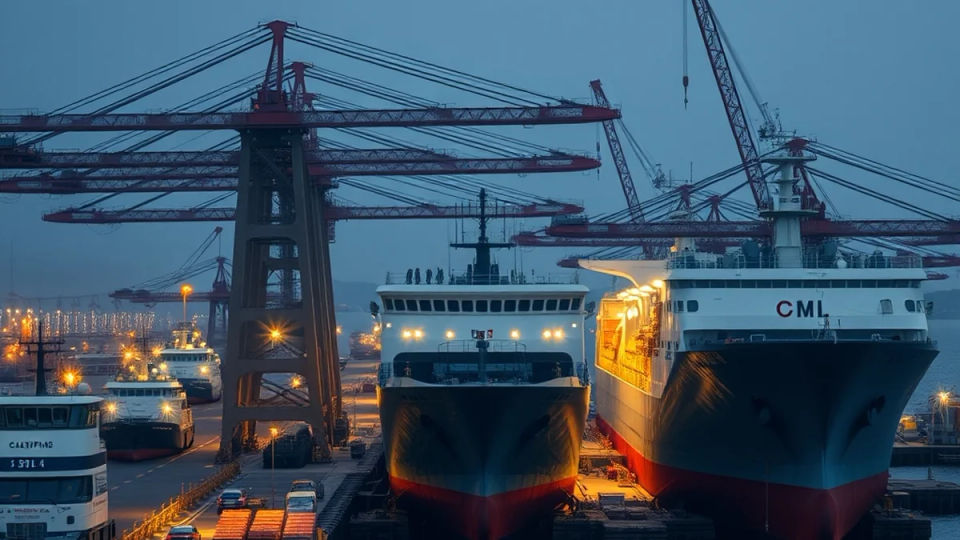
India and South Korea have progressed bilateral plans to establish a commercial shipyard in Tamil Nadu with a preliminary estimated investment value of about $4 billion.
India's shipping minister, Sarbananda Sonowal, held discussions with Chung Ki-sun, the Chairman of HD Hyundai, during official meetings in Seoul.
Separately, iMarine reported that HD Hyundai withdrew from an earlier Cochin Shipyard joint-venture proposal, an initiative distinct from the Thoothukudi discussions.
The bilateral conversation reviewed next steps for the planned greenfield facility at Thoothukudi during the minister's four-day trip to South Korea.
iMarine reported an indicative additional infrastructure requirement of about $400 million for work such as breakwaters and dredging, alongside proposals for overseas training before the yard becomes operational.
Bilateral Framework And Investment Arrangements
HD Korea Shipbuilding and Offshore Engineering reaffirmed its intention to serve as the project's primary strategic investor.
Both delegations agreed to set up a Joint Working Group responsible for guiding the progress of the maritime development.
The two sides also intend to formulate an agreed joint venture structure while targeting completion of a Detailed Project Report within six months.
The subsequent project phase will concentrate on determining equity participation, financing terms, and execution arrangements subject to due diligence.
The forthcoming report will define the vessel product mix, construction capacity, capital expenditure figures, and implementation timelines.
Officials envisage annual capacity of approximately 2.5 million gross tonnage under the government’s Shipbuilding Development Scheme, subject to validation in the detailed project report.
Drishti IAS described a framework under which the government may fund shared facilities in new shipbuilding clusters and contribute to eligible expansions of existing yards.
The nation currently maintains 0.072 million Gross Tonnage of commercial shipbuilding capacity, securing less than a single percentage point of worldwide production and placing 18th globally, according to Drishti IAS.
Government statements describe the planned facility as potentially India's largest commercial shipyard if the project is completed.
Institutional Partnerships And Special Purpose Vehicle
The project expands upon a memorandum of understanding signed on 20 April 2026 between HD KSOE and Indian maritime entities.
The Thoothukudi project follows 2026 maritime-industry discussions, while the final investment structure remains under negotiation.
The bilateral engagement was established within the comprehensive maritime logistics and shipbuilding framework adopted in April 2026.
Government discussions also involved maritime financing and industrial-park coordination bodies, with their precise project roles yet to be finalized.
State and central authorities have established a special purpose vehicle named the National Shipbuilding and Heavy Industries Park Tamil Nadu Limited.
The entity represents a corporate collaboration between the State Industries Promotion Corporation of Tamil Nadu and the V.O. Chidambaranar Port Authority.
A separate V.O. Chidambaranar Port Authority tender discusses environmental and coastal clearances for marine works; it does not establish the proposed shipyard's own clearance status.
Infrastructure Development And Domestic Demand
The project's operating entity will secure appropriate waterfront acreage, utility access, and supportive ground infrastructure for the hub.
Site preparation involves infrastructural planning, site assessments, and preliminary studies evaluating dredging and land reclamation.
Sarbananda Sonowal noted that Indian public agencies plan to purchase more than 400 vessels over the coming years.
The collaboration seeks to expand domestic skillsets by exploring technical training partnerships with domestic industry and academic institutions.
The initiative also aims to develop domestic technical capacity through knowledge exchange, workforce training, and industrial technology transfer.