
IIT Madras Launches Landmark Project To Map 100 Human Brains At Cellular Resolution
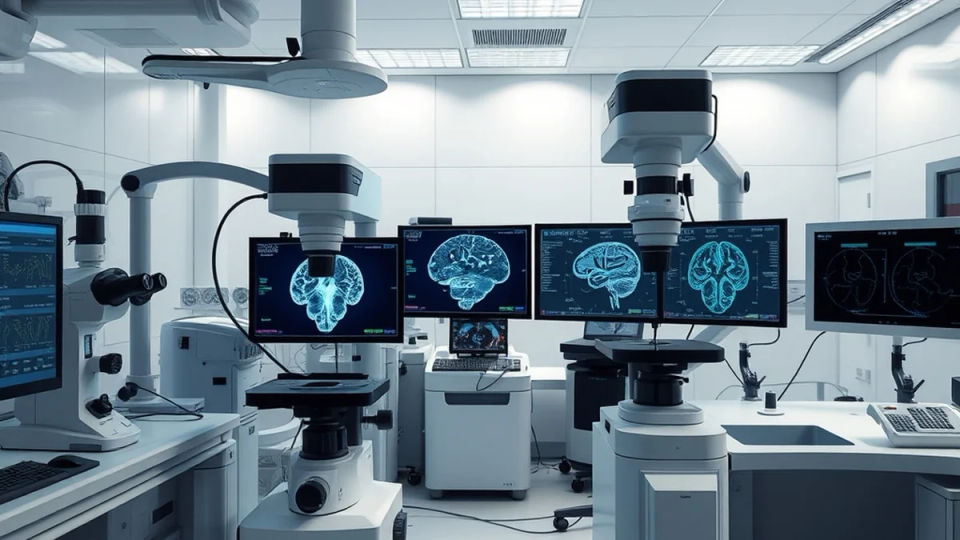
The Sudha Gopalakrishnan Brain Centre at IIT Madras has embarked on a pioneering scientific initiative to construct high-resolution three-dimensional digital atlases of 100 human brains spanning from the fetal period up to 85 years of age. Recently inaugurated by Prime Minister Narendra Modi, the project represents an unprecedented international effort to chart complete organ structures at cellular fidelity across the entire human lifespan.
Prime Minister Narendra Modi released C-STROKE, described as the world's first human ischemic stroke atlas featuring over 1,000 annotated sections.
To achieve microscopic resolution, researchers freeze donated human brain specimens before slicing them into micro-thin sections using custom-designed laboratory instrumentation. According to project lead Professor Mohanasankar Sivaprakasam, an adult human brain yields between 8,000 and 10,000 individual slices, whereas a fetal brain produces roughly 3,000 cross-sections. While conventional clinical magnetic resonance imaging captures anatomical details at millimeter dimensions in living subjects, these laboratory atlases reveal cellular arrangements invisible under routine radiological scans.
Lifespan Mapping And Open Data Architecture
The research program seeks to establish how structural networks inside the human brain form, mature, and progressively decline across successive stages of life. The center released its inaugural set of developmental reconstructions, titled the DHARANI fetal brain atlas, in 2025 to illustrate early neuroanatomical assembly.
In December 2024, the centre released its first atlas, Dharani, mapping the developing fetal brain, followed by the Anchor brainstem atlas in June 2026.
The overarching initiative convenes approximately 200 investigators spanning medicine, biology, engineering, computing, and machine learning. Sivaprakasam emphasized that the center plans to release all finished mapping databases openly to global researchers and has partnered with over 10 medical centers, including Christian Medical College Vellore, Kasturba Medical College, and Saveetha Medical College.
Human brains are collected from collaborating medical institutions including CMC Vellore and NIMHANS.
Pathological Modeling And Computational Infrastructure
Alongside healthy lifespan references, the center unveiled C-STROKE, a specialized digital atlas mapping an entire post-mortem human brain damaged by stroke. The resource enables investigators to inspect ischemia-affected zones from varying spatial angles while maintaining a comprehensive whole-organ view to uncover potential pharmaceutical targets.
Because mapping whole organs at microscopic precision generates immense volumes exceeding multiple petabytes of imaging information, the institution engineered a dedicated computational visualization portal. The technical team additionally integrated an artificial intelligence research assistant that allows scientists to query vast spatial datasets using conversational natural-language prompts.