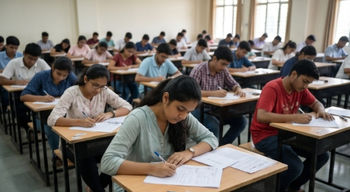
More than 12,000 IIT aspirants have submitted a formal petition to India's Ministry of Education, the IIT Council, and the Joint Admission Board (JAB), advocating for a third attempt at the Joint Entrance Examination (JEE)-Advanced, according to reports that emerged between September 1 and September 2, 2026. The exact date the petition was formally submitted to these authorities has not been publicly disclosed. Under current regulations, candidates are restricted to a maximum of two attempts for JEE-Advanced, which must be taken in two consecutive years: the first in the year they pass Class 12, and the second in the subsequent year. The JEE-Advanced 2026 examination is scheduled for May 17, 2026, with eligibility restricted to the top 2.5 lakh (250,000) candidates in JEE-Main. The petition proposes either increasing the total number of attempts to three or permitting the existing two attempts to be utilized over three consecutive years.
Aspirants highlighted a policy inconsistency between JEE-Advanced and other major national entrance examinations, according to the petition text. Specifically, JEE-Main allows up to six attempts over three consecutive years, while the National Eligibility-cum-Entrance Test for undergraduate medical courses (NEET-UG) features no limit on attempts or upper age limits. In their submitted text, the petitioners stated, "Under the current policy, students are limited to only two consecutive attempts, while JEE-Main allows three attempts within the same admission system. If improvement is allowed in JEE-Main, why is it restricted in JEE-Advanced? This inconsistency denies many capable and hardworking students a fair opportunity to demonstrate their true potential."
The petitioners also cited historical precedent from the COVID-19 pandemic, when an additional JEE-Advanced attempt was permitted by authorities, demonstrating previous capacity for policy adaptation during extraordinary circumstances. This debate follows a brief regulatory shift in November 2024, when the JAB announced a three-attempt rule before rolling it back just 13 days later. Following that reversal, a January 2025 Supreme Court ruling allowed a limited exception for JEE-Advanced 2025 specifically for students who dropped out during the brief operational window of the three-attempt policy.
Opposing perspectives from institutional leaders emphasize the necessity of strict attempt limits to preserve cohort integrity and manage examination volume. IIT Kanpur director Manindra Agrawal expressed concern that a third attempt could lead to various operational problems and stated that multiple attempts should only be considered for exceptional circumstances, such as serious health issues. Furthermore, Agrawal suggested that the petitioners are likely individuals who failed to clear the examination in their two allotted attempts, per institutional feedback. IIT officials and education experts argue that the current two-attempt limit is crucial for preventing student burnout and maintaining age parity within academic cohorts.
For the over 12,000 IIT aspirants, a potential policy revision regarding JEE-Advanced attempt rules would offer increased opportunities to gain admission to India's premier engineering institutions, potentially alleviating academic pressure and addressing disparities faced by students from diverse socio-economic backgrounds. For the Ministry of Education, IIT Council, and JAB, the petition requires a policy review balancing student welfare and fairness with concerns about maintaining academic standards and managing the logistical complexities of the nationwide examination process.