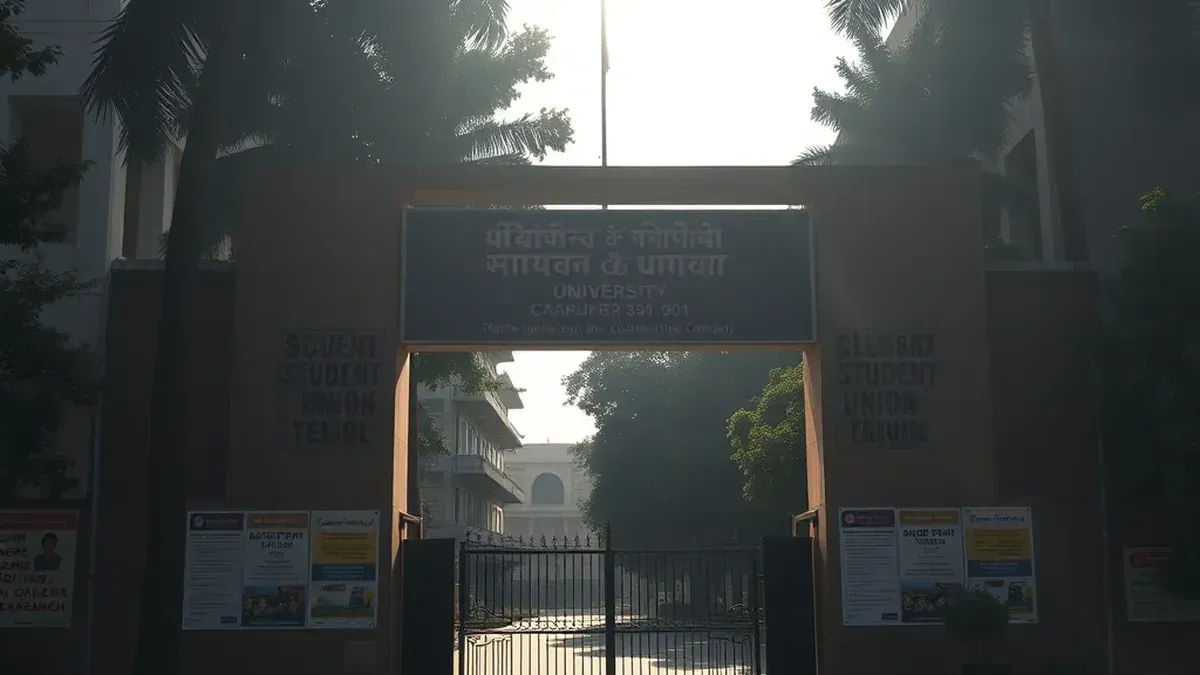
Civil rights advocates, youth organizations, and student welfare collectives have intensified demonstrations across major educational hubs, demanding systemic governance overhauls and legislative safeguards for national competitive examinations. The ongoing movement, galvanized by prominent youth activists and student representative bodies in the national capital and state capitals, centers on systemic vulnerabilities in the National Eligibility-cum-Entrance Test (NEET-UG) and the centralized operational architecture managed by the National Testing Agency (NTA).
Gathering outside designated civic demonstration zones near Jantar Mantar in New Delhi, Patna, and Jaipur, demonstrators have voiced frustration over repeated instances of question paper leaks, arbitrary compensatory grace mark allocations, and administrative irregularities that threaten the academic futures of over 2.4 million medical aspirants. The coordinated mobilization has elevated entrance exam integrity into a major national policy debate, compelling central ministries and parliamentary standing committees to confront deep-seated structural flaws in national testing administration.
Genesis of the Crisis: Testing Integrity and Logistical Vulnerabilities
The ongoing student agitation stems from an unprecedented series of controversies that plagued the nationwide conduct of the NEET-UG examination. Aspirants across several northern states reported compromised exam logistics, including the circulation of leaked question papers through encrypted messaging channels prior to the scheduled exam commencement, delayed delivery of correct test booklets at designated exam centers, and suspicious clusters of perfect 720/720 scores originating from single coaching-hub centers.
Public indignation reached a boiling point when the testing agency applied discretionary normalization and compensatory grace mark formulas to over 1,500 candidates without publishing transparent baseline algorithms. Although the Supreme Court subsequently intervened to cancel the arbitrary grace marks and order targeted re-tests, the disclosures eroded student trust in the centralized computer-based and optical mark recognition (OMR) testing frameworks that govern admissions into the country’s premier professional degree institutions.
Student Advocacy Demands and Proposed Structural Reforms
Youth leaders and student organizations across ideological affiliations have articulated a comprehensive charter of demands aimed at overhauling the national examination ecosystem. Chief among these demands is the complete restructuring of the National Testing Agency (NTA), transforming it from a semi-autonomous society into a fully accountable, statutory commission established through an Act of Parliament, subject to annual audits by the Comptroller and Auditor General (CAG).
The student charter also demands:
- Decentralization of Massive Entrance Tests: Transitioning from monolithic, single-day pen-and-paper exams toward multi-session, computer-adaptive testing models conducted in government-owned institutions rather than outsourced private commercial computer labs.
- Enactment of Stringent Anti-Cheating Legislation: Rigorous nationwide enforcement of the Public Examinations (Prevention of Unfair Means) Act, imposing severe criminal penalties and multi-crore asset attachments on organized coaching-center syndicates and exam racketeers.
- Universal Grievance Redressal Mechanism: The institutionalization of an independent National Examination Ombudsman, equipped with judicial authority to adjudicate candidate complaints, question paper objections, and center irregularities within strict 72-hour timeframes.
- Enhanced Weightage for School Board Performance: A balanced hybrid normalization formula incorporating high school board performance to reduce total reliance on a single high-stakes competitive examination.
The Mental Health Crisis in Competitive Coaching Hubs
Beyond legal and administrative grievances, the youth demonstrations have cast an urgent spotlight on the severe psychological toll endured by millions of teenagers trapped in commercialized coaching factory ecosystems. In education hubs like Kota, Sikar, and Namakkal, intense parental expectations, exorbitant coaching tuition loans, and cutthroat percentile competition have created an acute mental health crisis, reflected in tragic spikes in student suicides and acute anxiety disorders.
Addressing gathered student assemblies, educational psychologists and student advocates emphasized that centralized high-stakes testing formats reduce holistic education into a mechanical game of test-cracking memorization. They argue that when the integrity of such exams is compromised by corrupt testing syndicates, the psychological trauma on hardworking, economically disadvantaged students is catastrophic, demanding immediate state psychological counseling interventions alongside administrative reforms.
Institutional and Judicial Interventions
In response to mounting public demonstrations and rigorous judicial scrutiny from the Supreme Court of India, the Ministry of Education constituted a high-level committee of technical and administrative experts, chaired by former ISRO Chairman Dr. K. Radhakrishnan, to recommend comprehensive reforms in the examination process, data security protocols, and the organizational structure of the NTA.
The central government also transferred the criminal investigation into widespread paper leak conspiracies to the Central Bureau of Investigation (CBI), resulting in multiple arrests of organized testing cartel operatives across Bihar, Jharkhand, and Gujarat. Furthermore, parliamentarians across party lines have raised the issue during parliamentary sessions, demanding that examination transparency be treated as a matter of national security and youth welfare.
Charting the Path Forward for Fair Admissions
The nationwide student mobilization demonstrates the democratic power of youth civic engagement in demanding institutional transparency and administrative accountability. As competitive examinations determine the socio-economic mobility of millions of young Indians from small towns and rural heartlands, safeguarding examination integrity is fundamental to social justice and national progress.
The ongoing discourse will prove instrumental in shaping the next generation of academic testing policies. As the central government reviews expert recommendations, the unified voice of student advocacy groups serves as an enduring reminder that the credibility of India's higher education system rests entirely on its commitment to fairness, transparency, and meritocracy.