
ECI Issues Fresh Work Allocation Order Restoring IT Directorate Oversight
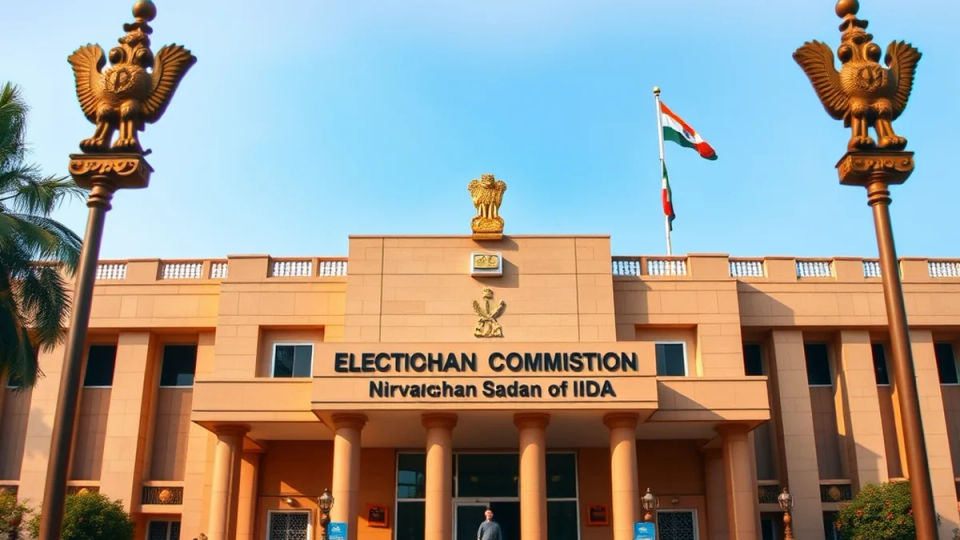
The Election Commission of India has issued a revised internal work allocation order that restores an intermediary supervisory layer over its information technology division. Under the fresh arrangement issued on November 4, 2026, Deputy Election Commissioner Prakash Raj Purohit assumes charge of supervising IT Director General Seema Khanna, replacing Senior Deputy EC Manish Garg.
The administrative restructuring follows an internal controversy that erupted after an earlier directive issued on July 28 sought to have Khanna report directly to the full commission. The poll panel, comprising Chief Election Commissioner Gyanesh Kumar alongside Election Commissioners Vivek Joshi and SS Sandhu, had faced internal disagreements regarding operational oversight and software governance. On August 14, 2026, Commissioner Sandhu recorded that several Chief Electoral Officers, District Election Officers and Electoral Registration Officers lacked proper and complete access to ERONet, directing that full access be provided immediately. On November 4, 2025, Deputy Election Commissioner Sanjay Kumar, acting on directions from Commissioner Sandhu, wrote to Seema Khanna stating that statutory functions of Electoral Registration Officers, District Election Officers and Chief Electoral Officers must be exercised by those authorities alone.
Administrative Dispute and Secretarial Interventions
The controversy originated when Manish Garg issued an order on July 28 following the transfer of Deputy Election Commissioner Sanjay Kumar to the Delhi government. That order effectively eliminated a senior bureaucratic buffer by directing the IT directorate to bypass deputy election commissioners and report straight to the three-member commission. On July 30, 2026, Election Commissioners Sandhu and Joshi jointly set aside Senior Deputy EC Manish Garg's work allocation order as having been made without reason or justification, directing the previous allocation to continue until the Commission reached consensus.
Both Election Commissioners, SS Sandhu and Vivek Joshi, raised objections to the reshuffle. The two commissioners subsequently addressed separate communications to Cabinet Secretary TV Somanathan, expressing concerns regarding the redistribution of administrative responsibilities within the poll body.
In response to scrutiny before the judiciary, the election commission informed the Supreme Court that the contentious July 28 order was never implemented. An election official stated that while administrative clarity was sought, Khanna remained supervised by Garg until the formal issuance of the November 4 order.
Electoral Roll Software and Authority Concerns
The reporting structure drew heightened attention amid operational concerns surrounding the digital systems governing electoral roll preparations. The two election commissioners raised concerns that statutory powers vested in field-level Electoral Registration Officers were being centralized through central IT platforms.
Commissioners noted that local registration officers responsible for compiling and revising voter lists were unable to perform certain statutory tasks because software permissions were restricted by the central IT division. The internal dispute emerged alongside political criticism from opposition coalitions demanding greater transparency over the ongoing Special Intensive Revision exercise.
Civic officials explained that regular work allocation revisions represent a normal administrative procedure conducted periodically to distribute divisional oversight. The poll panel clarified on Thursday that there was no overall disruption in administrative reporting lines, maintaining that established reporting protocols remained functional throughout the transition period. The latest directive formalises administrative, technical, and grievance-handling portfolios across senior officers to ensure institutional stability ahead of upcoming electoral exercises.