
Cabinet Approves ₹1.86 Lakh Crore Green Energy Corridor Phase-III
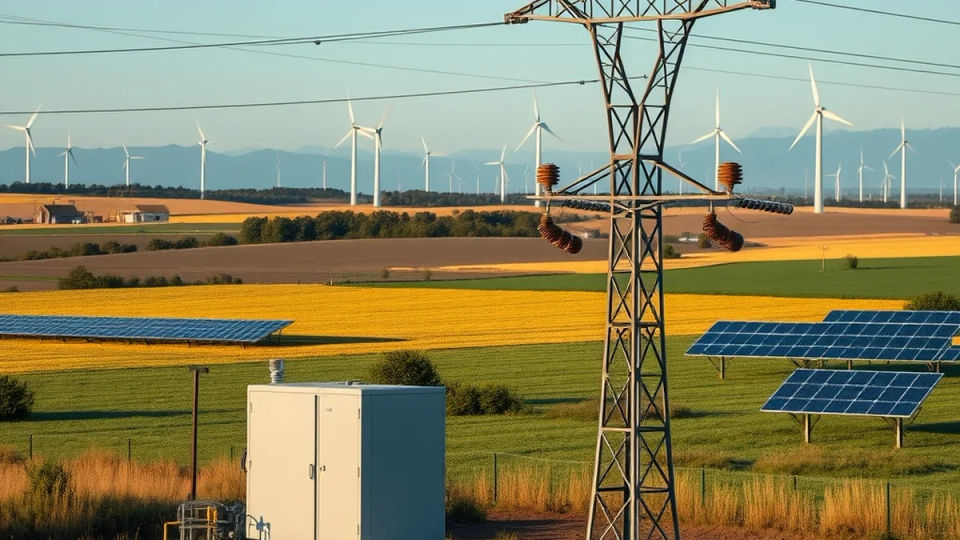
According to The New Indian Express, the Union Cabinet on Wednesday approved the third phase of the Green Energy Corridor (GEC-III) scheme, committing an outlay of ₹1,86,405 crore to bolster India's power transmission infrastructure. The initiative is designed to facilitate the evacuation of up to 135 gigawatts (GW) of renewable energy across states and Union Territories by the 2032-33 fiscal year.
Infrastructure and Storage Allocation
The project funding is divided into two primary components: ₹1,36,378 crore is earmarked for the development of Intra-State Transmission Systems (InSTS), while ₹50,000 crore is allocated for the deployment of 50 gigawatt-hours (GWh) of Battery Energy Storage Systems (BESS). These storage systems are intended to be installed at renewable energy generation sites or other strategic locations to manage grid flexibility, mitigate intermittency, and address peak-hour curtailment issues.
The National Solar Energy Federation of India welcomed the approval, noting that strengthening state networks will become vital as transmission charge waivers are phased out.
According to The New Indian Express, for Green Energy Corridor Program Evolution, India's dedicated renewable corridor planning evolved from GEC-I in 2015 and GEC-II in 2022 into GEC-III in September 2026, marking the first time large-scale battery storage has been integrated into the central transmission corridor framework.
Implementation and Financial Support
To support the project, the central government has pledged ₹54,082 crore in financial assistance. This support is intended to offset intra-state transmission charges, thereby keeping electricity costs lower for end-users. The implementation strategy distinguishes between project types: greenfield transmission projects will be awarded through Tariff Based Competitive Bidding (TBCB) under a Build-Own-Operate-Maintain (BOOM) model, while brownfield upgrades and network strengthening will be executed on a Cost Plus Basis.
State Transmission Utilities will serve as the primary implementing agencies for the corridor. The government expects the initiative to contribute significantly to India's long-term energy security and its broader goal of achieving 900 GW of installed non-fossil capacity by 2035. Beyond grid stability, the project is projected to generate substantial employment opportunities in the power sector, construction, manufacturing, and the domestic energy storage industry.
According to Saur Energy, gEC-III is structurally aligned to achieve India's national milestone of 900 GW of non-fossil fuel power generation capacity by 2035.