
Bengaluru Pink Line Draws 33,409 Riders on Day One; Underground Link Targeted for 2027
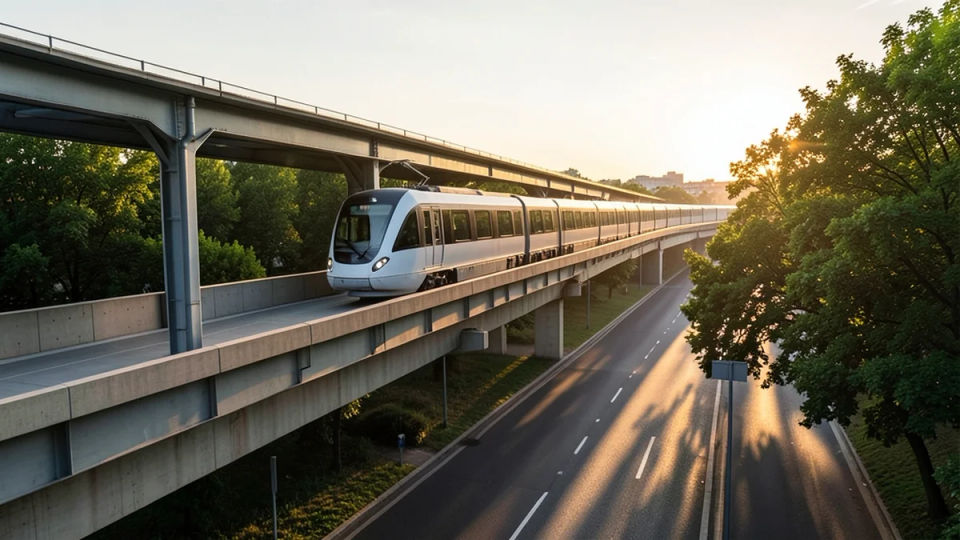
The Pink Line's elevated stretch between Kalena Agrahara and Suddagunte Palya recorded a footfall of 33,409 between 6 am and 8 pm on its first day of commercial operations, Deccan Herald reported. Public service on the 7.5 km elevated section began on 14 November 2026, a day after Prime Minister Narendra Modi inaugurated it on 13 November. Station-wise data accessed by Deccan Herald showed a footfall of 21,642 at Jayadeva Hospital station until 7 pm that day.
What the Opening Stretch Covers
The six-station elevated stretch was built at a cost of around Rs 3,470 crore, according to Deccan Herald. The full Pink Line is 21.25 km long with 18 stations, of which the elevated corridor has six and the underground section 12, the paper added. Jayadeva Hospital station links the Pink Line to the Yellow Line towards Electronic City, according to The Open Press. The Open Press described the six-level station as Bengaluru's tallest metro interchange. The opening took the operational network from 96.1 km to 103.6 km, The Open Press reported, citing Asia Daily. KNN India reported that Bengaluru became the third Indian city, after Delhi-NCR and the Mumbai Metropolitan Region, with a metro network of 100 km or more. The same report put the network at 17 km in 2014.
Fares, Timings and Train Frequency
Asianet Newsable reported that BMRCL fixed fares between Rs 10 and Rs 30 depending on distance. From SG Palya, the full run to Kalena Agrahara costs Rs 30 and the ride to Hulimavu or IIMB costs Rs 20, according to the same report. Passengers going to NS Palya or JP Nagar 4th Phase pay Rs 10. The outlet said five trains supplied by BEML would run at intervals of roughly eight minutes. The Open Press reported a different set-up, with four trains in service and a fifth held on standby, running about every eight minutes at peak hours. Greater Bengaluru Development Minister Krishna Byre Gowda said, “Once the signalling system stabilises, and based on passenger demand, the frequency will be improved”. According to Metro Rail News, the last service leaves Kalena Agrahara at 10.50 pm, and the last one from SG Palya departs at 10.54 pm. BMRCL has advised against booking QR tickets that involve a Pink Line transfer after 10.45 pm, since the Jayadeva interchange has no connecting trains after that hour.
Where Riders Went on Day One
Deccan Herald reported that most interchange passengers were heading towards Kalena Agrahara and RV Road. Only 1,065 passengers travelled towards Bommasandra and 1,596 towards Suddagunte Palya, against 4,346 towards Kalena Agrahara and 4,263 towards RV Road. In the two hours from 5 pm to 7 pm, Jayadeva Hospital station saw 5,124 passengers. A BMRCL official told Deccan Herald that the actual ridership effect would be seen from Monday and would stabilise by the end of the month. Asianet Newsable reported that BMRCL expected around one lakh passengers on that first weekday. A week after the opening, Metro Rail News reported that the stretch was carrying about 33,000 passengers a day.
What Commuters Say Is Missing
While the stretch eases traffic on Bannerghatta Road, The Federal's ground report found that platforms lack basic safety bars and that there are no feeder buses for the last mile. Giri Prasad, who works as a software engineer at Manyata Tech Park, urged the authorities to finish the Nagawara section on schedule, he told The Federal. Muniraju, a commuter from Bommasandra, said the line cut nearly 40 minutes from his morning trip, but that without feeder buses within five kilometres of stations workers remain stuck in traffic. Ashwini, an IT worker, said an eight-minute frequency would be insufficient once the weekday rush begins and asked BMRCL to cut it to five minutes. Michael, a construction worker who lives near NS Palya-JP Nagar 4th Phase station, told Deccan Herald he finds side roads easier than the metro once walking and waiting time are counted.
When the Underground Section Is Due
The remaining stretch runs underground from Dairy Circle to Nagawara with 12 stations, according to Metro Rail News. The Federal wrote that the line was sanctioned under Phase 2 in 2014, with civil work starting in 2017-18 against an original completion target of 2023-24. Deccan Herald reported that the stated deadline for the underground stretch between Dairy Circle and Nagawara is March 2027. BMRCL is aiming to open the underground section in May 2027, Metro Rail News reported. BMRCL Managing Director PC Jaffer told Moneycontrol that trials can start once safety approval is received so that the buffer barrier at the end of the elevated stretch can be removed. Metro Rail News added that materials for the platform screen doors of 10 of the 12 underground stations have been shipped.