
AERB Clears 700 MW RAPP-8 Reactor in Rajasthan for Criticality
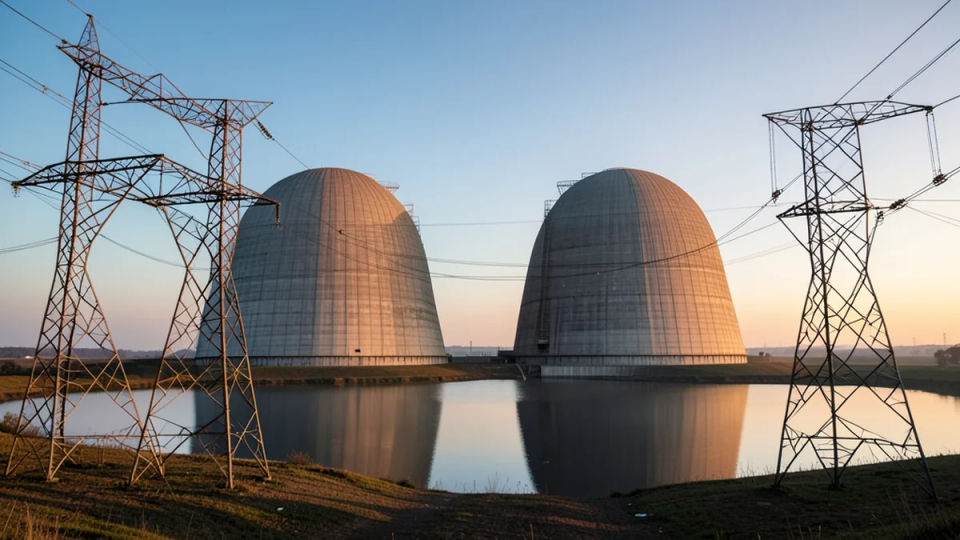
India's nuclear safety regulator, the Atomic Energy Regulatory Board (AERB), granted permission on November 19, 2026, for the First Approach to Criticality of Rajasthan Atomic Power Project Unit-8 (RAPP-8) at the Rawatbhata Nuclear Power Plant, according to ET EnergyWorld and Swarajya. The regulator cleared the indigenously designed 700 megawatt Pressurised Heavy Water Reactor (PHWR) in Rajasthan's Chittorgarh district after completing safety reviews, the Department of Atomic Energy said, as cited by ET EnergyWorld. First Approach to Criticality is the stage when a nuclear reactor initiates a controlled, self-sustaining nuclear chain reaction at low power for the first time, Swarajya reported.
Safety Reviews and Commissioning Timeline
According to the Department of Atomic Energy, the AERB granted clearance after examining the reactor's design, construction, commissioning test results, and operational preparedness, ET EnergyWorld reported. Swarajya reported that the regulator reviewed seven areas, while ET EnergyWorld noted the assessment covered safety committees, regulatory inspections, and board deliberations. Unit 8 at Rawatbhata had earlier begun fuel loading in September 2026 following prior AERB permission, Swarajya reported. Following criticality, RAPP-8 will undergo low-power physics testing before gradually raising output toward commercial electricity generation, subject to prescribed tests and further regulatory clearances, according to Swarajya and ET EnergyWorld. Nuclear Power Corporation of India Limited (NPCIL), which operates the eight-unit Rawatbhata site, targets grid synchronisation and commercial operation by next year, Swarajya reported. AERB will continue overseeing remaining commissioning work through safety reviews, inspections, and monitoring by its resident site observer team, according to ET EnergyWorld. Kakrapar Unit-4 (KAPP-4) received AERB permission for First Approach to Criticality in an announcement dated December 11, 2023, and achieved first criticality on December 17, 2023, according to World Nuclear News and the Press Information Bureau (Government of India). In an August 5, 2026 Lok Sabha reply, the Department of Atomic Energy listed RAPP-8 as being in an advanced stage of commissioning and expected to be operational in 2026, according to Press Information Bureau (Government of India). RAPP-7 received AERB permission to initiate a controlled nuclear fission reaction on September 10, 2024, and reached criticality on September 19, 2024, according to Press Information Bureau (Government of India). India's first 700 MW PHWR, Kakrapar Unit-3 (KAPP-3), received AERB permission for First Approach to Criticality on July 17, 2020, and attained criticality on July 22, 2020, according to Press Information Bureau (Government of India).
India's Indigenous 700 MW Fleet and State SMR Plans
RAPP-8 is the fourth unit in India's series of 16 indigenous 700 MW PHWR reactors being built across the country, Swarajya reported. The first two reactors of this design, Kakrapar Atomic Power Station Units 3 and 4 in Gujarat, began commercial operation in FY24, followed by RAPP-7 in April 2025, according to Swarajya and ET EnergyWorld. India currently operates 24 nuclear power reactors with 8.78 gigawatts of installed capacity, while 18 additional reactors totalling 13.6 gigawatts are under implementation or pre-project activities, Swarajya reported. Separately on Friday, Andhra Pradesh Special Chief Secretary (Energy) K Vijayanand issued Government Order Rt 81 permitting APGenco to explore Small Modular Reactor (SMR) nuclear plants of around 300 MW(e) at retiring thermal sites with private participation once the technology stabilises, following an October 2026 proposal by APGenco Managing Director S Nagalakshmi, The Hindu and Deccan Chronicle reported.
Sources & Citations
- Swarajyamag
- Economic Times
- The Hindu
- Deccan Chronicle
- Press Information Bureau (Government of India)Primary / official
- World Nuclear News
- Press Information Bureau (Government of India)Primary / official
- Press Information Bureau (Government of India)Primary / official
- Press Information Bureau (Government of India)Primary / official
- Press Information Bureau (Government of India)Primary / official