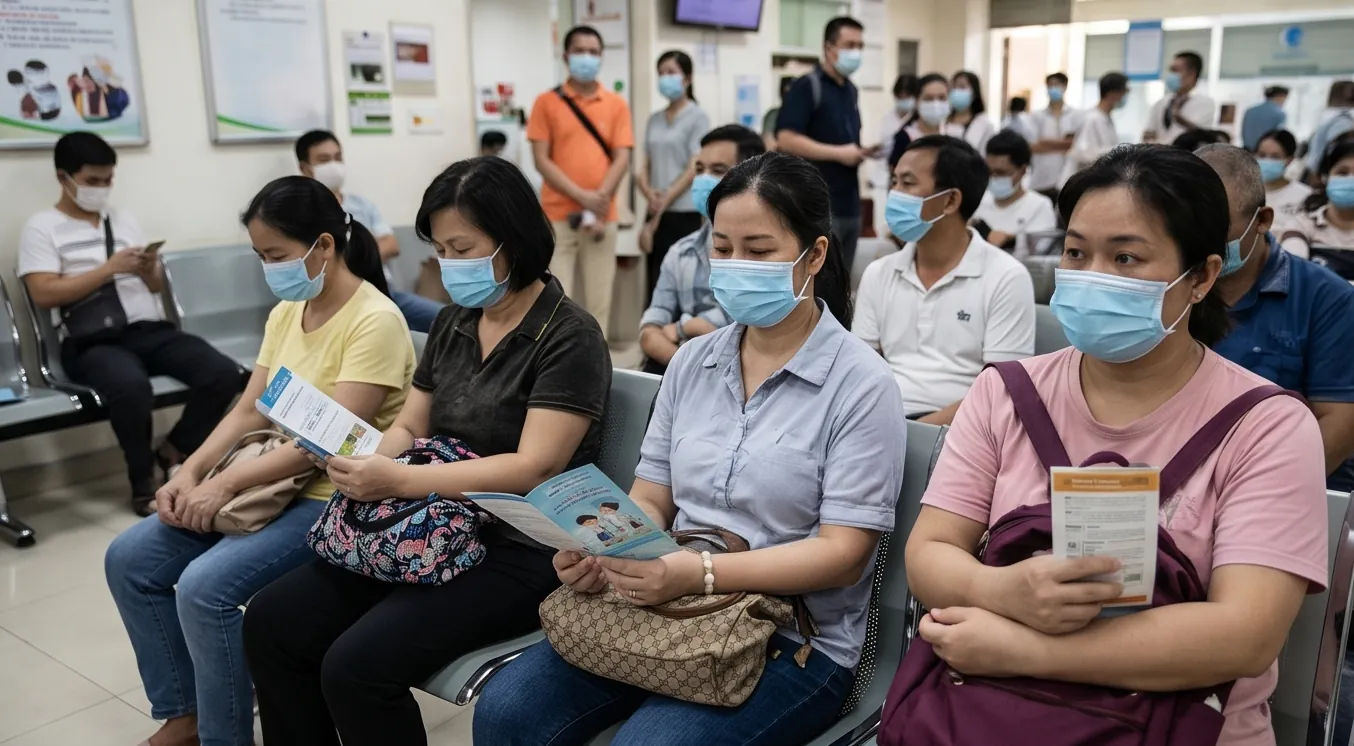
Delhi and several major Indian states are confronting a substantial spike in swine flu cases, with the national capital reporting more than 3,000 confirmed infections over a three week period ending in early September 2026. Health officials and state monitoring networks have noted rising H1N1 influenza cases across Karnataka, Kerala, Rajasthan, and Punjab, marking an off-pattern seasonal surge during the ongoing monsoon period.
Despite the sharp escalation in patient numbers, senior public health leaders and medical authorities stress that the vast majority of cases remain mild and self-limiting. The Indian Council of Medical Research has verified that the circulating virus is the established seasonal H1N1 strain rather than a novel variant, offering reassurance even as healthcare facilities prepare for elevated patient visits.
Surveillance Data and Variant Strain Analysis
Laboratory surveillance across the country indicates that H1N1 has rapidly emerged as the dominant pathogen driving acute respiratory illnesses in recent weeks. According to scientist and pediatrician Soumya Swaminathan, former deputy director general of the World Health Organization, data from Indian surveillance laboratories shows that H1N1 accounts for more than 70 percent of all respiratory infections currently being reported. The remaining cases are comprised of circulating COVID-19 strains and other seasonal influenza lineages.
Crucially, genetic testing confirms that the virus has not mutated into a more severe form. Swaminathan emphasized that the pathogen is behaving within expected parameters for seasonal influenza. As she stated in an interview, "... the good thing is that there has been no marked antigenic shift, which would indicate that this is behaving differently or that it has become more virulent or more dangerous." She added that current patterns reflect a typical seasonal increase linked to monsoon weather conditions.
Seasonal influenza in India historically follows two distinct annual peaks, according to data from the Ministry of Health and Family Welfare. The first wave typically occurs between January and March, followed by a second surge during the post-monsoon months of October and November. While the current spike has arrived somewhat earlier than the traditional post-monsoon window, laboratory findings confirm that the virus remains genetically identical to the seasonal strain that has circulated globally since the 2009 pandemic.
Official Health Directives and Containment Guidelines
In response to rising case numbers, public health administrators have issued clear directives aimed at preventing health system congestion. Rajiv Bahl, director general of the Indian Council of Medical Research, confirmed that most patients infected during this wave experience mild symptoms that resolve naturally with home care. Bahl advised that individuals with routine coughs do not require immediate diagnostic testing for swine flu, urging the public instead to practice basic preventative measures such as wearing face masks in crowded areas and staying home when symptomatic.
Reinforcing this guidance, the Indian Medical Association declared that the surge does not constitute an epidemic and that there is no cause for public panic. The professional body emphasized that standard H1N1 symptoms, including high fever, cough, sore throat, headache, and muscle aches, can generally be managed with rest and basic symptomatic relief. However, medical professionals caution that warning signs such as chest pain or breathing difficulties require prompt clinical evaluation.
The association issued an explicit warning against the practice of self-medication, particularly the unprescribed use of over the counter antibiotics and antivirals. Professional guidelines highlight that antiviral and antibacterial agents are only appropriate when secondary bacterial infections are confirmed through diagnostic laboratory testing. Misuse of these powerful medications poses a direct threat to public health by accelerating rates of antimicrobial resistance across the population.
Seasonal Vaccine Efficacy and Coverage Gaps
Public health experts continue to evaluate the role of preventive immunization in managing seasonal influenza surges. Currently, there is no standalone vaccine developed exclusively for H1N1. Instead, protection is provided through quadrivalent or trivalent seasonal influenza vaccines that target multiple circulating strains, including influenza A(H1N1), influenza A(H3N2), and influenza B lineages. These formulations are updated periodically to match circulating viral strains worldwide.
Medical researchers emphasize that while flu vaccines offer valuable individual protection, their primary utility lies in reducing disease severity rather than stopping transmission entirely. Ritu Priya, a retired professor at the Centre for Social Medicine and Community Health at Jawaharlal Nehru University in New Delhi, explained that seasonal influenza jabs moderate the intensity of illness in high risk individuals but do not alter the overall cycle of viral spread within the community.
Guidelines from the Indian Medical Association highlight the broad utility of seasonal immunization, noting that vaccination reduces the theoretical potential for influenza strains to undergo genetic recombination. Medical experts strongly advise seasonal vaccination for vulnerable demographic groups, including elderly citizens, young children, individuals with underlying immunocompromising conditions, and frontline healthcare workers who face high occupational exposure.
Household Financial Strain and Out of Pocket Healthcare Costs
Although the biological severity of the current strain remains relatively low, the healthcare costs associated with treatment are placing a heavy financial burden on low income families. A significant proportion of the population seeks medical attention from private sector clinics, driven by long wait times and brief consultation periods at public healthcare facilities. Data from government policy think tank NITI Aayog confirms that patients frequently prefer private providers due to the additional time clinicians spend during individual examinations.
The economic burden becomes particularly acute when routine flu cases escalate into complications such as secondary pneumonia. For instance, Gomati, a domestic worker in her 60s residing in Delhi, accumulated treatment bills totaling 16,000 rupees (US$ 168) at a private clinic after her initial flu symptoms progressed to severe chest pain and pneumonia. This single medical event far exceeded her monthly wage of 6,000 rupees (US$ 63), which she combines with a 2,500 rupee (US$ 27) monthly state pension to cover living expenses.
Financial barriers also limit the widespread adoption of preventive vaccination. Unlike childhood vaccines supplied free of charge under national immunization programs, seasonal flu shots are available exclusively through private healthcare providers. With retail prices ranging between 2,000 and 3,000 rupees (US$ 22 to 32) per dose depending on the brand, immunization remains largely unaffordable for the poorest 20 percent of Indian households, whose total monthly spending averages 12,000 to 18,000 rupees for a family of five.
Ongoing Surveillance and Implementation Details
State health departments and local municipal authorities are maintaining active surveillance systems to track case trajectories and monitor hospital admission rates across affected urban centers. Health ministries across Karnataka, Kerala, Rajasthan, Punjab, and the National Capital Territory of Delhi continue to gather epidemiological data to detect any unexpected shifts in patient demographics or clinical outcomes.
Public health agencies are focusing on clear public communications to ensure that citizens recognize red flag symptoms while avoiding unnecessary emergency room visits. Clinical monitoring networks will continue analyzing viral isolates throughout the remainder of the monsoon period to verify that the circulating H1N1 strain maintains its stable genetic profile without acquiring novel mutations or resistance characteristics.