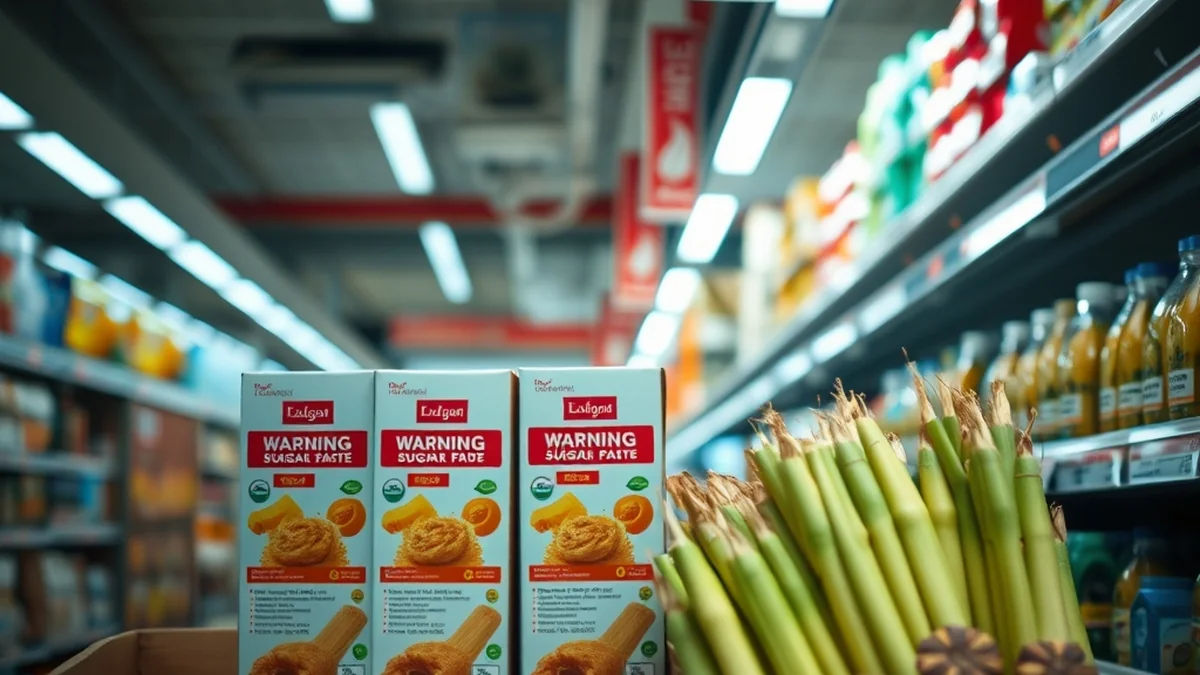
India is confronting a multifaceted crisis surrounding sugar, driven by surging child obesity rates on the public health front and a tightening agricultural supply crunch linked to the national ethanol blending programme. The Food Safety and Standards Authority of India, prodded by the Supreme Court, has proposed mandating bold red warning labels on the front of packaged foods high in fat, salt, or sugar. This regulatory action follows mounting scrutiny over nutritional transparency, highlighted by findings that 41 million Indian children and adolescents aged 5 to 19 are now classified as overweight or obese according to the World Obesity Atlas 2026.
Simultaneously, the agricultural and commercial dimensions of sugar are placing intense pressure on domestic markets and consumer prices. Domestic sugar production is currently expected to reach approximately 30.6 million tonnes, falling significantly short of the government's earlier projection of 34.4 million tonnes. This shortfall has been compounded by exports shipped before the true scale of the deficit became clear, with roughly 800,000 tonnes dispatched prior to the imposition of export restrictions. To stabilize domestic supply ahead of the festive season, the government has opened duty-free imports allowing an additional one million tonnes of raw sugar into the country.
Nutritional Scrutiny and Front of Pack Warnings
The push for front-of-pack red warning labels seeks to reform how processed foods and sweetened beverages are marketed to consumers. Breakfast cereals, sweetened yoghurts, and popular health drinks have long been promoted as wholesome additions to children's diets, emphasizing energy content while obscuring high sugar levels. Public criticism intensified after a major multinational was found adding sugar to infant food sold in lower-income countries while omitting it from identical products in Europe. Furthermore, public pressure forced a leading health drink brand to institute a 15% reduction in its added sugar content.
Public health advocates argue that warning labels alone will not resolve the broader dietary crisis affecting millions of young Indians. The rapid rise in childhood diabetes and morbid obesity underscores the need for comprehensive regulatory measures that go beyond mere disclosure. While the FSSAI proposal represents a departure from traditional back-of-pack fine print, experts note that meaningful dietary shifts require tackling the aggressive marketing strategies employed by processed food manufacturers across the country.
Ethanol Mandates and Sugarcane Diversion
Beyond nutritional concerns, the domestic sugar market faces structural pressures from India's ambitious Ethanol Blended Petrol programme. The programme requires oil marketing companies to procure ethanol at government-set prices to reduce crude oil imports and enhance energy security. However, this dual mandate means that sugarcane must simultaneously satisfy demands for domestic consumption, exports, and fuel feedstock. Nearly three million tonnes of sugar were diverted toward ethanol production during the current cycle, triggering intense debate over the policy's impact on food supplies.
Disagreements persist regarding the exact scale of this diversion and its contribution to rising consumer prices. While critics argue that ethanol production exacerbates sugar shortages, government figures indicate that the share of sugarcane diverted to ethanol has declined from roughly 12 percent in the 2022-23 period to approximately 9 percent in 2025-26. Political parties have clashed over the issue, with the Communist Party of India-Marxist publicly blaming government ethanol policies for driving up retail sugar costs.
Market Dynamics and Supply Chain Flexibility
Agricultural policy experts emphasize that India's sugar supply challenges require greater structural flexibility for producers and mills. When domestic production forecasts prove inaccurate, relying solely on export bans and delayed imports can disrupt planning for farmers and traders while failing to create actual physical supply. Industry analysts point to Brazil's integrated sugar-ethanol model as a framework where mills can seamlessly pivot between sugar production and fuel depending on prevailing market prices.
The Food Secretary reported that ex-mill sugar prices fell by 18 percent to Rs 55 per kilogram following the implementation of duty-free import allowances. However, this reduction has been slow to materialize for retail consumers facing higher costs ahead of the festive season. Legal challenges have also emerged regarding transparency, as demonstrated when the Supreme Court declined to entertain a petition seeking mandatory disclosure of ethanol blending percentages on fuel-dispensing nozzles and receipts, directing the petitioner instead to approach the relevant High Court.
Balancing Food Security and Energy Goals
Policymakers face the delicate task of balancing national food security, farmer livelihoods, and energy independence without forcing an artificial choice between sugar and fuel. Allowing duty-free raw sugar imports serves as a necessary safety valve when domestic forecasts fall short, preventing temporary agricultural deficits from escalating into prolonged price shocks. Open trade policies, proponents argue, complement domestic production by providing an essential buffer against unpredictable crop yields.
Managing these competing demands effectively requires establishing regulatory frameworks that grant agricultural producers the adaptability to respond to shifting market conditions. As India navigates both a childhood obesity epidemic and tightening commodity markets, policymakers must ensure that regulatory interventions protect consumers and farmers alike. The convergence of nutritional reform and agricultural strategy highlights the urgent need for a cohesive national approach to the nation's defining dietary and crop management challenges.