
Hospitals Lack Capacity to Measure Healthcare AI Outcomes, Warns French Expert
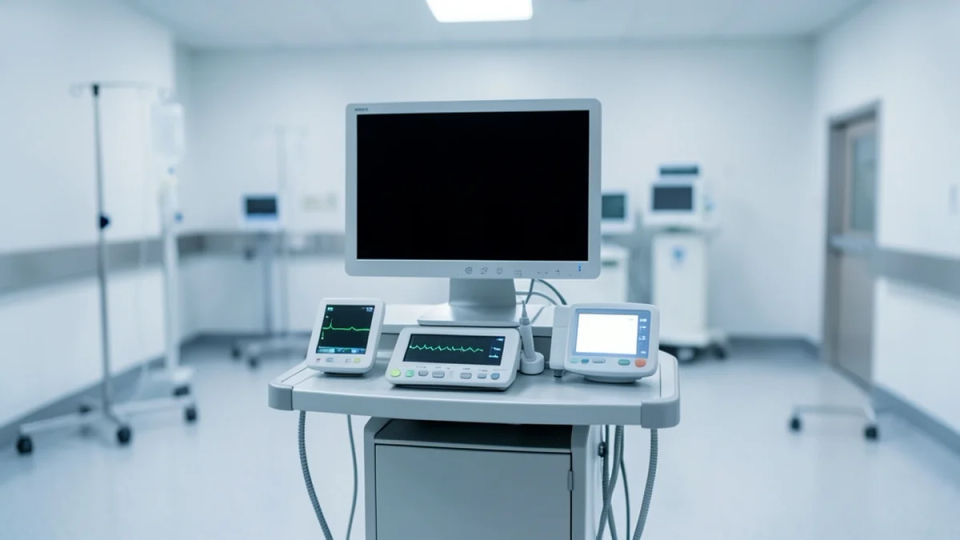
Hospitals around the world lack the capacity to evaluate whether artificial intelligence tools deployed in clinical care actually improve patient outcomes, Emmanuel Bacry, Scientific Director of France's Health Data Hub, warned at the Bengaluru Tech Summit on November 20, 2026.
"There are maybe six or seven hospitals in the whole world today that are able to evaluate medical devices deployed in their system," Bacry said, according to The Hindu. He explained that hospitals struggle to access and integrate patient records to track post-discharge recovery rates and mortality, leaving them unable to verify the clinical impact or return on investment of medical technologies, noting: "In hospitals, we don't know how to compute that." As of September 2026, the U.S. Food and Drug Administration (FDA) has authorized over 1,600 AI-enabled medical devices for marketing in the United States, according to U.S. Food and Drug Administration.
ICU Alert System Case and Laboratory Scores
To illustrate unintended clinical effects, Bacry cited a 2022 rules-based AI expert system deployed in six US hospitals to alert intensive care unit staff to severe kidney failure, which he said was associated with a doubling of deaths in two of those hospitals despite functioning effectively.
Bacry also cautioned against judging diagnostic AI by laboratory accuracy scores or head-to-head comparisons with clinicians, noting that a tool scoring 95% accuracy against a doctor's 90% may not perform better in practice. "When you deploy in real life, you can forget about these scores," he said.
Black-Box Correlations and Western Data Bias
Pointing to unexplained model behaviour, Bacry cited research in which one AI system predicted ethnicity from chest X-rays with roughly 85% accuracy and another inferred sex from eye images with 95% accuracy, warning that hidden correlations could introduce unintended bias into diagnosis and treatment without clinicians knowing why. In a separate conversation with The Hindu, he estimated that nearly 70% of global healthcare AI training data comes from male, white and Western populations, remarking: "We are developing an Occidental AI and even narrow types of Occidental AI."
Bacry, who heads France's Health Data Hub established under French law in 2019 and serves as a CNRS research director at Université Paris Dauphine-PSL, urged healthcare systems to adopt smaller, locally tailored AI models trained on representative data, warning that deploying large general-purpose models without local adaptation could have disastrous consequences in developing countries.
Background
Through December 1, 2025, the U.S. Food and Drug Administration sought public comments under Docket No. FDA-2025-N-4203 on practical approaches to measuring real-world performance and managing performance drift of AI-enabled medical devices, according to U.S. Food and Drug Administration.
In India, hospital buyers increasingly require a licence from the Central Drugs Standard Control Organisation (CDSCO) before discussing a pilot deployment of healthcare AI software, rather than accepting accuracy scores alone, according to Asian Hospital & Healthcare Management.
Sources & Citations
- The Hindu
- Wisevoter
- U.S. Food and Drug AdministrationPrimary / official
- Asian Hospital & Healthcare Management
- French Ministry of HealthPrimary / official
- PLOS Digital Health
- The BMJ
- Cisema
- Indian Council of Medical ResearchPrimary / official
- Health Data Hub
- Health Data Hub
- Galeon
- U.S. Food and Drug AdministrationPrimary / official
- Office of the Assistant Secretary for Technology PolicyPrimary / official