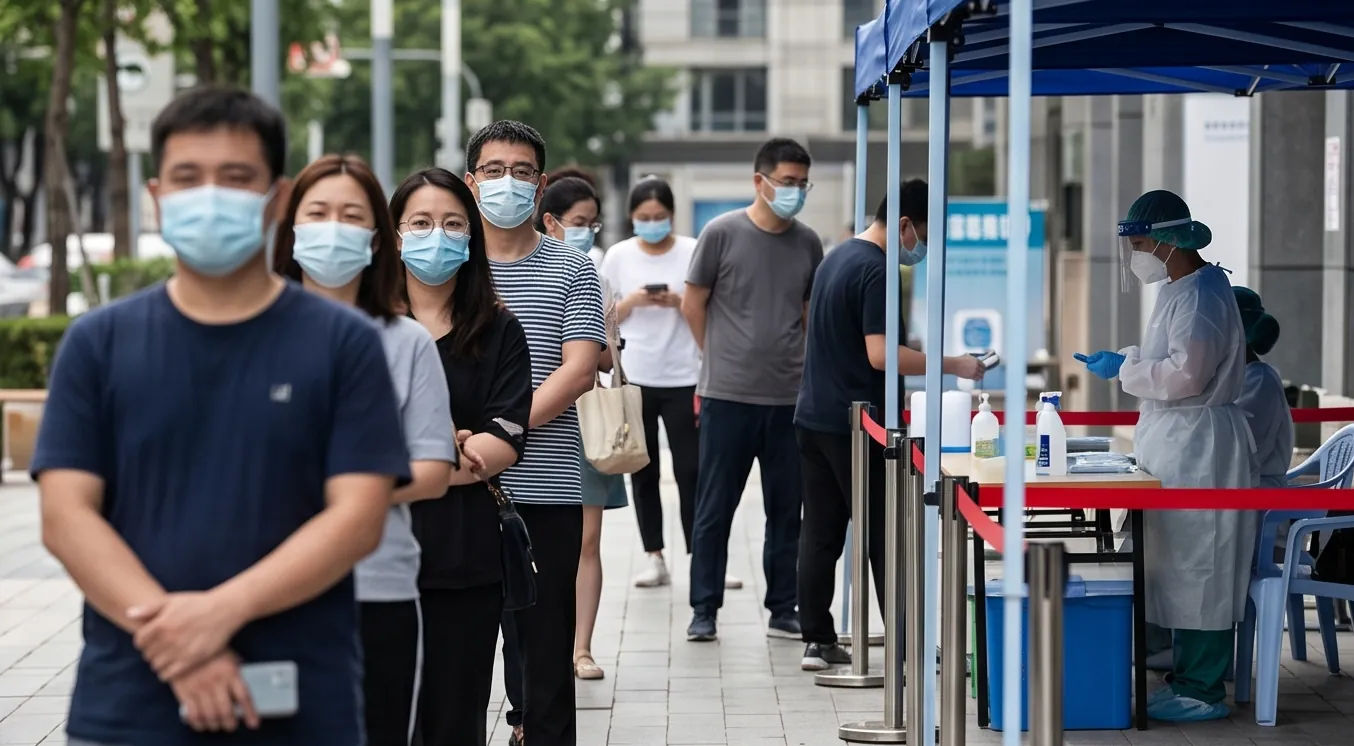
The Ebola death toll in the Democratic Republic of Congo reached 3,007 fatalities as of August 31, 2026, accompanied by 6,186 confirmed cases, according to DR Congo government data. The epidemic, categorized as the 17th Ebola outbreak in the country's history, was formally declared in Ituri province on May 15, 2026. Health officials have suggested that transmission may have begun as early as January 2026, though the exact start date remains unconfirmed. The outbreak has since spread across six provinces, including North Kivu, South Kivu, Haut-Uélé, Tshopo, and Bas-Uélé. Caused by the Bundibugyo species of Ebola virus, for which no approved vaccine or specific treatment currently exists, the crisis prompted the World Health Organization (WHO) to declare a Public Health Emergency of International Concern (PHEIC) on May 16, 2026.
Responding to the spread of the Bundibugyo strain, the WHO Technical Advisory Group on Candidate Vaccine Prioritization (TAG-CVP) recommended on August 7, 2026, that Merck's Ervebo vaccine be prioritized for a Phase III clinical trial to assess cross-protection. A WHO statement confirmed that committee members recommended Ervebo, the only licensed Ebola vaccine, for inclusion in a randomized clinical trial during the ongoing outbreak. An initial allocation of 70,000 doses of Ervebo has been secured, which includes 20,000 doses designated for the clinical trial and 50,000 doses allocated for frontline health workers.
Beyond direct clinical management, the outbreak presents severe socioeconomic consequences. The UN Development Programme (UNDP) warned on June 30, 2026, that the outbreak could push 985,000 additional people into poverty and impose costs of up to US$3.6 billion on African economies. Ahunna Eziakonwa, UN assistant secretary-general and UNDP regional director for Africa, stated that Ebola affects livelihoods, education, food security, trade, public finances, and trust, cautioning that treating the crisis solely as a health challenge risks missing a larger development emergency. Downstream economic modeling indicates the DR Congo Gross Domestic Product could lose over $1 billion alongside 55,000 jobs, while disrupted healthcare services threaten to trigger up to 2,520 excess infant deaths from non-Ebola causes.
Operational responses have faced persistent security obstacles. Pierre Akilimali, incident manager for the Ebola response, noted that numerous attacks on health facilities and workers have been perpetrated by angry local crowds. These security challenges mirror difficulties faced during the 2018-2020 outbreak in North Kivu and Ituri provinces, which recorded nearly 3,500 confirmed cases and over 2,200 deaths. Public skepticism has further complicated containment efforts, compounded by historical precedents where communities questioned official response strategies.
Critiques of the handling of the epidemic were published by Doctors Without/Médecins Sans Frontières (MSF) in a commentary in The Lancet on September 1, 2026. Karline Kleijer, MSF Head of Emergencies, described the Ebola response in DR Congo as a systematic and catastrophic failure that left thousands dead, questioning why mortality rates exceeded those of the West Africa epidemic despite newer medical interventions, and why communities targeted healthcare workers. Historical survey data published in The Lancet in 2019 indicated that less than a third of responders trusted official authorities, with over a quarter doubting the existence of Ebola, behaviors that historically limited healthcare utilization.