
Best time to eat almonds (badam) and nuts: what trials found about a mid-morning or bedtime handful
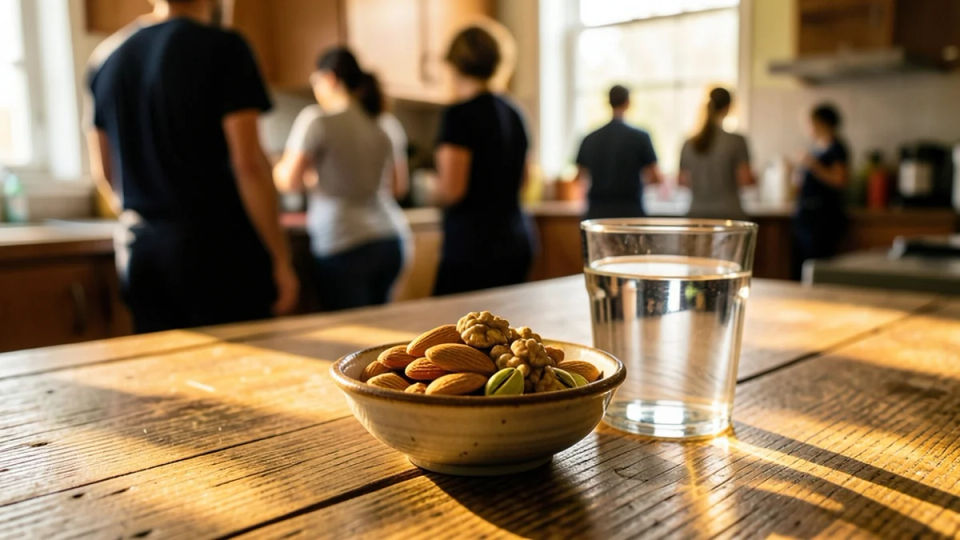
People often wonder whether eating almonds, known as badam, or other tree nuts mid-morning or at night makes a difference to blood sugar, appetite and weight. In a 2021 randomised crossover trial of 100 healthy and overweight adults in New Zealand, researchers at the University of Otago found that a mid-morning snack of raw almonds lowered blood sugar spikes and reduced total calorie intake later that day compared with sweet biscuits. By contrast, a 2024 randomised crossover trial of 66 adults with prediabetes by researchers at The Pennsylvania State University found that eating 57 grams of pistachios at night did not lower morning fasting blood sugar compared with standard carbohydrate snacks.
What a mid-morning handful of almonds did
In the 2021 University of Otago trial published in the International Journal of Environmental Research and Public Health, participants ate either raw almonds, equivalent to 42.5 grams or 10 percent of daily energy needs, or isocaloric sweet biscuits two hours after a standardised breakfast. Over the next two hours, the blood sugar response area under the curve was 53 mmol/L.min lower after almonds than after sweet biscuits. Although self-reported appetite ratings and lunch intake two hours later did not differ meaningfully, participants consumed 638 kJ less combined energy across lunch and the rest of the day after the almond snack. In a separate 2023 randomised trial of 140 overweight or obese adults published in the European Journal of Nutrition, researchers at the University of South Australia gave participants almonds or a carbohydrate snack bar after an overnight fast. The University of South Australia authors reported a 47 percent smaller C-peptide response, reflecting lower insulin secretion, along with larger responses in appetite-related hormones such as glucagon and pancreatic polypeptide, though self-reported hunger and buffet intake did not change.
What happened with a nighttime pistachio snack
In the 2024 trial published in The Journal of Nutrition, 51 of 66 randomised adults with prediabetes completed 12 weeks of eating 57 grams per day of dry roasted unsalted pistachios after dinner and before bedtime, compared with education to eat 15 to 30 grams of carbohydrates. The Penn State University authors found no significant differences between the two diets in fasting plasma glucose, HbA1c, insulin, insulin resistance, blood pressure or blood lipids. However, the Healthy Eating Index-2015 diet quality score was 6.8 points higher after the pistachio period than after the usual carbohydrate snack period.
Daily tree nuts and blood sugar control
For longer-term blood sugar control, a 2014 meta-analysis of 12 randomised trials in 450 adults with type 2 diabetes published in PLoS One by researchers at Saint Michael's Hospital and the University of Toronto examined daily tree nut intake. The Saint Michael's Hospital and University of Toronto authors reported that a median dose of 56 grams per day over a median of about 8 weeks lowered HbA1c by 0.07 percent and fasting blood glucose by 0.15 mmol/L, especially when nuts displaced high-glycemic carbohydrates. They noted that fasting insulin and insulin resistance (HOMA-IR) did not change significantly, and that trials lasting 12 weeks or longer showed larger HbA1c reductions than shorter trials.
Who should be careful and study limits
In the 2024 Penn State University trial, participants gained 0.7 kg in weight and 0.2 kg/m2 in body mass index during the nighttime pistachio period, which the authors noted may mean the snack added extra daily calories instead of replacing evening foods. The 2021 University of Otago trial excluded obese individuals and measured blood sugar and appetite for only two hours. The 2023 University of South Australia trial had its buffet meal component cut short by COVID-19 restrictions. The authors of the 2014 PLoS One meta-analysis added that 81 percent of the included diabetes trials were of poor quality and more than half lasted under 12 weeks, concluding that larger, longer trials are needed.