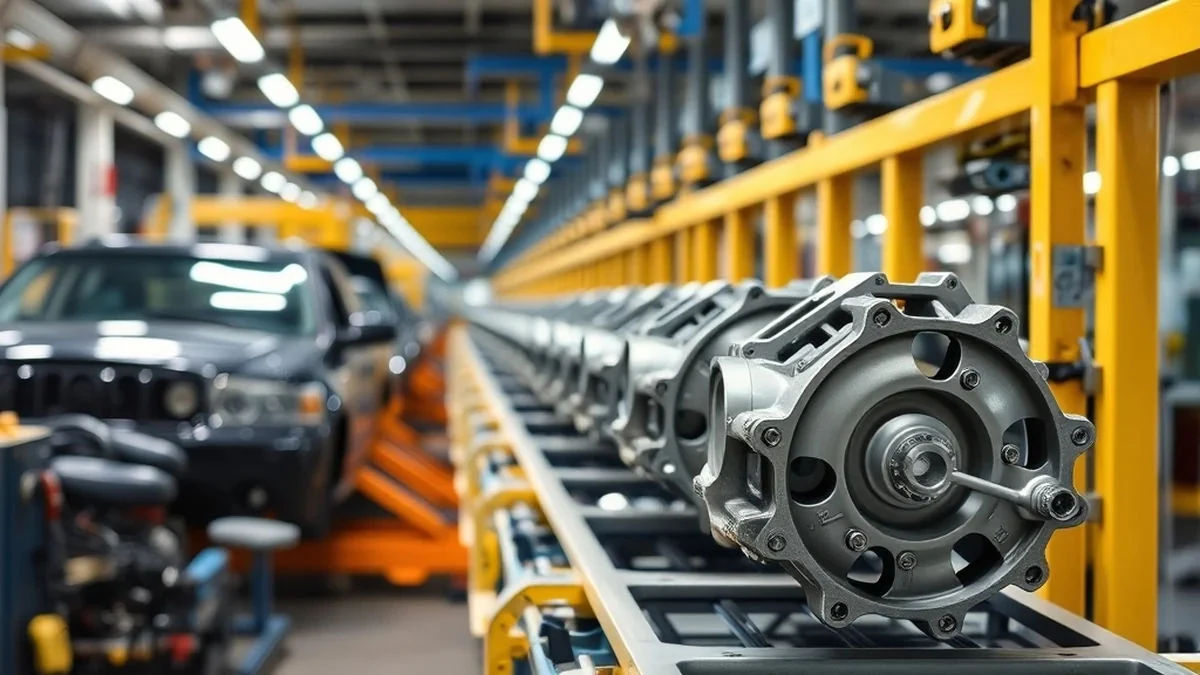
Vietnamese electric vehicle manufacturer VinFast has secured official regulatory approval to expand its manufacturing facility in India, according to a report published by Autocar India on September 2, 2026. The approval accompanies a strategic pivot by the automaker to develop electric vehicles specifically tailored for the Indian market, moving away from a uniform global model after previously pausing certain manufacturing lines to re-evaluate its local production roadmap.
The plant expansion authorization enables VinFast to anchor its regional production framework around local consumer needs. A VinFast spokesperson stated, 'We are committed to the Indian market by localizing our product architecture to meet the unique infrastructure and consumer demands of the region.' This localized product architecture involves engineering vehicles capable of withstanding severe regional road conditions and operating efficiently within developing domestic charging networks.
While regulatory clearance for the manufacturing site has been granted, specific capital expenditure figures for the upcoming India-specific research and development center, along with exact commercial launch timelines for the India-exclusive models, have not been publicly disclosed by corporate representatives.
The strategic shift mirrors the localized product development approach previously adopted by international automakers such as Hyundai and Kia, which successfully tailored vehicle platforms and cabin features to capture substantial market share across the region. However, entering the domestic market requires navigating an entrenched competitive environment.
Industry analysts at J.D. Power India have previously questioned the financial and operational viability of new electric vehicle entrants in the country, citing intense price competition and market dominance established by domestic incumbents like Tata Motors and Mahindra. These established manufacturers maintain mature supply chains and extensive dealer networks that present significant barriers for new market participants.
For Indian electric vehicle consumers, the plant expansion and local R&D initiative will eventually translate into vehicle options engineered specifically for domestic driving cycles and climate conditions. These targeted models are expected to lower the operational barriers to premium electric vehicle adoption, providing alternatives to imported designs that often require adaptation to local infrastructure constraints.