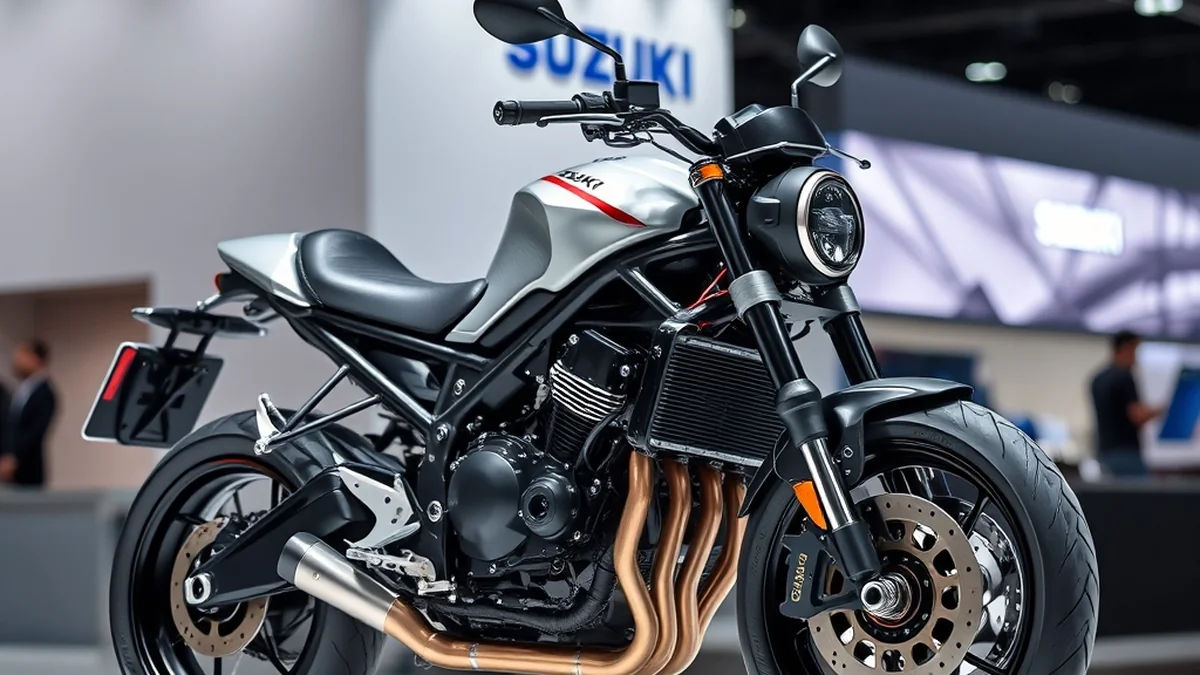
Suzuki Motor Corporation is preparing an updated version of its longstanding SV650 middleweight motorcycle for the 2027 model year, as confirmed by regulatory documents filed with the California Air Resources Board. An executive order published by the state environmental regulator shows that the Japanese manufacturer has added a revised SV650 model to an existing emissions certification, incorporating hardware changes that will allow the platform to meet current international emissions limits.
The regulatory approval marks a clear path for Suzuki to reintroduce the popular naked bike to European markets, where the previous iteration was withdrawn after failing to meet strict Euro5+ environmental standards. The filing also indicates that the updated middleweight motorcycle will receive its first major mechanical and electronic overhaul in several years, aligning its feature set with contemporary market expectations.
Regulatory Filings Confirm SV650 Engine Shared With SV-7GX
According to the published California Air Resources Board executive order, Suzuki registered the new motorcycle under the internal model code SV650RQM7. Industry naming conventions used by the manufacturer indicate that the "M7" designation applies to the 2027 model year, while the "RQ" prefix matches coding previously applied to street-oriented models, such as the GSX-8S introduced in 2023.
By incorporating the SV650 into the existing certification established for the newly introduced SV-7GX, Suzuki confirms that both machines will share an updated 645cc liquid-cooled V-twin engine platform. On the SV-7GX, which debuted at last year's EICMA show, this revised powerplant delivers a peak output of 73.4 horsepower and 64 Newton-meters of torque.
To comply with stringent tailpipe standards across North American and European regulatory jurisdictions, the updated emissions assembly includes modified exhaust hardware. Specifically, the regulatory documentation outlines the addition of a second oxygen sensor alongside a redesigned catalytic converter, resolving the compliance hurdles that had halted European distribution.
Integrated Electronic Package Replaces Analog Throttle Architecture
The transition to the updated 645cc V-twin architecture brings full ride-by-wire electronic throttle control to the SV650 line. The digital system replaces the traditional cable-actuated setup, serving as the foundational technology for a broad suite of modern rider assistance features previously absent from the budget-focused middleweight bike.
With electronic throttle management installed, the 2027 SV650 is slated to feature selectable riding modes, multi-stage traction control, and a bidirectional quickshifter. Cockpit instrumentation will also undergo a major modernization, moving from older digital-analog gauge clusters to a full-color 4.2-inch thin-film transistor display screen.
These technical inclusions address a historic gap in Suzuki's middleweight lineup. For decades, the SV650 prioritized mechanical simplicity and value pricing over advanced rider aids, but competing offerings in the naked streetfighter category have increasingly standardized electronic traction controls and quickshifters as baseline equipment.
European Market Re-Entry Following Euro5+ Discontinuation
The SV650 model line has served as an entry point for intermediate riders for over twenty-five years, praised for its accessible power delivery and predictable handling. However, European operations suffered a setback when Euro5+ emissions rules took effect, forcing Suzuki to pull the non-compliant model from regional dealerships rather than immediately update its aging engine internals.
The unified engine certification strategy solves that commercial dilemma. By standardizing the emissions package across the SV-7GX and the SV650, Suzuki can cost-effectively reintroduce the SV650 into European showrooms without maintaining distinct production variants for separate global markets.
While Indian enthusiasts never received the SV650 in official domestic showrooms, Suzuki previously utilized the identical 645cc V-twin architecture in the V-Strom 650 adventure-touring motorcycle sold in India. The compliance refresh for the V-twin platform could potentially re-open possibilities for future model allocations in developing motorcycle markets.
Design Retrospective and Unanswered Hardware Questions
While the California Air Resources Board documentation clarifies powertrain and emissions specifications, executive orders do not provide details regarding frame geometry, suspension components, braking hardware, or bodywork design. Consequently, whether Suzuki intends to modify the motorcycle's tubular steel frame or update its styling remains unconfirmed.
Suzuki has navigated structural re-designs for the SV lineage with mixed consumer reactions in past generations. When Suzuki replaced the original SV chassis design with the clad Gladius model in 2006, the rounded aesthetic faced criticism from traditionalists, prompting Suzuki to return to a stripped-back naked design language upon reviving the SV moniker in 2016.
Automotive observers expect Suzuki to officially present the finished production model at the EICMA motorcycle show in Milan, Italy, scheduled for November. The public exhibition is anticipated to reveal final retail pricing, market-by-market availability timelines, optional color schemes, and full chassis specifications ahead of its formal 2027 commercial rollout.