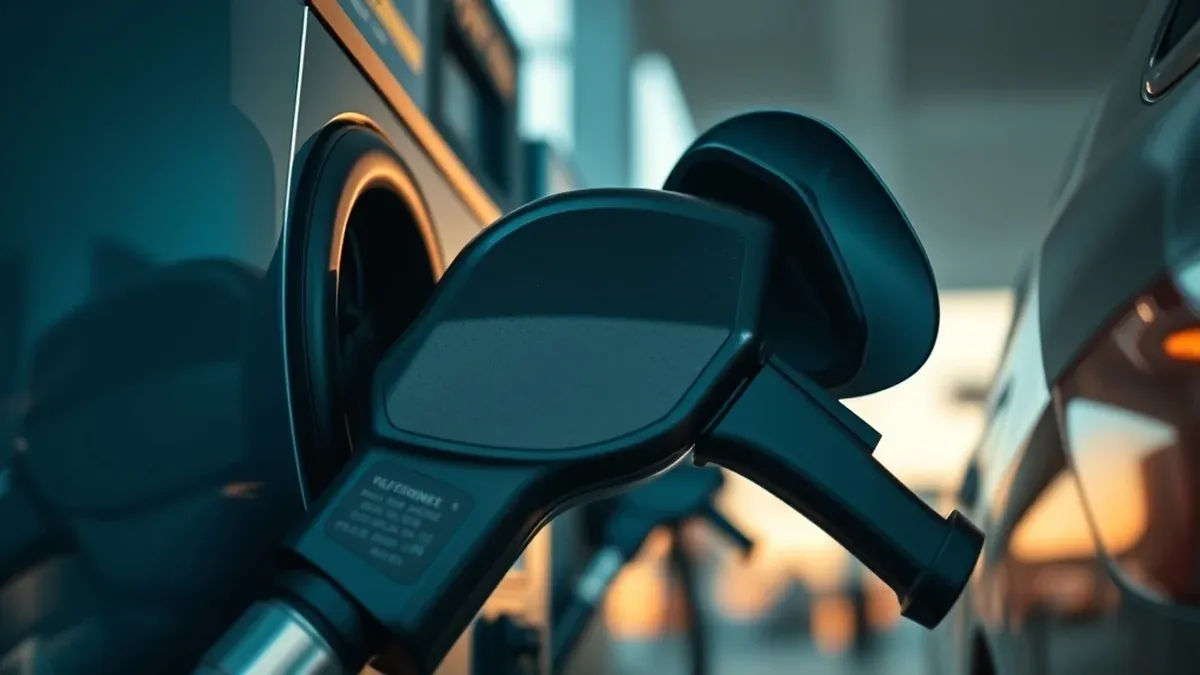
The Supreme Court of India has agreed to examine a comprehensive public interest litigation (PIL) petition seeking judicial directions to mandate clear, standardized labeling of ethanol-blended petrol across all retail fuel dispensing stations nationwide. The legal intervention highlights growing technical and consumer concerns regarding the rapid rollout of E20 (20 percent ethanol blended with 80 percent petrol) fuel and its operational impact on millions of older internal combustion engine vehicles not engineered to withstand high alcohol concentrations.
A judicial bench presided over by the Chief Justice of India issued formal notice to the Ministry of Petroleum and Natural Gas (MoPNG), the Ministry of Road Transport and Highways (MoRTH), and leading public sector oil marketing companies (OMCs), seeking their formal response to consumer protection and environmental disclosures at retail dispensing points. The litigation argues that the absence of transparent fuel composition signage deprives citizens of informed choice and risks widespread mechanical damage to private vehicles.
The Legal and Constitutional Arguments Behind the Petition
The petition, filed under Article 32 of the Constitution of India, contends that consumers possess an inherent fundamental right to information under Article 19(1)(a) regarding the precise chemical composition and ethanol percentage of fuel dispensed into their vehicles. The plea argues that without prominent, standardized dispenser stickers distinguishing between pure petrol (E0), E10 (10 percent blend), and E20 (20 percent blend), motorists cannot exercise informed consumer choice.
the petition invokes the Consumer Protection Act of 2019, arguing that dispensing high-blend ethanol fuel into incompatible legacy vehicles without clear forewarning amounts to an unfair trade practice. Motorists who unknowingly refuel pre-2023 BS-IV and early BS-VI vehicles with E20 risk severe fuel system corrosion, degraded fuel line seals, engine misfiring, and invalidated manufacturer mechanical warranties.
Technical Realities: Ethanol Corrosiveness and Engine Compatibility
Ethanol possesses chemical properties that distinguish it markedly from pure petroleum hydrocarbons. As an alcohol, ethanol is hygroscopic, meaning it actively absorbs atmospheric moisture and water vapor from storage tanks and vehicle fuel systems. When the water concentration exceeds critical thresholds, phase separation occurs, causing an ethanol-water layer to settle at the bottom of the fuel tank where the fuel pump draws intake.
For modern flex-fuel vehicles and models manufactured after April 1, 2023, automotive manufacturers have redesigned fuel tanks, rubber fuel hoses, injector seals, and engine valve seats using corrosion-resistant fluoroelastomers and stainless steel alloys. However, the Society of Indian Automobile Manufacturers (SIAM) has repeatedly observed that pre-2023 vehicles were engineered strictly for E5 or E10 blends. Running older engines on E20 fuel over extended periods accelerates the degradation of rubber gaskets, corrodes aluminum carburetor components, and reduces volumetric fuel efficiency by 3 to 6 percent due to ethanol’s lower calorific energy density.
National Ethanol Blending Roadmap and Energy Security Goals
The central government’s aggressive ethanol blending push is anchored in the National Policy on Biofuels, which advanced the target for nationwide E20 implementation from 2030 to 2025-2026. The policy aims to achieve three vital macroeconomic objectives: reducing India's massive crude oil import expenditure, curbing tailpipe carbon monoxide emissions, and providing agricultural income support to domestic sugarcane and grain farmers through biofuel procurement.
According to government telemetry, India's average ethanol blending percentage in petrol has surged from just 1.5 percent in 2014 to over 15 percent by mid-2024, saving tens of thousands of crores in foreign exchange outflows. Oil marketing companies argue that standardizing retail supply simplifies logistical distribution pipelines and maximizes national biofuel absorption, maintaining that modern fuel additives mitigate corrosion risks across general consumer fleets.
Dispenser Transparency and Global Regulatory Precedents
The petitioners contrast India's current retail dispensing environment with international regulatory frameworks across the United States, Brazil, and the European Union. In the United States, federal law under the Environmental Protection Agency (EPA) strictly mandates bright orange and black dispenser warning labels on all E15 and E85 fuel pumps, explicitly alerting consumers that using blends exceeding E10 in legacy vehicles or small two-stroke engines violates federal regulations and causes engine failure.
The petition urges the Supreme Court to direct Indian authorities to adopt comparable color-coded pump labeling, alongside an obligation for retail outlets to maintain at least one dispensing nozzle delivering standard E10 fuel for older vehicles during the transitional phase. Such measures would safeguard billions of rupees in consumer vehicular assets while allowing national biofuel mandates to advance responsibly.
Next Judicial Steps and Automotive Industry Impact
The Supreme Court bench has scheduled subsequent hearings to evaluate technical affidavits from automotive testing agencies, including the Automotive Research Association of India (ARAI) and the Indian Institute of Petroleum (IIP). The outcome of the litigation could compel the central government to formalize mandatory pump labeling guidelines and establish clear dispute resolution mechanisms for motorists experiencing mechanical failures attributed to fuel incompatibility.
As India balances environmental stewardship and foreign exchange savings against consumer transparency and vehicle durability, the Supreme Court’s examination of ethanol labeling will play a defining role in shaping domestic energy retail standards for decades to come.