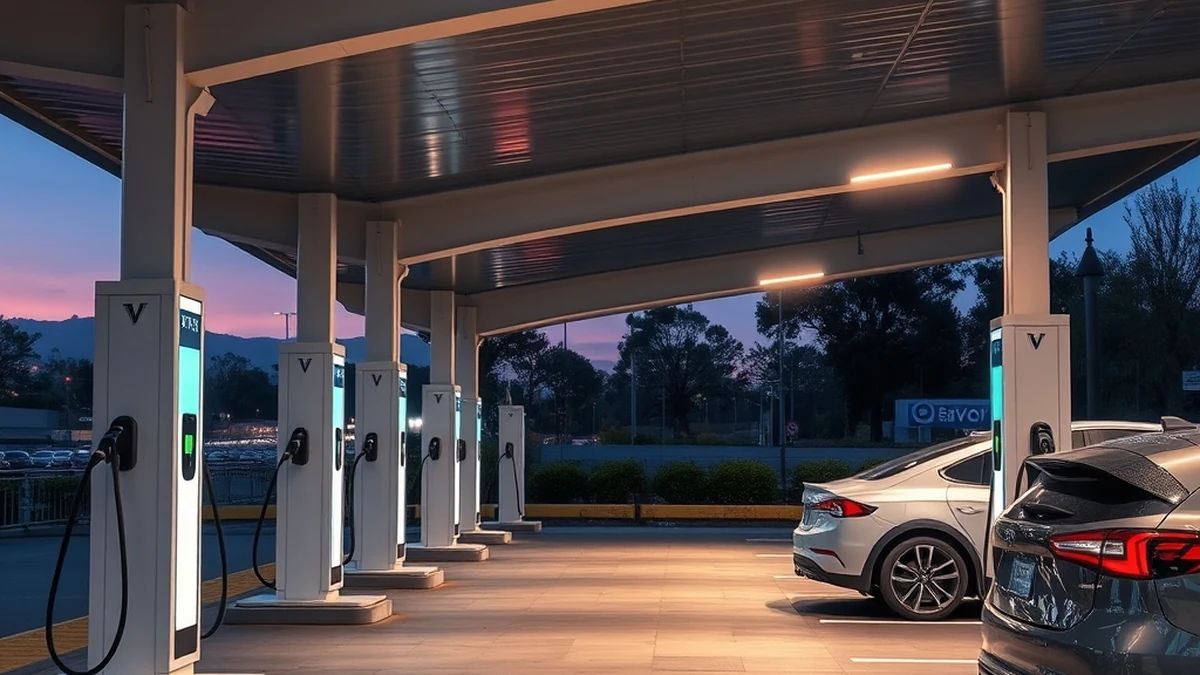
The Ministry of Petroleum and Natural Gas (MoPNG) has issued comprehensive regulatory guidelines mandating that all public and private sector oil marketing companies establish alternative clean fuel dispensing infrastructure across at least one-third of their nationwide retail network. The landmark policy directive compels state-owned energy majors, Indian Oil Corporation (IOCL), Bharat Petroleum (BPCL), and Hindustan Petroleum (HPCL), alongside private retail operators to equip designated outlets with Electric Vehicle (EV) fast-charging facilities, Compressed Natural Gas (CNG), or Bio-CNG (CBG) dispensers within a strict implementation timeframe.
The policy initiative represents the central government's most decisive regulatory intervention to date aimed at eliminating range anxiety and accelerating the mainstream transition toward zero-emission passenger and commercial mobility. By leveraging India's extensive network of over 88,000 retail fuel outlets, the regulatory framework ensures that alternative energy dispensing becomes accessible along major national corridors, state highways, and peri-urban commercial centers rather than remaining confined to Tier-1 metropolitan cores.
Regulatory Framework and Phased Compliance Timelines
Under the gazetted policy guidelines, retail fuel license holders are required to categorize their operational network into high-density urban clusters, national and state highway corridors, and rural agricultural distribution zones. Outlets handling monthly fuel throughput exceeding 300 kilolitres are designated as priority Tier-1 hubs, mandated to commission at least one high-capacity alternative fueling facility within twelve to eighteen months of notification.
Oil marketing companies failing to meet phased compliance quotas face administrative penalties, restrictions on securing new retail site permissions, and potential reductions in bulk pipeline allocations. The Ministry has mandated the creation of a centralized digital compliance dashboard, updated bi-weekly, to track real-world infrastructure commissioning across state jurisdictions and ensure accountability between public sector undertakings and private concessionaires.
Technical Specifications: DC Fast Charging and Compressed Bio-Gas (CBG)
The regulatory guidelines establish rigorous technical standards for alternative fueling equipment to ensure consumer safety and commercial reliability. For electric vehicle charging infrastructure, retail outlets situated along national expressways and golden quadrilateral corridors must install minimum 60 kW dual-gun CCS2 DC fast chargers capable of scaling to 120 kW configurations, guaranteeing high-speed power replenishment for passenger cars and light commercial fleets.
Urban and suburban outlets may satisfy alternative fuel requirements by deploying authorized CNG dispensing cascades connected to city gas distribution (CGD) networks or by establishing decentralized Compressed Bio-Gas (CBG) storage and dispensing units. The promotion of CBG aligns directly with the Sustainable Alternative Towards Affordable Transportation (SATAT) initiative, converting agricultural crop residue and municipal organic waste into automotive-grade methane fuel.
Dealer Capital Expenditure, Subsidies, and Revenue-Sharing Models
The implementation of alternative fuel infrastructure involves substantial upfront capital expenditure, ranging from ₹15 lakh to ₹45 lakh per outlet for electrical substation enhancements, high-tension transformer installations, and safety containment barriers. To alleviate financial burdens on independent dealer-owners, oil marketing companies have structured multi-tiered capital subsidy and revenue-sharing frameworks.
Under the standard Public-Private Partnership (PPP) model, OMCs partner with charge point operators (CPOs) and renewable power providers who finance, install, and maintain the EV charging hardware. Dealer-owners provide physical land parcels and dedicated parking bays, receiving guaranteed monthly rental stipends alongside a fixed percentage royalty on every kilowatt-hour of electricity or kilogram of compressed gas dispensed. Furthermore, state electricity regulatory commissions have been directed to offer concessional open-access power tariffs for automotive charging hubs during off-peak nighttime hours.
Grid Modernization, Space Constraints, and Urban Challenges
While highway outlets typically possess ample peripheral real estate to accommodate charging bays and gas compressor cascades, urban retail stations face severe spatial and electrical infrastructure bottlenecks. In congested metropolitan centers like Mumbai, Kolkata, and Old Delhi, standard petrol pumps often operate on compact 600 to 800 square metre footprints, creating severe physical constraints when attempting to integrate safety buffer zones mandated by the Petroleum and Explosives Safety Organization (PESO).
To overcome urban spatial constraints, the Ministry has permitted the installation of automated overhead battery swapping stations for electric two- and three-wheelers, which occupy a fraction of the ground footprint required by conventional four-wheeler fast chargers. Power distribution companies (DISCOMs) have also been instructed to prioritize commercial grid augmentation requests from retail fuel stations, ensuring high-voltage feeder line access to prevent local transformer overloading during peak daytime charging surges.
Long-Term Impact on National Decarbonization and Energy Security
The mandatory transformation of traditional petrol stations into integrated energy hubs marks a structural turning point in India's automotive and energy landscape. By guaranteeing widespread access to clean fuels across one-third of the nation’s fueling infrastructure, the central government has constructed the foundational backbone necessary to support millions of incoming electric vehicles and natural gas commercial fleets over the coming decade.
As oil marketing companies ramp up hardware installations and grid interconnections across national highways, the strategic convergence of conventional retail fuel networks with renewable energy infrastructure solidifies India's commitment to reducing carbon emissions while safeguarding national energy resilience.