
Mercedes-Benz Bets on India Luxury Demand with 12 New Models
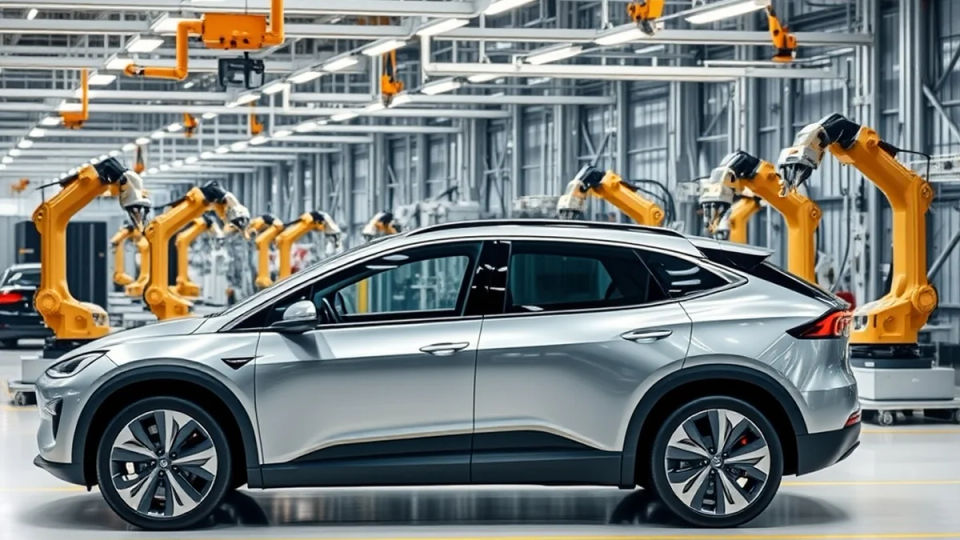
German luxury automaker Mercedes-Benz is scaling up its commercial footprint in India, preparing 12 new model introductions across 2026 to capture surging domestic demand. Company leadership expects the current fiscal cycle to deliver a record sales performance, according to statements from executive management. The manufacturer's newly launched electric SUV, the GLC EV, accumulated more than 1,000 bookings, extending its forward delivery pipeline through March 2027. Priced at an introductory ₹78.5 lakh ex-showroom, the luxury electric vehicle is assembled locally at the automaker's manufacturing facility in Pune. Robust buyer interest prompted Mercedes-Benz India to request additional completely knocked down assembly kits from global headquarters to abbreviate customer delivery wait times.
Local Assembly and Record Quarterly Deliveries
Mercedes-Benz India Managing Director and Chief Executive Officer Santosh Iyer highlighted the strong reception during the model's official rollout in Pune. Mercedes-Benz Group Chairman Ola Källenius stated that the brand delivered more than 5,400 vehicles in India during the third quarter of 2026. The quarterly volume represented the luxury brand's best-ever quarterly sales performance in the Indian market, Källenius said. Källenius projected that electric vehicles will account for over 20% of the brand's total Indian vehicle sales by 2027. The automaker intends to introduce zero-emission powertrain options across its entire model hierarchy, spanning from entry-level segments to the flagship S-Class. Mercedes-Benz noted that the GLC Electric became the fastest global vehicle to arrive in India as a locally assembled model, launching six months after European sales commenced. Mercedes-Benz offered the GLC Electric in the GLC 400 4Matic trim supporting ultra-fast DC charging up to 330 kW that adds up to 300 km of range in 10 minutes, according to EVINDIA.
Strategic R&D Investments and Global Headwinds
India serves as a strategic cornerstone for Mercedes-Benz, hosting the German corporation's largest engineering research and development center outside Germany. The automaker has invested more than ₹3,000 crore in its Indian manufacturing and operational facilities, according to disclosures by Källenius. The domestic expansion push coincides with economic headwinds across foreign luxury automotive markets, particularly slowing sales volumes in China. The German company's global revenue contracted by 9% last year, while adjusted operating profit declined 15% during the third quarter. In response, Mercedes-Benz recorded steady vehicle sales expansion across markets outside China during each of the first three quarters of 2026.
ADAS Strategy and Transition to Level 2++ Tech
On the automated driving front, Mercedes-Benz is recalibrating its advanced driver assistance system development pipeline to prioritize Level 2++ technologies. Chief Technology Officer Jörg Burzer explained that commercial deployment of Level 3 Drive Pilot was premature for everyday driving demands. The prior Level 3 Drive Pilot automated driving system was restricted to maximum operating speeds of approximately 64 kmph in congested traffic. The carmaker is now deploying MB.DRIVE Assist Pro point-to-point assistance to handle lane maneuvers, intersections, and traffic signals before transitioning directly to Level 4 autonomy. Mercedes-Benz's MB.DRIVE ASSIST PRO system operates using around 30 sensors comprising ten cameras, five radar sensors, and twelve ultrasonic sensors linked to a supercomputer that can store up to 508 TOPs, according to Mercedes-Benz Group.