Tarun Kapoor, advisor to the Prime Minister's Office (PMO), has called for a decisive shift toward flex-fuel vehicles and ethanol blending levels exceeding 20 percent. Speaking at the India Sugar and Bio Energy Conference in New Delhi, organized by the India Sugar Manufacturers Association, Kapoor declared that the country's E20 program has achieved its initial goals, leaving the domestic energy and automotive sectors positioned to transition to higher biofuel concentrations.
This policy push comes at a critical juncture for India's automotive market. While the government seeks to address a growing domestic surplus of ethanol by expanding its use in transportation, cooking, and industrial applications, manufacturers are simultaneously updating their conventional lineups. The dual track of India's automotive transition is highlighted by Maruti Suzuki's concurrent rollout of its updated 2026 Baleno, demonstrating how carmakers are navigating immediate consumer demand for high-efficiency petrol and CNG models while preparing for a flex-fuel future.
Transitioning Beyond the E20 Blending Milestone
Kapoor emphasized that the 20 percent ethanol blending target has been successfully integrated into the national fuel supply. However, further progress requires a fundamental shift in vehicle technology. "Up to E20 it's been very successful," Kapoor stated. "Now our focus is on going into flex-fuel vehicles and allowing blending at a percentage which should be higher than E20, and it has to be on flex-fuel vehicles."
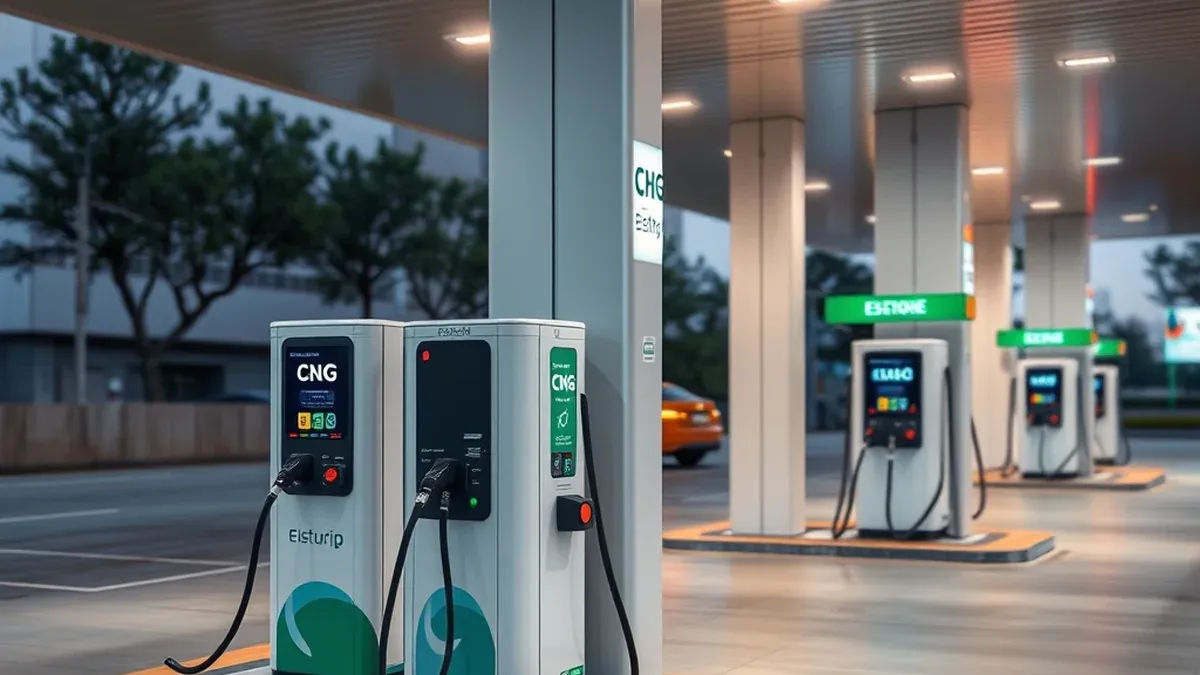
To support this transition, the PMO advisor noted that the retail infrastructure must evolve in tandem with vehicle manufacturing. While some fuel stations already offer higher ethanol blends or pure ethanol, Kapoor stressed that this availability must expand rapidly. He noted that the supply of pure ethanol, potentially enhanced with specific additives, must be rolled out systematically alongside the commercial introduction of compatible vehicles to avoid distribution bottlenecks.
Addressing Vehicle Compatibility and Efficiency Concerns
The aggressive push toward higher ethanol blends has not been without friction. Kapoor acknowledged persistent public and industry criticism regarding the impact of ethanol-blended fuel on older, non-compatible vehicles. Despite these concerns, he defended the program's technical viability, citing studies and experiments that confirm E20 performs reliably across the existing fleet.
Addressing the known thermodynamic properties of ethanol, Kapoor admitted that drivers might experience a marginal drop in fuel economy. "E20 is quite good and works very well, maybe a little bit of fuel efficiency declines somewhere, but it gets compensated with higher octane," he explained. This higher octane rating improves engine combustion resistance to knocking, partially offsetting the lower energy density of the biofuel.
Resolving the Ethanol Overcapacity Challenge
A primary driver behind the government's urgency is a significant shift in the domestic agricultural and refining sectors. India's ethanol production capacity has now outpaced the volume currently required to sustain the nationwide 20 percent blending mandate. This surplus has forced policymakers to look beyond the immediate transport sector to absorb the excess supply.
"Now the production is more than that, probably it's more than what we actually need for blending, but then probably we have to look for more uses of ethanol in various forms," Kapoor remarked. To resolve this overcapacity, the government is actively exploring non-transportation avenues, including domestic cooking fuels and industrial chemical applications. Kapoor emphasized that expanding the market rapidly is essential to stabilize the bioenergy sector and support agricultural producers.
Automaker Readiness and the Flex-Fuel Pipeline
Major Indian automakers are already aligning their product pipelines with the government's bioenergy roadmap. Prototype flex-fuel models, such as Maruti Suzuki's Wagon R flex-fuel, have demonstrated the technical feasibility of running on high-ethanol blends. Kapoor expressed optimism regarding the imminent commercial launch of these platforms, noting that several manufacturers have finalized plans to bring flexible-fuel options to the mass market.
Beyond passenger cars, the government is also targeting the diesel-dominated commercial vehicle segment. Because ethanol is primarily blended with petrol, finding a viable biofuel alternative for diesel remains a priority. Kapoor revealed that the government is closely monitoring ongoing experiments involving isobutanol, which is being studied as a potential high-blend biofuel route to reduce diesel dependency on a larger scale.
Balancing Future Fuels with Immediate Market Demands
While the long-term policy focus shifts toward flex-fuel and alternative biofuels, India's automotive market continues to be driven by highly optimized conventional powertrains. This is evident in Maruti Suzuki's release of the full price list for its updated 2026 Baleno premium hatchback. Priced between Rs 5.98 lakh and Rs 9.99 lakh ex-showroom, the updated model introduces a new three-cylinder naturally aspirated petrol engine designed to maximize fuel efficiency under current fuel standards.
The 2026 Baleno is offered across five trim levels: Sigma, Delta, Zeta, Alpha, and a new top-tier Alpha (O) variant that introduces Level 2 Advanced Driver Assistance Systems (ADAS). The vehicle also features front seat ventilation and updated styling. To cater to diverse regional economic factors, the model is available in both petrol and CNG configurations, with on-road prices varying significantly across major metropolitan areas.
Regional Pricing Dynamics and Next Steps
On-road pricing data reveals that Delhi offers the most affordable rates for the petrol-powered Baleno, while Chennai and Hyderabad represent the highest cost brackets, with price differences reaching up to Rs 71,000 due to local registration and road tax structures. Conversely, Mumbai offers the most competitive pricing for the CNG variants.
As automakers roll out these highly efficient conventional models to meet immediate demand, the next critical milestone will be the commercial debut of the promised flex-fuel passenger vehicles. The Ministry of Petroleum and Natural Gas, alongside automotive industry bodies, is expected to monitor the initial consumer response to these upcoming flex-fuel launches while simultaneously expanding the specialized fuel dispensing infrastructure at retail outlets nationwide.