Europe's transition toward zero-emission road transport accelerated significantly in the first half of 2026, with battery electric vehicles reaching a 22% share of new passenger car registrations across the European Union, according to data published by the International Council on Clean Transportation (ICCT). The comprehensive assessment reveals that automotive manufacturers are currently on track to meet stricter carbon dioxide emission targets, aided by falling global battery prices, an expanding catalog of affordable models, and robust consumer adoption in major automotive markets.
The widespread rollout of electric vehicles is reshaping the European automotive landscape, driven by declining upfront vehicle costs and compelling running cost advantages over internal combustion engine vehicles. Researchers Marie Rajon Bernard and Alexander Plummer noted in the ICCT transition report that improving electric ranges and lower battery production expenses have fundamentally shifted market dynamics across member states, pushing certain vehicle segments into immediate upfront cost parity.
Passenger Car Registrations and Manufacturer Compliance
Automotive manufacturers across Europe are maintaining compliance with European Union carbon dioxide emission standards for new vehicles. As of June 2026, car makers were running less than 2 grams of CO2 per kilometer short of the average target of 93 grams per kilometer established for the 2025 to 2027 regulatory period. Battery electric passenger cars accounted for 22% of all new registrations in the EU during the first half of 2026, underpinned by substantial consumer uptake in key national markets including France at 28%, Germany at 26%, Belgium at 36%, and Denmark at 80%. Adoption rates also showed upward movement in traditionally slower markets such as Italy at 8% and Spain at 10%.
Parallel to new car sales, the secondary market for battery electric vehicles is experiencing measurable expansion. In Germany, Europe's largest national automotive market, battery electric vehicles accounted for 5.6% of used car ownership transfers during the first half of 2026, climbing from 3.2% in the corresponding period of 2025. For heavy-duty commercial vehicles, manufacturers have already complied with the European Commission's 2025 emission reduction target of 15% one year ahead of schedule, utilizing data from 2024. Buses and coaches spearheaded this commercial electrification trend, capturing a 28% market share in the first half of 2026.
Affordability, Pricing Trends, and Total Cost of Ownership
Vehicle affordability metrics have shifted favorably due to a 35% drop in global battery prices over the past five years. In Germany, real-world battery electric vehicle prices decreased by approximately 18% between 2020 and 2025 after adjusting for inflation and controlling for vehicle performance gains, which included an average 30% expansion in electric driving range. During the same five-year timeframe, the number of battery electric passenger car models available in Germany quadrupled to approximately 160 options, while internal combustion engine offerings contracted from 275 to 194 models.
Market accessibility has broadened with the arrival of about 35 affordable battery electric models priced below €30,000 across the EU in 2025. Across medium, upper-medium, and luxury segments, battery electric cars have reached upfront cost parity with equivalent internal combustion engine vehicles. Regarding operational expenses, battery electric cars remained approximately 33% cheaper to drive than gasoline alternatives in 2025. For commercial freight, regional and long-haul battery electric trucks are approaching or have already reached total cost of ownership parity with diesel equivalents, particularly in markets like Germany where carbon dioxide road charges are enforced.
Climate Benefits and Real-World Emissions Realities
Life-cycle assessments underscore the environmental advantages of full electrification over alternative powertrains. Life-cycle greenhouse gas emissions for a battery electric passenger car are calculated to be 73% lower than those of a gasoline-powered vehicle, while battery electric long-haul trucks yield an 86% reduction compared to diesel combustion trucks. Researchers emphasize that road transport emissions of fine particulate matter, ozone, and nitrogen dioxide contributed to an estimated 74,000 premature deaths and 11,000 pediatric asthma cases across Europe in 2024.
By contrast, plug-in hybrid electric vehicles continue to exhibit a pronounced divergence between laboratory certification values and real-world performance. Official data indicates that real-world carbon dioxide emissions from plug-in hybrids in the European Union are on average 4.6 times higher than their type-approval ratings. This expanding real-world emissions gap demonstrates that plug-in hybrids are currently failing to deliver the operational emission reductions promised by their regulatory ratings.
Charging Infrastructure Expansion and Power Grid Readiness
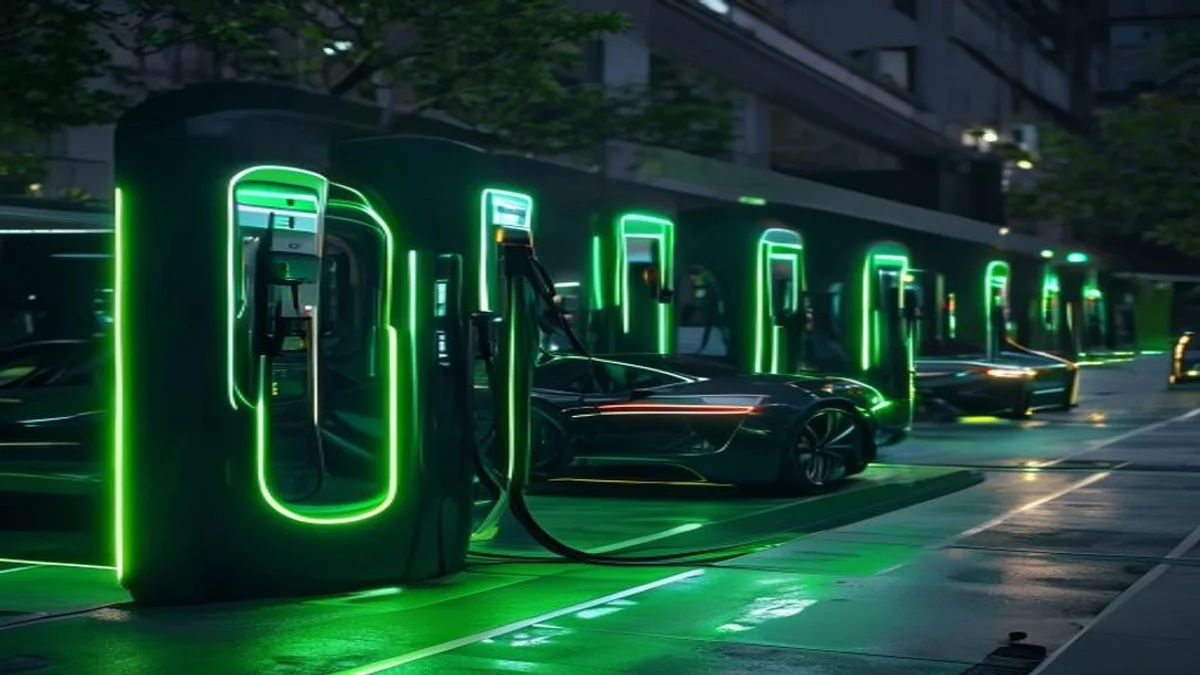
Public charging infrastructure across the European Union has scaled rapidly, growing nearly eightfold since 2020 to reach 1.16 million public charging points by June 2026. This deployment exceeds the fleet-based compliance mandates established under the Alternative Fuels Infrastructure Regulation across all member states except Malta. High-power direct current chargers exceeding 150 kW now cover 92% of the Trans-European Transport Network. However, public charging rates remain a financial hurdle, averaging €0.50 per kilowatt-hour for alternating current and €0.62 per kilowatt-hour for direct current, making public charging roughly twice as expensive as private depot or residential rates.
Integration of smart charging and vehicle-to-grid capabilities offers a pathway to mitigate grid pressure and reduce consumer energy expenses. By the end of 2025, 63% of European utility customers were equipped with smart meters, though national adoption rates varied widely, ranging up to full deployment in some regions down to 5.5% in Germany. Analysts estimate that widespread smart charging implementation could reduce European peak power output by 6% by 2035, while localized vehicle-to-grid integration can drive meaningful peak load reductions during periods of high demand.
Industrial Competitiveness and Battery Supply Chain Resilience
Europe's industrial strategy is increasingly tied to domestic manufacturing capacity across the battery and electric vehicle supply chains. In 2025, battery electric vehicles accounted for 19% of total passenger car production within the European Union, with Germany responsible for 56% of regional production volumes. While the EU produces approximately half of the battery cells installed in locally manufactured vehicles, gigafactories have faced capacity utilization constraints stemming from uncertain domestic demand projections and international pricing pressures.
Despite these utilization hurdles, all announced cell manufacturing capacity projections for 2030 would be sufficient to satisfy projected regional demand if utilization rates improve. Upstream processing capacities for cathode active materials and separators are robust, though domestic production limits remain for anode active materials and electrolytes. This industrial transformation has generated an estimated 62,300 battery supply chain jobs across Europe, supported by workforce retraining initiatives in the manufacturing sector.