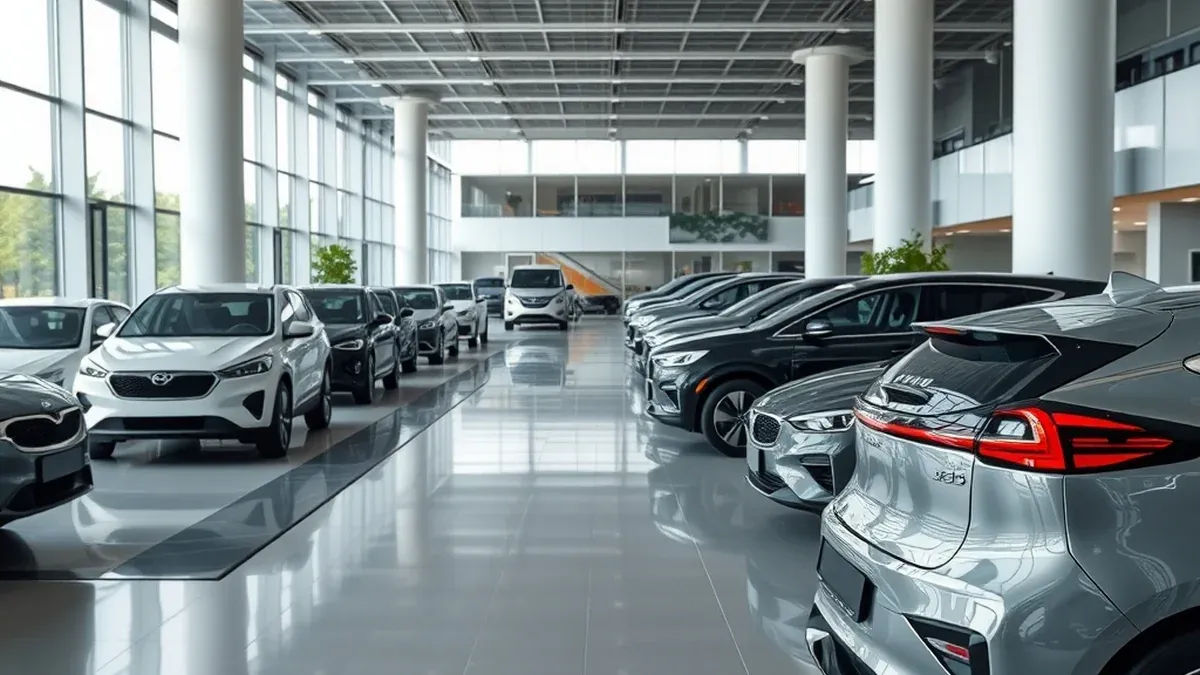
China's electric vehicle adoption rate reached an all-time high last month, with battery-powered and plug-in hybrid models capturing 65.2 per cent of total automobile sales across the mainland. Data published by the China Passenger Car Association revealed that the latest figure surpassed the previous record of 65.1 per cent established just a month earlier, even as the broader domestic automotive market experienced a sustained economic slowdown.
The accelerating transition toward electric mobility coincides with a pronounced contraction in traditional fuel-powered vehicle sales, driven largely by surging global energy costs resulting from the ongoing conflict in Iran. While petrol car sales plunged steeply year on year, electric vehicle deliveries demonstrated significantly stronger resilience against the macroeconomic headwinds.
Fuel Cost Pressures Drive Motorists Away From Petrol
The ongoing conflict in the Middle East has kept international oil prices elevated far above pre-war levels, creating a direct financial incentive for motorists to abandon internal combustion engines. Benchmark Brent crude hovered around US$97 per barrel, marking a 34 per cent increase compared to late February when hostilities commenced.
Industry calculations indicate that persistent oil prices near US$90 a barrel will force Chinese drivers of petrol cars to incur annual fuel cost increases of roughly 2,000 yuan, equivalent to about US$298, when measured against pre-war expenditure baselines. This immediate economic penalty has dramatically altered consumer purchasing calculations in the retail automotive market.
Slumping Traditional Sales Contrast With EV Resilience
Overall vehicle transactions in mainland China have slowed considerably amid a broader economic deceleration, impacting both segments of the market but hitting traditional automakers with exceptional severity. Last month, sales figures for conventional petrol cars plummeted by 40 per cent compared with the same period in the previous year.
In stark contrast, electric vehicle deliveries fell by a much more modest 10.1 per cent over the same timeframe according to official association metrics. Between January and August, Chinese automotive manufacturers delivered a cumulative total of 6.67 million electric vehicles to domestic consumers despite the challenging macroeconomic climate.
Technology Debuts and Charging Network Expansion
Beyond shifting fuel economics, the rapid uptake of electric vehicles has been supported by the continuous introduction of new commercial models equipped with advanced driver-assistance systems. Car dealers report that these technological additions have successfully convinced millions of prospective buyers to commit capital to new purchases despite broader financial caution.
Simultaneously, the physical infrastructure required to support large-scale electrification has continued to expand at a rapid pace across the country. Official figures from the China Electric Vehicle Charging Infrastructure Promotion Alliance show that public charging stations reached 5.1 million units by the end of July, representing a 21.3 per cent year-on-year increase, while household charging piles climbed 48.8 per cent to nearly 18.6 million units.
Rollback of State Subsidies and Consumer Sentiment
The surging penetration rate of electric vehicles has occurred despite a deliberate tapering of government financial incentives and purchase tax exemptions by Beijing. Buyers acquiring an electric car priced at 100,000 yuan currently receive a state subsidy of 12,000 yuan, reflecting a 40 per cent reduction compared to the previous year alongside the introduction of a standard 5 per cent vehicle purchase tax.
Industry participants note that consumer confidence in the technology has matured past the point of relying strictly on government fiscal stimulus. "Consumers are convinced of EVs' advantages now that range anxiety has been largely eased," said Zhao Zhen, a sales director at Shanghai-based auto dealer Wan Zhuo Auto. "Higher penetration rates can be expected as more drivers shun petrol cars."
Market participants anticipate that the combination of structurally higher fuel costs and ongoing technological innovations will continue to sustain elevated electric vehicle adoption rates. The China Passenger Car Association and commercial dealerships are monitoring upcoming monthly sales disclosures to determine whether the market share will exceed the newly established 65.2 per cent threshold heading into the final quarter of the year.