
31 Aug 2026, 05:03 PM 5 min readindiaanalysis
Vande Mataram Controversy Resurfaces in Kerala Amid Onam Festivities
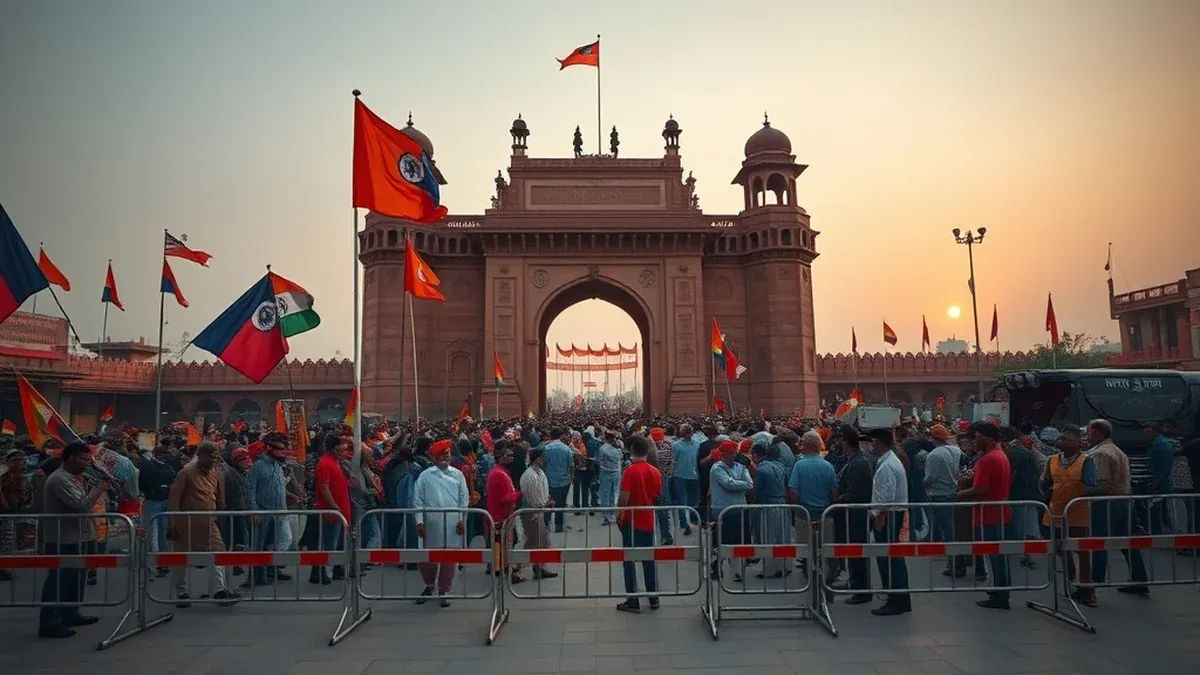
## Cultural Autonomy and the Nationalist Narrative
The annual celebration of Onam in Kerala invariably serves as a vital mirror reflecting the state's distinct socio-political contours. This year, the festivities have once again become entangled in ideological friction following renewed debates over the public recitation and symbolic placement of 'Vande Mataram'. In a state where regional identity is fiercely guarded across political divides, the friction between centralizing nationalist symbols and local cultural pluralism highlights the enduring complexities of India's federal structure. Kerala's political class, dominated by alternating coalitions led by the Left Democratic Front and the United Democratic Front, frequently positions itself as a bulwark against perceived cultural homogenization emanating from national political currents.
The historical trajectory of Onam itself complicates any attempt to impose uniform cultural narratives. Celebrated as a secular harvest festival commemorating the egalitarian reign of the mythical King Mahabali, Onam transcends traditional religious demarcations in Kerala, drawing participation from all communities. When national patriotic anthems or associated ideological motifs are introduced into school assemblies or public cultural programs during these harvest celebrations, regional political actors interpret the move as an assertive encroachment on Kerala's carefully cultivated secular ethos. State governance structures, sensitive to minority demographics and progressive traditions, routinely push back against administrative directives perceived as nationalist signaling.
## The Political Economy of Regional Identity in Kerala
Beyond cultural symbolism, the recurrent friction over national identity markers reflects deeper structural divergences between Kerala's political economy and national governance models. Kerala boasts high human development indices, robust literacy rates, and a strong tradition of labor politics that fosters skepticism toward centralized political authorities. Regional political parties utilize these cultural flashpoints to consolidate their voter bases, framing local autonomy as a necessary defense of democratic federalism. The ruling Left administration frequently utilizes administrative levers to counter directives from central bodies, transforming cultural observances into arenas for ideological contestation.
Conservative political forces, conversely, argue that the promotion of pan-Indian national symbols fosters civic unity and counters regional parochialism. From this perspective, resistance to historical national anthems or patriotic verses is characterized as appeasement politics that undermines the foundational unity of the republic. The ideological battleground is thus framed in binary terms: regional cultural exceptionalism versus nationalist integration. This polarization permeates academic institutions, public administrative bodies, and cultural academies, leaving little neutral ground for purely artistic or festive expressions.
## Institutional Implications for Indian Federalism
Navigating these recurrent controversies requires a nuanced understanding of India's constitutional framework, which deliberately balances a strong central state with recognized regional autonomies. When cultural celebrations become proxy battlegrounds for ideological supremacy, public institutions risk losing their institutional neutrality. Educational boards and cultural councils in Kerala frequently find themselves caught between central funding dependencies and state-level administrative directives, leading to bureaucratic paralysis and fragmented implementation of national education policies.
the economic implications of such protracted cultural friction should not be underestimated. Kerala's economy relies heavily on remittances from the Gulf diaspora, tourism, and domestic consumption, all of which thrive in an atmosphere of social harmony and stability. Prolonged ideological agitation deters prospective private investments in the state's emerging technology and tourism hubs. As political parties continue to leverage cultural identity for electoral mobilization, the challenge for policymakers remains finding a sustainable equilibrium that respects regional diversity while reinforcing constitutional patriotism across all administrative jurisdictions.
The Indus Pulse is committed to accuracy and transparency.