
18 Aug 2026, 10:53 AM 2 min readworlddeveloping
USS Abraham Lincoln Crew Faces Grim Conditions in Extended Deployment
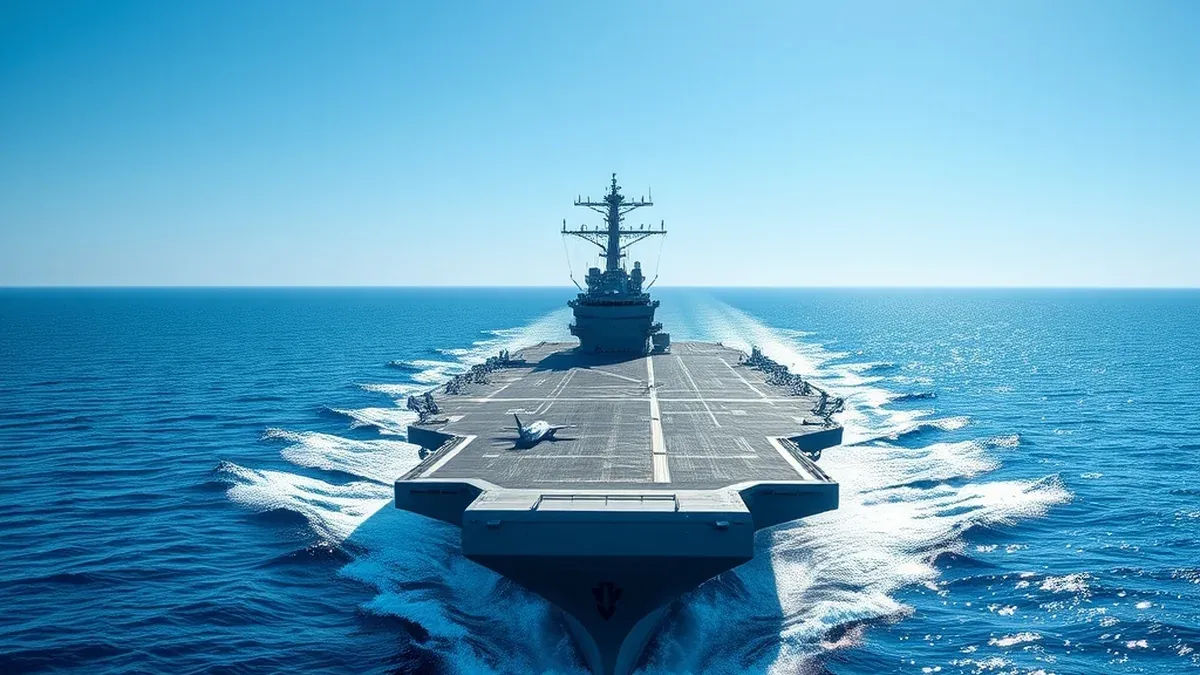
USS Abraham Lincoln Operations:
The United States Navy aircraft carrier USS Abraham Lincoln faces intense scrutiny over deteriorating living conditions aboard the vessel during its prolonged deployment in the Arabian Sea. Sailors on the warship, which has been deployed since December 11, 2025, have reportedly endured over 250 days of continuous operations. Reports have surfaced detailing substandard conditions, including moldy showers and shortages of essential sanitary items like soap and toothpaste. The extended deployment highlights the physical and operational strain on US naval personnel as the Pentagon maintains a heavy presence in the Middle East.
Strategic Shifts and Political Fallout:
The controversy intensified after political figures addressed the situation, with Donald Trump dismissing the reports of poor shipboard conditions as fake news. The deployment comes as the US military pulls its last aircraft carrier from Asia to consolidate forces, reflecting a strategic pivot under the Trump administration to focus heavily on Iran and threats within the Western Hemisphere. Naval experts note that keeping a massive supercarrier like the USS Abraham Lincoln stationed in the Arabian Sea for nearly nine months without relief reflects the escalating geopolitical tensions in the region.
Geopolitical Impact on India:
The prolonged presence of US naval assets in the Arabian Sea directly affects India's maritime security calculations in the Indian Ocean Region. India closely monitors these developments, as any escalation in the Arabian Sea threatens vital commercial shipping lanes and energy supply lines passing through the Persian Gulf. New Delhi must balance its strategic partnership with Washington while ensuring its own naval forces maintain stability and freedom of navigation. Observers are watching whether the US Navy will soon rotate another carrier group to relieve the exhausted crew of the USS Abraham Lincoln.
Pulse Intelligence
Context & ImpactContext & Background
- The USS Abraham Lincoln was dispatched to the Middle East to deter regional aggression, primarily from Iran and its proxy networks.
- US carrier strike groups typically operate on six-to-seven-month deployment cycles, but rising global conflicts have repeatedly forced the Navy to extend these missions.
Key Consequences
- Crew morale and operational readiness could degrade further if the carrier does not receive immediate logistical relief or a scheduled rotation.
- The strategic vacuum left in the Indo-Pacific by shifting carriers to the Middle East may allow rival powers to expand their maritime influence.
Market & Economic Impact
The military buildup in the Arabian Sea maintains a risk premium on global oil prices, directly affecting India's crude import bill.
The Indus Pulse is committed to accuracy and transparency.